In the small municipality of Ventosa de la Cuesta, where public life is usually quiet, an unexpected scandal has erupted over the sale of old doors from the local church. What began as a routine administrative decision quickly escalated beyond the village and attracted widespread attention, largely thanks to social media.
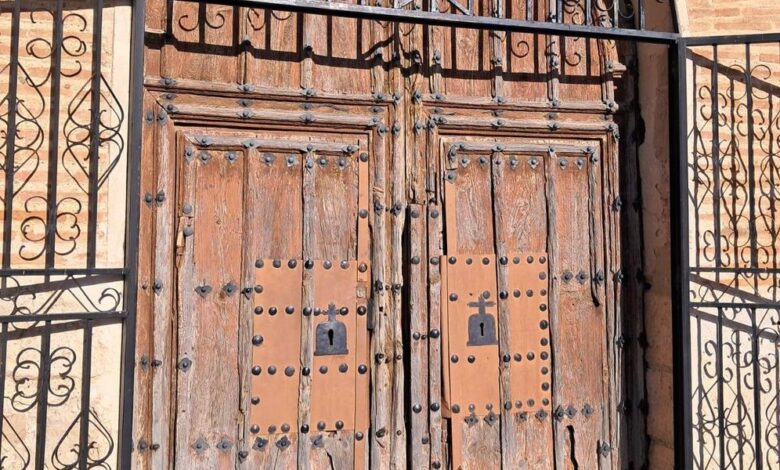
The controversy was sparked by an advertisement on Wallapop offering the church doors for sale at 390 euros. For some, this looked like simple disposal of worn-out property; for others, it meant the loss of a piece of historical memory. Debate intensified after Malena Alonso, a Ventosa de la Cuesta resident, posted a video calling the sale an ‘attack on historical heritage’ and blaming the local authorities. The video quickly went viral on TikTok and other social networks, turning the local incident into a national topic.
Political context
The situation became even more tense when it took on a political dimension. Malena Alonso is the daughter of Alberto Alonso, a Socialist Party member of the opposition. The decision to sell the doors was made by the parish committee, led by María Luisa Escalante, the mayor representing the Partido Popular. This raised suspicions that the conflict was not only cultural, but also political.
At the same time, local residents are divided in their opinions about the incident. Many point out that the doors are in poor condition, let in cold air, and do not adequately protect the building. Significant heat loss is recorded inside the church during the winter months, which has become one of the reasons for considering their replacement.
The question of historical value
One of the main points of contention has been the supposed dating of the doors. Social media users have claimed they date back to the 16th century. However, the heritage delegate Juan Carlos Álvarez has expressed doubts about this. According to him, while the church building itself is indeed quite old, the doors may have been installed much later and do not necessarily possess unique artistic or historical value.
The church in Ventosa de la Cuesta does not have official cultural heritage status, which means it is not formally subject to strict regulations regarding the replacement of architectural elements. Nevertheless, after the public outcry, a decision was made to prepare a special report. The document will assess the condition of the doors, the feasibility of restoration, estimated costs, and whether preservation is justified.
The final decision will be made by the Archdiocese, since the church is owned by the diocese, which is responsible for managing its property.
Procedural errors and consequences
Even among participants in the discussion, few dispute the poor condition of the doors. Not only do they compromise insulation, but they also fail to provide adequate security, prompting the earlier installation of metal grilles. The main criticism is not about the idea of replacement itself, but rather the way it has been implemented.
Posting the item for sale before obtaining approval from the relevant heritage authorities caused confusion. Had the sale gone through quickly, the church could have been left without doors for an extended period while new ones were made. Subsequently, the listing was removed by Wallapop, since the platform’s rules prohibit selling parts of active buildings.
Public reaction
Many residents admit that without the attention drawn by social media, the situation would likely have remained a local episode. However, once the story spread beyond the municipality and reached national media, the issue took on symbolic significance. Now, some are calling to preserve the doors as part of history, while others hope the scandal will speed up the church’s modernization and improve conditions inside.
The incident in Ventosa de la Cuesta showed that even in the smallest communities, routine management decisions can escalate into widespread public debates—especially when they touch on memory, identity, and political tensions, and particularly in the age of social media.