Deep in the Castilian heartland, within the province of Soria, lies a small town where time seems to have stood still. Far from the bustle of big cities, here you can feel the true spirit of old Iberia. Walking its streets is more than just sightseeing—it’s a genuine journey back centuries, to the era of knights, bishops, and craftsmen. The air is filled with tranquility and grandeur, and every feature of the townscape, from imposing defensive structures to graceful colonnades, bears the mark of past ages.
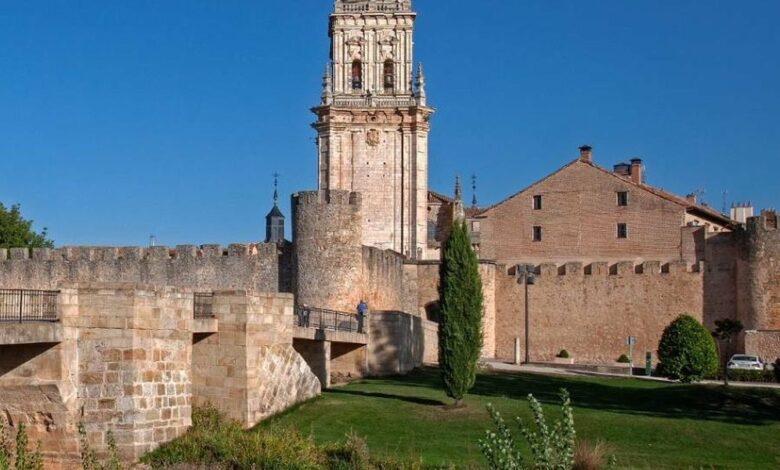
The main artery of this settlement, Calle Mayor, greets visitors with a unique gallery of arcades. Beneath its arches, supported by sturdy stone columns, life has thrived for centuries. Today, cozy shops and taverns line the street, but look up to see old houses adorned with the coats of arms of noble families. These stone buildings create an ensemble like no other. The street leads to the spacious Plaza Mayor, designed in a strict and harmonious baroque style. Its focal points are the old San Agustin Hospital and the town hall, forming an elegant and finished space ideal for leisurely rest and observing the unhurried pace of local life. All this is surrounded by fragments of the fortress perimeter built in the 15th century. To this day, several gates remain, such as the San Miguel gate, silent guardians of the town’s tranquility.
The spiritual and architectural heart of the city is, without a doubt, the Cathedral of the Assumption of the Blessed Virgin Mary. Its history reads like a chronicle of changing architectural styles. Founded during the Romanesque period, it was radically transformed in the 13th century, acquiring Gothic features: soaring vaults, pointed arches, and an upward sense of aspiration. Later, Renaissance elements were added to the façade, and a slender Baroque tower rose above the city, becoming its main visual landmark. Inside, the cathedral houses true masterpieces. The main altarpiece, created by Juan de Juni and Juan Picardo, impresses with its expression and masterful execution. The Gothic cloister with its ornate arcades invites contemplation, while in the crypt rests the founder of the episcopal seat, Saint Pedro de Osma. Of particular value is the sacristy, where a unique 11th-century manuscript—the Beatus of Osma—is preserved as part of a museum exhibit. This illuminated manuscript, containing commentaries on the Apocalypse, is one of the most significant examples of early book art.
Beyond the city walls, cultural heritage continues to thrive. The majestic Episcopal Palace and the building of the former Universidad Santa Catalina bear witness to this place’s former importance as a major religious and educational center. However, the charm of the area extends beyond man-made monuments. Just nearby lies the Cañón del Río Lobos National Park. This spectacular gorge, cut by the river through limestone rocks, offers excellent hiking trails. Steep cliffs are home to colonies of griffon vultures, whose flight can be watched for hours. At the very heart of the canyon, in a secluded and picturesque spot, stands the mysterious chapel of San Bartolomé, which legend connects to the Knights Templar. The combination of the landscape’s stark beauty and the mystical aura of the ancient sanctuary leaves a lasting impression, perfectly complementing the cultural experience of visiting an old Castilian village.