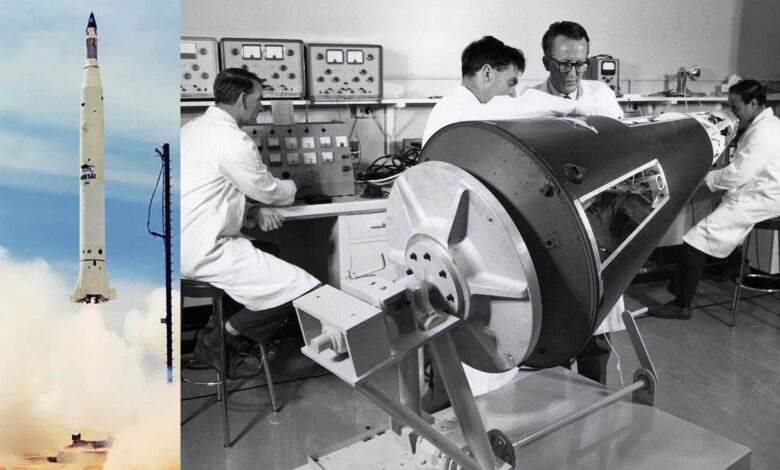
On November 29, 1967, Australia made a breakthrough that would forever change its scientific and technological future. On that day, the country’s first satellite was launched into orbit from the Woomera Test Range in the south. Named the Weapons Research Establishment Satellite, its launch marked a new chapter in the nation’s scientific development.
The satellite weighed nearly 45 kilograms, and its trajectory allowed it to cross the Earth’s poles, providing unique opportunities for observation. With this launch, Australia joined an elite group of nations that had explored space, becoming the seventh country to successfully place its own satellite into orbit.
Notably, a key factor in this achievement was cooperation with the United States. The Americans delivered ten Redstone rockets to Australia for a series of test launches. However, after the program ended, one rocket remained unused. Instead of returning it, the US offered to use it for the launch of the Australian satellite. This decision became the starting point for Australia’s first independent step into space.
A technological leap and international recognition
The satellite launch not only strengthened Australia’s position on the global stage, but also served as a major driving force for the development of its own scientific and engineering schools. The country experienced a genuine boom in interest in space technology, and the specialists involved in the project gained unique experience that was later in high demand across various fields.
The satellite’s mission was not merely symbolic. It enabled the collection of valuable data on radiation levels, the magnetic field, and other parameters of near-Earth space. This information formed the basis for further research and helped Australia secure a prominent place among the nations actively engaged in space exploration.
Since then, Australia has repeatedly proven its status as a serious player in the space industry. Over the past decades, the country has launched several more satellites and has become one of the world’s leaders in the field of radio astronomy. Australian observatories and research centers regularly participate in international projects, making significant contributions to the study of the universe.
Contribution to Global Science and the Development of Radio Astronomy
Radio astronomy occupies a special place in Australia’s scientific life. Thanks to its unique geographic location and low levels of radio interference, the country has become an ideal site for powerful radio telescopes. Australian scientists have taken part in a number of major international programs, including projects to search for extraterrestrial signals and study distant galaxies.
In recent years, Australia has been actively developing its own space initiatives. The establishment of a national space agency, the launch of new satellites, and participation in global missions all point to the country’s serious ambitions. Australian engineers and scientists continue to work on new technologies that could redefine humanity’s capabilities in space.
Today, Australia is not only maintaining its traditions in space research, but also reaching for new heights. The country is implementing educational programs aimed at training young specialists while actively attracting investment to the space sector.
First Steps and Recent Achievements
The story of the first satellite was the starting point for a series of accomplishments. Australian specialists contributed to developing equipment for international missions and worked on their own projects to study Earth and near space. New research centers have appeared in the country, and interest in space has become part of the national culture.
Today, Australia continues to strengthen its position in the global space industry. New satellites, state-of-the-art observatories, and participation in major international scientific initiatives all confirm that the country has no intention of slowing down. Australia’s experience inspires other nations and demonstrates how even a relatively small country can achieve significant success in space exploration.
If you didn’t know, the Woomera Test Range is one of the largest testing ranges in the world, located in South Australia. Key stages of Australia’s space program took place here. The Weapons Research Establishment Satellite became the first satellite built and launched with the involvement of Australian engineers. Today, Australia is actively developing its own space agency and taking part in international projects focused on space research and advancing new technologies.