In the mid-16th century, the map of Europe was constantly shifting due to dynastic alliances, wars, and political intrigue. Amidst this complex environment, a unique event occurred: a Spanish monarch ascended to the throne of England and Ireland. This was not a military occupation, but the result of a marriage alliance that briefly united two historical rivals and had significant political consequences.
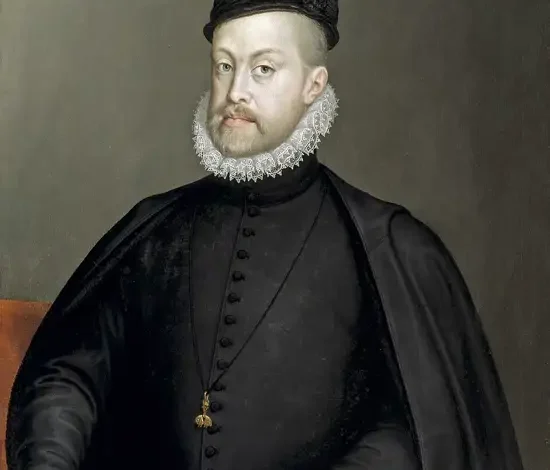
That monarch was Philip II (Felipe II), son of Emperor Charles V, whose reign left a profound mark on European history. In 1554, he married Queen Mary I of England (Mary I of England), known to history as ‘Bloody Mary’ for her brutal persecution of Protestants. The aim of this union was to strengthen the position of Catholicism in Europe. The wedding ceremony took place at Winchester Cathedral, after which Philip received the title of king consort of England and Ireland. He held this title for four years, until Mary’s death in 1558.
Despite his royal title, Philip’s power in England was highly restricted. Many English people viewed the union with suspicion, fearing the country might be drawn into the politics of the Spanish monarchy and its wars against France. Philip himself never mastered the English language and spent most of his time outside England, governing his vast dominions from Spain and the Netherlands.
The marriage contract imposed strict restrictions on the king consort. He could not make decisions without the queen’s consent, and foreigners could not hold government positions without parliamentary approval. Furthermore, if Mary died without heirs—which is what ultimately happened—Philip would automatically lose the English crown.
The alliance had international repercussions. The fears of the English court were justified: Philip used his influence to draw England into war with France. This resulted in the loss of Calais—the last English possession on the continent. This failure undermined Mary’s popularity and, consequently, Philip’s, who was always viewed with suspicion in Britain.
Mary’s death in 1558 put an end to this unusual union. Relations between England and Spain changed dramatically. Elizabeth I (Isabel I), Mary’s half-sister and successor, abandoned Catholic policies, returned the country to Protestantism, and became one of Philip II’s main adversaries.
Years later, the Spanish monarch attempted to invade England with his fleet, which became known in history as the ‘Invincible Armada’ (Armada Invencible). This ironic name was coined by English propagandists, reflecting the unfavorable memory Philip left on the British Isles. Thus, the king who had once ruled England became its sworn enemy. Today, this episode is often overlooked, overshadowed by the long history of Anglo-Spanish rivalry. However, it illustrates how a single dynastic marriage could briefly turn bitter enemies into allies.