Once the trouser suit was an undeniable prerogative of men’s wardrobes. Today, it has become a powerful statement and a symbol of female strength, independence, and refined taste. This transformation reflects not just fashion trends, but deeper social shifts that have influenced the role of women in society, especially within the halls of power and royal palaces. As we return to the workdays of 2025, it’s worth remembering how this garment has evolved from a forbidden fruit to the uniform of the world’s most influential people.
The first steps toward freedom
At the dawn of the 20th century, women’s fashion was synonymous with restrictions. Rigid corsets and cumbersome dresses limited movement, dictating not only style but also way of life. Everything changed when visionaries like Gabrielle Chanel appeared on the fashion scene. In 1913, she challenged traditional norms by offering women elegance without sacrifice. Coco radically redefined the female wardrobe, freeing it from uncomfortable elements. She popularized trousers and created her legendary tweed skirt suit, granting women a new level of freedom. This was nothing short of a revolution: adapting men’s patterns for women’s comfort and grace.
A revolution on the runway and in society
Several decades later, in 1966, the world was shaken by a new fashion revelation. Yves Saint Laurent introduced his iconic women’s tuxedo, ‘Le Smoking.’ This haute couture masterpiece unveiled an image of an elegant woman in an outfit previously considered strictly masculine. The event became a watershed moment in the history of fashion and women’s emancipation. The tuxedo was not just a bold design choice but a powerful symbol of a woman claiming her place in the sun. It quickly gained popularity, becoming a standard of power and sophistication.
Armor for the corporate world
The 1980s finally cemented the suit’s status as an instrument of influence. The ‘power suit,’ with its signature broad, accentuated shoulders, became the uniform for women executives making their way in a male-dominated corporate world. This look symbolized confidence and ambition. The suit was not just functional clothing, but a kind of armor that helped women feel more assured and assert themselves in a tough professional environment. The symbolism of independence also permeated popular culture. A vivid example is the Bermuda suit worn by Julia Roberts in the finale of ‘Pretty Woman’ (1990). This outfit visually highlighted that her character had taken control of her own destiny and was no longer dependent on anyone.
The suit as a political and royal language
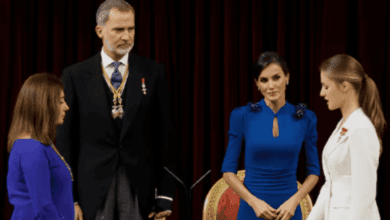
Появление костюма в гардеробах представительниц королевских семей стало еще одним шагом, ломающим традиции. Одной из первых этот бастион взяла принцесса Диана. Леди Ди создала неповторимый стиль, сочетавший в себе элегантность и силу, установив новые стандарты для женской одежды в монарших кругах. Каждый ее выход в костюме был посланием о современности, демонстрируя образ женщины XX века, способной гармонично сочетать традиции и перемены. В политике одежда также давно стала инструментом коммуникации. Дресс-код имеет четкую цель, и мода на протяжении всей истории использовала это для обсуждения социальных и культурных вопросов. Женщины-политики, от суфражисток до современных лидеров, таких как Джорджа Мелони, Камала Харрис или Хиллари Клинтон, используют свой внешний вид для трансляции уверенности и авторитета. Цвет наряда играет здесь не последнюю роль. Белый, например, ассоциируется с движением за избирательные права и стал символом чистоты и новых начинаний. Именно в белом костюме принцесса Леонор присягала на верность Конституции. Красный, который так любит королева Летисия, излучает энергию и страсть, усиливая присутствие и проецируя власть. А фиолетовый, исторически связанный с феминизмом, выбирают для демонстрации независимости и мудрости. Классические же серый, черный и темно-синий остаются универсальным языком серьезности и элегантности. Даже розовый цвет в строгом крое костюма создает интересный парадокс, сочетая властность силуэта с деликатностью и открытостью оттенка. Таким образом, женский гардероб постепенно впитал в себя элементы мужского, превратив их в символы собственной силы и свободы.