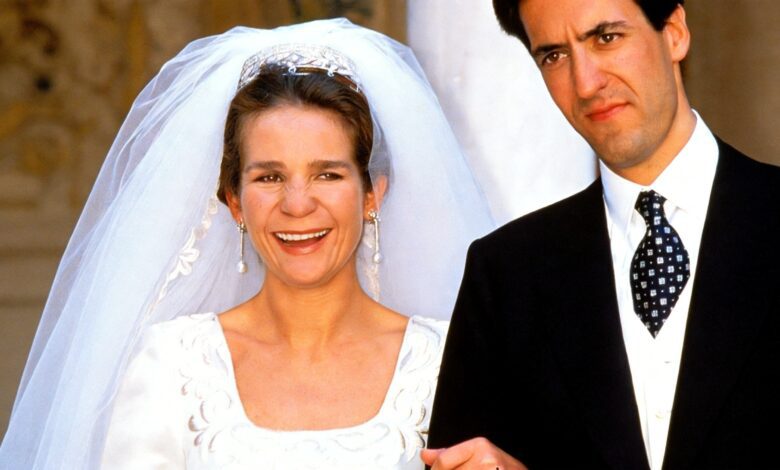
The wedding of Infanta Elena and Jaime de Marichalar, held on March 18, 1995, in Seville, was not only the first royal ceremony in Spain in nearly a century but also an event that changed public attitudes toward monarchical traditions. The choice of location was no coincidence: Seville became a symbol of respect for family roots and the bride’s personal preferences. This decision highlighted the link between the dynasty’s history and modern times, sparking widespread interest in the ceremony’s details.
Preparations for the wedding took place amid discussions within the royal family. The relationship between Infanta Elena and Jaime de Marichalar began in Paris, where they met during a French literature course. Despite Queen Sofia’s support and King Juan Carlos’s reserved response, the couple announced their engagement at the end of 1994. Before the celebration, the couple hosted a joint party with a traditional bullfight, an unusual step for members of the royal family.
Guests and atmosphere
On the day of the wedding, more than 1,500 guests arrived at the Cathedral of Santa María de la Sede, including representatives of 39 royal houses, politicians, aristocrats, and prominent figures. Among the guests were Felipe González, Rainier of Monaco, Charles of England, and Noor of Jordan. The presence of relatives from Greece and Bulgaria underscored the event’s international scale. The atmosphere in Seville was filled with anticipation and excitement, and the public’s attention was focused on every step of the ceremony’s participants.
One of the most talked-about moments was the groom’s entrance mishap: Jaime de Marichalar and his mother accidentally entered through the wrong door according to protocol, and had to walk past the crowd, greeting those gathered. This episode added an informal touch to the ceremony and became a topic of discussion in the media. Infanta Elena arrived accompanied by her father, who had his arm in a cast due to a recent injury. Her outfit, designed by Pedro Valverde, stood out for its elegance and highlighted the significance of the event.
Fashion and Tradition
The guests’ and press’s attention was drawn to the outfits of those invited. Queen Sofía chose a vibrant turquoise dress by Toni Benítez, while Infanta Cristina surprised the public with a folkloric look in a red dress and a traditional Spanish mantilla. Special mention was given to the elegance of Marie-Chantal Miller, wife of Prince Pavlos of Greece, who appeared in a dress by Valentino. These details became the focus of society columns and set new standards for future royal events.
There was another unexpected moment during the ceremony: Infanta Elena, visibly nervous, forgot to perform the traditional gesture of respect toward her father before saying “sí, quiero.” King Juan Carlos responded with humor, which only increased the public’s affection for the family. After the wedding, the long train of the dress had to be quickly removed so that the newlyweds could travel by carriage to the church of El Salvador, where the bride left her bouquet at her great-grandparents’ grave.
Festive Banquet and Life After the Wedding
The wedding dinner was held at the Reales Alcázares, where chef Rafael Juliá served guests dishes of sea bass with truffles, quail in cream sauce, and a dessert of coffee ice cream with almonds and caramel. The wedding cake was personally chosen by the Infanta. After the celebration, the couple set off to Australia for their honeymoon, then settled in Paris. They had two children: Felipe Juan Froilán and Victoria Federica. However, a few years later, following the Duke of Lugo’s serious illness, the couple announced their separation and subsequently divorced.
Interest in royal families and their private lives remains high. Analysis by russpain.com shows that attention to dynasties and their traditions is not waning, and details of monarchs’ personal lives attract as much interest as official events. In this context, publications about family conflicts and reconciliations, such as the piece on changes in the House of Alba, resonate with a wide audience.
Infanta Elena de Borbón holds a special place in Spain’s recent history. The eldest daughter of King Juan Carlos and Queen Sofía, she became the first member of the royal family in many years to marry within the country. Her life has been closely tied to significant social changes and evolving attitudes toward the monarchy. Events surrounding her wedding are still discussed as an example of blending tradition with new influences in the Spanish royal family.