The death of Princess Irene of Greece has sparked discussion not only about her life journey but also about the unexpected distribution of her estate. Contrary to expectations, her material assets turned out to be minimal, and the circle of heirs — quite limited. The focus was not on the amount inherited, but on the personal motives that guided Irene as she wrote her will.
With no children of her own, the closest heirs were believed to be her sister, Queen Sofía, her nieces and nephews, and their descendants. Among them were Irene Urdangarin and the royal daughters, Princess Leonor and Infanta Sofía. However, the usual logic of dividing assets in royal families did not apply in this case. Irene made her choice based on personal relationships and her own sense of family responsibility.
Origin of the estate
Irene of Greece’s financial situation developed under challenging circumstances. After the Greek royal family lost their property, they received compensation. Through the division of these assets, Irene’s brother Constantine received a significant amount — around 16 million euros. Irene herself received only 900,000 euros. Instead of spending it on luxury or investments, she used these funds to establish a charitable foundation.
Interestingly, part of this money was invested in buying cows, which Irina sent to India to help the local population. However, her good intentions ran into cultural differences: in India, cows are considered sacred animals and cannot be used for food. As a result, even these efforts to provide assistance did not yield the expected outcome.
Personal Motives
In her final years, Irina of Greece owned almost no personal property. Her living expenses were covered by the royal family’s budget. She was not interested in accumulating wealth and preferred to support her loved ones and engage in charity work. This is exactly why her will turned out to be so unusual.
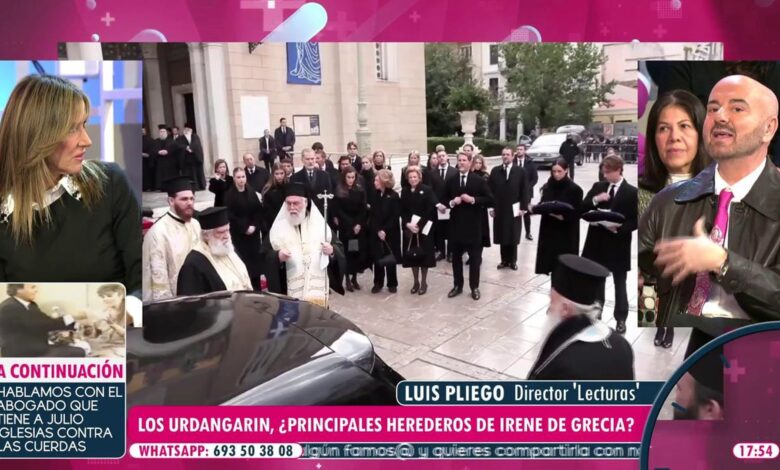
The most unexpected decision was naming Irina Urdangarin as the main heir—a goddaughter with whom Irina shared a particularly warm relationship. Meanwhile, Princess Leonor and Infanta Sofia were excluded from the inheritance. The reason is simple: they receive state support and enjoy financial stability, while Irina Urdangarin could not count on the same guarantees.
Symbols and Gestures
Particular attention was paid to the details of the farewell to Irina Griega. At the ceremony, it was Irina Urdangarin who carried the cushion with the late princess’s orders and medals, symbolizing their special bond. This gesture did not go unnoticed and was seen as confirmation that the choice of heir was driven not by formal protocol, but by genuine feelings and personal history.
This decision sparked considerable discussion in royal circles and among the public. Many had expected the inheritance to be divided according to tradition, but Irina Griega once again demonstrated her independent spirit and commitment to her principles.
RUSSPAIN reminds readers that Irina Griega was the younger sister of Queen Sofía of España and former King Konstantinos II of Greece. She was known for her modesty, charitable work, and lack of interest in material wealth. In recent years, Irina was actively involved in social initiatives and supported loved ones, remaining out of the spotlight of major royal events.