Cantabria, with its rugged mountains, lush valleys, and ancient paths, hides places where time seems to have stood still. In the most secluded corners of this region lie abandoned villages that serve as silent guardians of the past. Once full of life, these settlements have become ghostly landscapes, drawing travelers in with their mysterious atmosphere. We invite you to discover six of the most fascinating abandoned villages in Cantabria—each with its own unique story to tell.
Porcienda
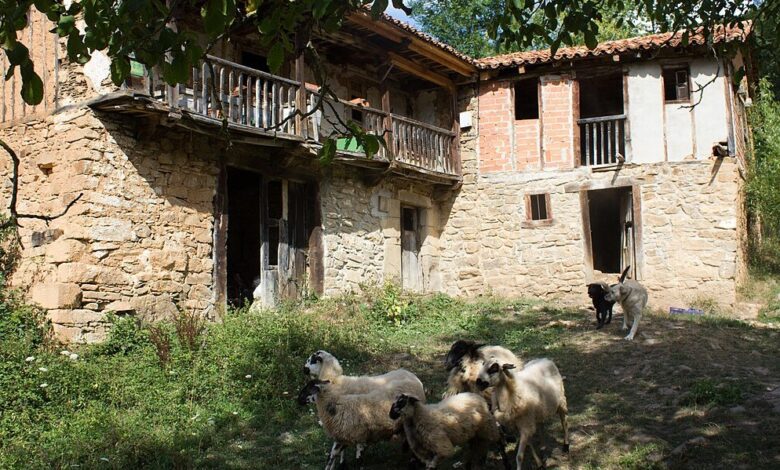
Nestled on the slopes of the Liébana valley is the tiny village of Porcienda. For decades, it has been uninhabited, yet its buildings remain a testament to traditional local architecture. The stone and wood houses, despite their decay, showcase centuries-old construction techniques. Among the ruins stands the chapel of Nuestra Señora de las Nieves—a modest but revered temple in the area that still brings together former residents and their descendants for the summer festival. In addition, Porcienda is located at the crossroads of historic pilgrim routes of the Camino de Santiago, routes that are now being actively restored.
Quintanasolmo
High up in the Valderredible valley, hidden deep within an oak forest, lies Quintanasolmo. For centuries, it was a small agricultural hub, its economy based on the cultivation of grain, potatoes, and sheep farming. The lives of its residents were closely connected with neighboring settlements. People would walk the trails linking their village with Polientes and other nearby towns. Relentless emigration gradually emptied the area, leaving behind only traces of a harsh and communal way of life.
Moroso
The village of Moroso, perched on an isolated hill amid dense forests, was inhabited until the mid-20th century. The last families endured tough conditions, trekking along winding old paths to reach nearby Valdeprado or Reocín de los Molinos. For centuries, this was a small rural community sustained by mountain agriculture, livestock breeding, and forestry. Its history is marked by disputes over pastures and stories of wolf raids that threatened the herds. Today, only silent ruins remain, where the outlines of former homes are barely discernible.
Montablis
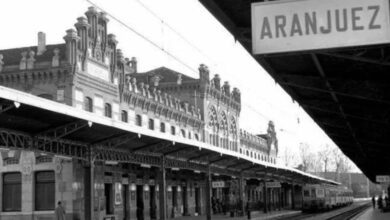
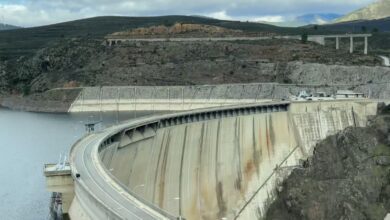
Located in the municipality of Bárcena de Pie de Concha, Montabliz is a site now completely engulfed by forest. Although it has long been uninhabited, the village’s name lives on thanks to the Montabliz viaduct—one of the greatest engineering feats along the A-67 highway. The village once had its own train station, the building of which still stands, though trains no longer stop there. The area is part of the Saja National Reserve, renowned for its rich natural beauty. Today, the village itself stands as a quiet monument to rural life in central Cantabria.
Somaconcha
Somaconcha is a small abandoned settlement in the municipality of Pesquera which, unlike many others, retains several buildings in good condition. Among them is a chapel that still shapes the character of the place. Despite having no residents, the village is not entirely lifeless thanks to its location at the beginning of the ancient Roman road of Blendaeus, one of the region’s best-preserved historical landmarks. The surroundings of Somaconcha are covered by dense oak and beech forests.
Villanueva
The story of Villanueva stands out from other abandoned villages in Cantabria. In the mid-20th century, much of it disappeared beneath the waters of the Ebro reservoir. The original settlement was almost completely submerged, but its most iconic symbol—the tower of the San Roque church—still rises above the water’s surface. Today, only a few people live in the new Villanueva, and scattered houses nestle between the reservoir shore, the highway, and the railway line. The present-day village coexists with the memory of its submerged predecessor.
Incidentally, the phenomenon of ‘Empty Spain’ (España Vaciada) is one of the country’s most pressing demographic issues. It has had a particularly strong impact in the northern regions, including Cantabria, where migration to large cities and economic shifts have left entire villages abandoned. In recent years, these places have seen growing interest from tourists and researchers eager to connect with a frozen past and witness unique architecture gradually yielding to the forces of nature.