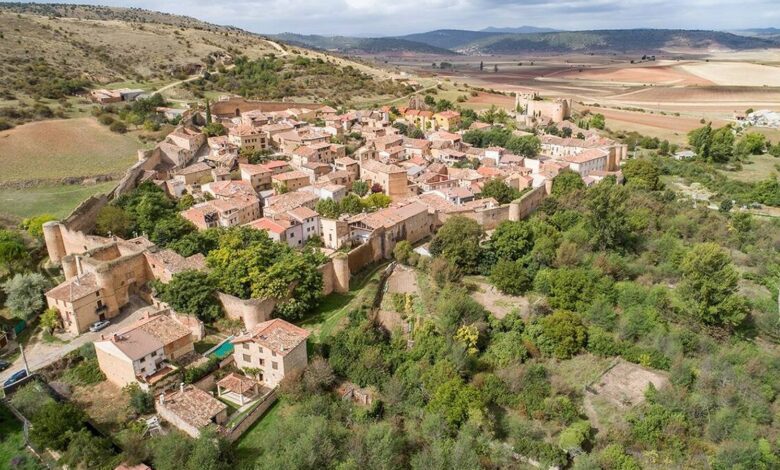
In the heart of Castilla-La Mancha, far from busy highways and tourist routes, lies a place seemingly untouched by modern times. Here, among hills and fields, stands a village where time appears to have stopped. Its residents live surrounded by walls built in the age of knights, with every stone bearing memories of events that shaped the region’s history.
Palazuelos — a small village hidden in the north of Guadalajara province, has become a true sensation among history lovers. Unlike most Spanish settlements, where old buildings stand alongside new construction, here not only the architecture but the very atmosphere of the Middle Ages has been preserved. Passing through its gates, visitors find themselves in a world where the noise of civilization gives way to silence, and every street corner reveals new details from the past.
A living fortress
The main pride of Palazuelos is its unique defensive system. The medieval wall, built between the 13th and 15th centuries, still completely encircles the village. Towers, crenelated walls, massive gates—these are not reconstructions but authentic elements that have survived through centuries. Such a level of preservation is rare even in Spain, a country rich in historical landmarks.
A walk along the fortress walls becomes a true journey through time. Here, you can imagine how residents defended their homes from raids, how guards watched over the surroundings from the towers, and how the gates were locked at night to secure the village. Unlike many other places where only ruins remain of past grandeur, Palazuelos presents a complete picture of medieval life.
Architectural harmony
The layout of the village deserves special attention. Unlike villages that expanded chaotically, Palazuelos was designed as a single entity during the reign of Alfonso VIII. The streets here are straight and logical, and the center of the village is dominated by a castle once owned by the influential Mendoza family. This fortress, built in the 15th century, may not impress with its size, but it stands out for its functionality and austere lines. It served not only as a symbol of power but also as a real stronghold of safety for local residents.
Inside the walls, old houses, stone-paved streets, fountains, and even the communal lavanderia where women washed clothes for centuries have been preserved. Every corner of the village tells its own story, evident in the building facades and decorative details. There is no room here for random buildings or modern alterations, which makes Palazuelos a true benchmark of historical authenticity.
The secret of survival
The fate of Palazuelos took an unusual turn. After losing its strategic importance and being bypassed by major trade routes, the village began to empty out. A mass exodus, particularly after the Civil War and during the urbanization period, left only a few families living here. However, it was precisely this demographic decline that saved the village from destructive redevelopment and helped preserve its appearance almost untouched.
Today, Palazuelos is not just an architectural monument but a living testament to how isolation and neglect can become the greatest allies of historical heritage. Tourists who come here notice a special atmosphere: there are no crowds, bustle, or noise; instead, you have the chance to feel like part of another era. Each visit turns into a personal discovery, and photos against the backdrop of the fortress walls become a rare collection of memories.
Inspiration for travelers
Interest in Spain’s forgotten corners grows every year. More and more people are seeking not only beaches and big cities, but also places where you can touch authentic history. Palazuelos has become one of the symbols of this trend, drawing attention not only from Spaniards but also from visitors from abroad. Guided tours are held here, themed festivals are organized, and local residents proudly share the story of their village’s past.
A trip to Palazuelos is a chance to see what life was like in Castilla-La Mancha centuries ago. Here, you can not only stroll through the streets but also discover the traditions, crafts, and daily life preserved thanks to the efforts of several generations. For many visitors, this becomes a true revelation and a reason to rethink their attitude towards lesser-known destinations.
Historical parallels
Spain is home to many places where the past comes to life before your eyes. For example, in Andalusia, there is a castle that has become a symbol of tragic events and inspired famous writers. Its walls have witnessed passions, betrayals, and dramatic outcomes, and tourists come here seeking both emotion and history. You can find out more about such unique spots on the pages of RUSSPAIN.COM, where the most unusual routes for history lovers are collected.
Palazuelos is not the only example of how small settlements can amaze with their heritage. Across different regions of the country, you’ll find villages where architecture, traditions, and the atmosphere of the past have survived against the odds. These places have become true gems for those who seek more than the standard tourist experience.
Palazuelos is not just a village, but a unique monument to an era when walls and towers were an integral part of daily life. Its history is closely linked to the Mendoza family, who played a significant role in the history of Castile. The castle, built in the 15th century, still stands as a symbol of power and resilience, although today it is privately owned and closed to visitors. Despite this, the village continues to attract researchers, architects, and travelers eager to connect with Spain’s genuine past. Thanks to the efforts of local residents and its protected status, Palazuelos has preserved its authenticity and remains one of the most striking examples of the country’s medieval heritage.