In the heart of Castilla y León, where the hills of El Bierzo meet ancient roads, stands a monastery that has not only survived a thousand years, but also witnessed the most turbulent events of Spain’s Middle Ages. Santa María de Carracedo is more than an architectural monument—it is a true symbol of endurance and spiritual strength. Its walls recall the flight of monks from Arab raids, the intrigues of royal courts, and changing eras, when power shifted from hand to hand and faith remained the only refuge.
At first glance, it seems as if this monastery has always been here, as if it sprang from the earth itself. But its story began at the end of the 10th century, when King Bermudo II decided to create a sanctuary for monks fleeing the devastating Moorish incursions. These lands were perilous at the time, and only under the crown’s protection could one hope for a peaceful existence. That’s why the monastery received generous endowments and was established under strict Benedictine rule, allowing it to endure during times of chaos and instability.
Nonetheless, even royal support could not save Carracedo from decline. By the mid-11th century, the monastery was on the brink of disappearance—its cells were emptying, and its walls began to crumble. But fate had other plans: in 1138, a community from Santa Marina de Valverde relocated here, marking the beginning of a new heyday. Thanks to the efforts of Infanta Sancha Raimúndez and the support of Pope Innocent II, the monastery became a center of immense spiritual and economic influence, extending its reach to dozens of other communities in León, Galicia, and Asturias.
An Age of Change
A turning point in the history of Santa María de Carracedo came in 1203, when the monastery officially joined the Cistercian order. This event not only altered its inner life but also influenced its architecture: strict Romanesque forms were complemented by Gothic and Cistercian elements, giving the complex a unique appearance. During these years, the monastery became a true spiritual and cultural center of the region, bustling with activity, chronicling events, and making crucial decisions for the entire area.
However, the trials did not end there. In the centuries that followed, Carracedo repeatedly suffered from fires, military invasions, and political upheavals. The Napoleonic Wars were particularly devastating, as the monastery was occupied by troops and partially destroyed. After the dissolution of the monastic orders in the 19th century, the building was abandoned and its grandeur faced the threat of complete disappearance.
Revival and the Present Day
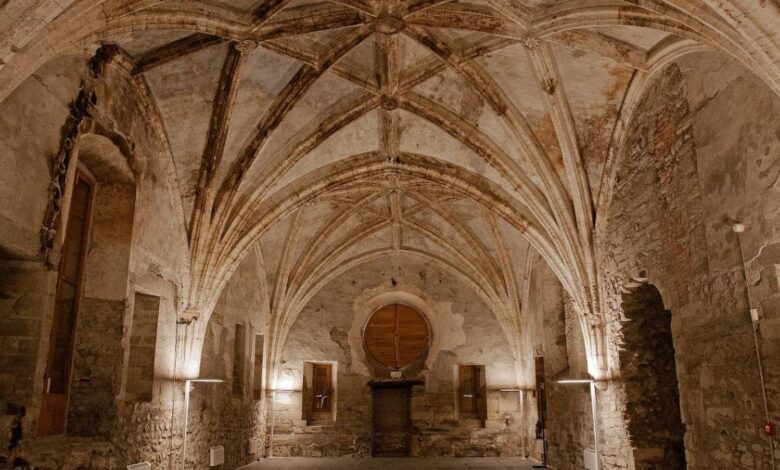
Only in the 20th century did a large-scale restoration begin, allowing Santa María de Carracedo to regain its former glory. Today, it is not just an open-air museum but a place where you can literally touch history. Visitors can stroll through the ancient cloister, peek into the chapter hall, or feel the atmosphere of the medieval refectory. Every stone here holds a secret, and the silence of the corridors seems to invite contemplation of the eternal.
What stands out most is the blend of architectural styles: Romanesque arches stand alongside Gothic windows, while austere Cistercian lines emphasize the monastery’s stark beauty. Over the centuries, the site sheltered not only monks but also ordinary people seeking refuge from wars and disasters. This unique layering makes Carracedo a monument that cannot be fully understood in a single visit.
A Place of Power
Today, Santa María de Carracedo is not just a cultural heritage site but also a popular destination for tourists and pilgrims. The monastery regularly hosts exhibitions, concerts, and themed events that revive long-forgotten traditions. Open to visitors year-round, its schedule changes with the seasons, giving everyone a chance to discover this remarkable place at the perfect time.
Yet Carracedo is far more than a museum. It is a living reminder of how faith and perseverance can overcome any trial. Its story mirrors that of Spain on a smaller scale, with all its tragedies, triumphs, and unexpected twists. Indifference has no place here: everyone who crosses the monastery’s threshold inevitably becomes part of this profound drama.
If you didn’t know, the Monasterio de Santa María de Carracedo is one of the most significant historic monasteries in the El Bierzo region. Founded in the 10th century, it was repeatedly rebuilt and expanded, reflecting changing eras and styles. Today the monastery is recognized as a cultural heritage site and welcomes everyone interested in Spain’s history, architecture, and spiritual traditions.