The question of how modern Spain relates to its past has once again taken center stage after the municipality of Alcantarilla (Murcia) decided not to revoke the city’s highest award granted to Francisco Franco in 1973. This decision could impact perceptions of historical memory and attitudes toward the dictatorship among the country’s population. The debate over the medal has sparked heated discussion about how laws on democratic memory should be interpreted and where the line lies between history and its reinterpretation.
Essence of the conflict
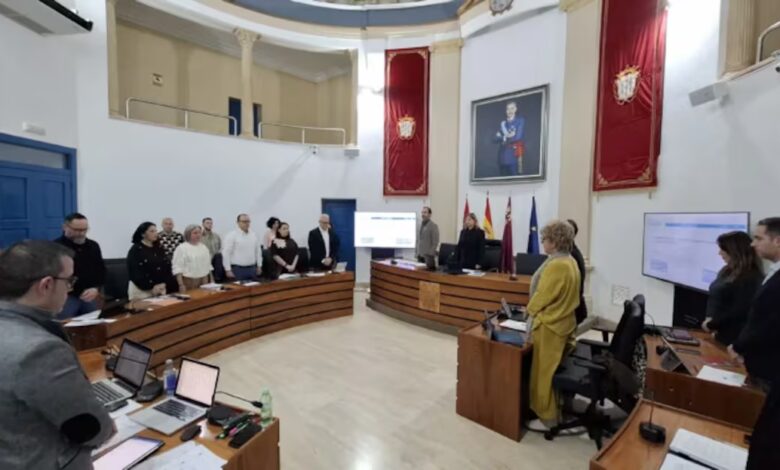
In the municipality of Alcantarilla, home to about 44,000 residents, the city council recently revisited the fate of the Medalla de Oro, awarded to Franco nearly half a century ago. Independent councilor Lara Hernández initiated the proposal to revoke the honor, citing provisions of the Democratic Memory Law. This law requires a review and annulment of awards that conflict with democratic values or glorify the dictatorship.
However, representatives of the Partido Popular (PP), who hold an absolute majority in the council, refused to support the initiative. In their view, keeping the medal does not violate the law, as the awarding was not directly tied to glorifying Franco’s regime. A Vox representative also backed this stance, though his vote was not decisive.
Arguments from both sides
Lara Hernández insisted that the issue was not ideological, but rather about the need to comply with current legislation. She reminded that the law demands the revocation of any awards that could be interpreted as supporting a dictatorship or military coup. For her, keeping the medal is not just a symbol, but a real barrier to acknowledging historical mistakes and advancing democratic values.
In response, official PP spokesperson Luis Salinas stated that awarding the medal in 1973 was not an act of glorifying the dictatorship. He referred to the council meeting protocol from that time, which noted that the award was given for ‘service to the country’ and ‘ensuring peace and unity.’ According to him, the law does not require the automatic withdrawal of all awards issued during the dictatorship, only those that can now be interpreted as promoting the regime.
Discussion details
During the discussion, Vox representatives emphasized that most city residents are not even aware this medal exists. In their view, if it were about a monument or a street name, the situation would be different. However, according to them, keeping the award does not lead to the popularization of Francoism.
Lara Hernández, on the other hand, believes that such decisions are attempts to ‘whitewash’ the dictatorship. She stressed that even if residents do not know about the medal, the very fact of its existence and official recognition remains a problem. In her words, it is impossible to build a democracy while continuing to honor dictators.
Historical context
In December 1973, the municipal council of Alcantarilla decided to award the Medalla de Oro to Franco and the then Prince Juan Carlos de Borbón. The meeting minutes stated that Franco had “dedicated his life to the good of the country” and “ensured peace and prosperity.” Today, such wording sparks debate over how well it aligns with modern views on democracy and human rights.
Supporters of revoking the award believe that such phrases and honors should not be preserved in contemporary Spain. Opponents argue that revisiting history should not become a tool for political conflict.
Public reaction
The decision by the Alcantarilla municipality has stirred broad public debate. For some, it’s evidence that Spain is still not ready to completely renounce symbols of the dictatorship. For others, it’s an example of how memory laws can be used for political disputes.
For now, most members of the city council continue to support keeping the award. The question of how Spain will address its past remains unresolved and, apparently, will continue to fuel heated debate.