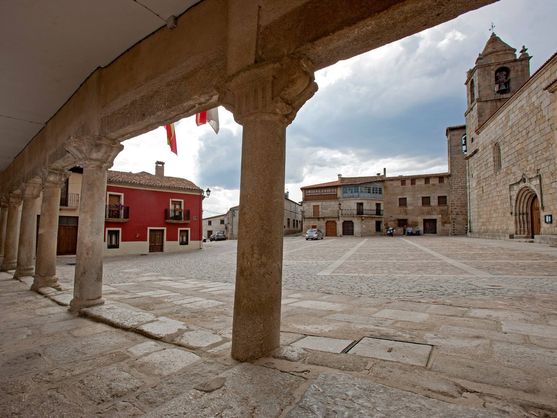
In the far west of the province of Salamanca, where Spanish land borders Portugal, there is a remarkable settlement lost in time. San Felices de los Gallegos is not just a point on the map, but a true portal to the past. Here, the frontier spirit, which has shaped local life for centuries, can be felt in every cobblestone street and in the solemn silence of ancient defensive structures. A stroll through this town offers a rare chance to hear echoes of bygone eras, when the fate of kingdoms was decided in fortified enclaves like this one.
The settlement is part of the famous Arribes Wine Route, but it is renowned above all for its fortification heritage. Back in the Middle Ages, the Portuguese monarch Dinis I, recognizing the strategic significance of this area, ordered the construction of an impregnable fortress and surrounded it with a ring of walls, fragments of which can still be seen today. Thanks to its unique frontier layout and cultural value, the entire historic center is officially recognized as a national heritage site.
Behind the massive gates, travelers are greeted by a wealth of architectural treasures. The church of Nuestra Señora entre Dos Álamos impresses with its blend of Romanesque, Gothic, and Renaissance features. The 16th-century town hall stands next to family mansions adorned with coats of arms, reminders of the former glory of Castilian nobility. Nearby are the Monastery of the Passion, with its elegant granite Renaissance portal, and the Rosario Chapel, founded in the 18th century. This ensemble reflects centuries of turbulent history and the key role the town played in the dialogue and rivalry between two powers.
The heart of the town is its castle, whose history spans more than seven centuries. It has withstood countless sieges, pillaging, and even an astonishing attempt to dismantle it stone by stone for transport to the United States. Built at the end of the 13th century by order of the Portuguese ruler, the castle was part of a complex defensive system. This included the Old Wall with its square towers from the 12th and 13th centuries, the main keep rebuilt in 1476, and a later star-shaped bastion from the 18th century. Over its long history, the fort passed from the Portuguese to the Castilians in 1326, belonged to the Dukes of Alba, and served as barracks during the War of Independence.
But San Felices is not a frozen museum. Locals carefully preserve their identity. The festival “El Noveno,” recognized as an event of regional tourist interest, is dedicated to the abolition of an ancient feudal tax once paid by the townspeople to the House of Alba. Today, visitors can leisurely stroll its streets, marvel at the strength of its fortifications, and enjoy the local cuisine. The highlights here are dishes made from Morucha beef, Churro lamb, and of course, the robust wines of the Arribes region. This border town, balancing between its past, traditions, and nature, remains one of Salamanca’s most valuable yet still undiscovered secrets.