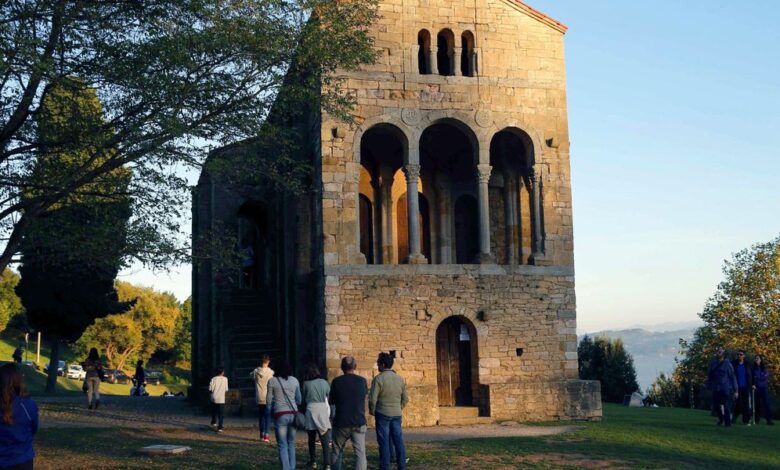
On the green slopes of Mount Naranco, towering above Oviedo, stands a stone sentinel that has survived twelve centuries. This is not just an ancient church, but something much more—a preserved fragment of a royal palace, a witness to the birth and flourishing of the Asturian Kingdom. Far from the bustling tourist routes leading to the grand cathedrals and palaces of the south, this structure offers a different journey—deep into the past, to an era when a new Christian world was being forged in the north of the Iberian Peninsula. Its austere yet elegant forms preserve the memory of kings, battles, and the exquisite art that seemed impossible in those turbulent times.
Originally, this building was not intended for prayer. In the mid-9th century, the powerful monarch Ramiro I ordered the construction of a countryside palace complex here, meant for leisure and official receptions. What we see today was its main hall, the aula regia. Imagine banquets of the nobility, the sounds of music, and important state decisions made within these walls. Only later, due to historical circumstances that remain somewhat unclear, was this secular structure consecrated as a church dedicated to the Virgin Mary. This transformation ultimately saved it from destruction, allowing it to reach us in an almost pristine state. The altar inscription, dated June 23, 848, serves as undeniable evidence of this change.
The building’s design impresses with its logic and harmony. Rectangular in plan, it has two floors. The lower one, smaller and vaulted, likely served as a crypt or chapel. The upper floor, filled with light, was the main hall. Access to it was via external staircases, which lent the entire complex a monumental character. Inside, the eye is drawn to graceful arches resting on columns adorned with capitals that bear echoes of the Corinthian order. The walls are decorated with thirty-six stone medallions featuring images of animals and people, whose identities still spark debate among historians. This is a unique synthesis of Late Roman, Visigothic, and even Byzantine influences, forming the distinctive Asturian style. From the open gallery-viewpoints at each end of the building, there is a breathtaking view of the valley, making it clear why the king chose this spot for his residence.
Reaching this historic treasure is easy. A paved road leads here from the center of Oviedo, and for those who prefer public transportation, city bus A2 is available. There is free parking next to the monument. All visits are guided, with a guide helping to reveal the secrets of the site. The exception is Monday, when you can explore the building independently and free of charge. Individual tourists do not need to book in advance, but groups of twenty or more should make a reservation. Tickets cost 5 euros, with discounts available. The tour lasts about forty minutes, and the visitor limit of 25 people per group creates an intimate atmosphere, allowing you to truly experience the spirit of history. Opening hours vary by season, so it’s recommended to check the current schedule before your visit.
Santa María del Naranco is more than just a standalone monument. It is a key part of the ensemble of pre-Romanesque churches of Asturias, recognized as a World Heritage Site. Together with neighboring San Miguel de Lillo, San Julián de los Prados, and the Holy Chamber of the Oviedo Cathedral, it forms a unique cultural landscape. By visiting, travelers come into contact with living history, sensing both the power and refinement of a distant era. This is a quiet gem whose brilliance does not require bright lights or crowds to be noticed.