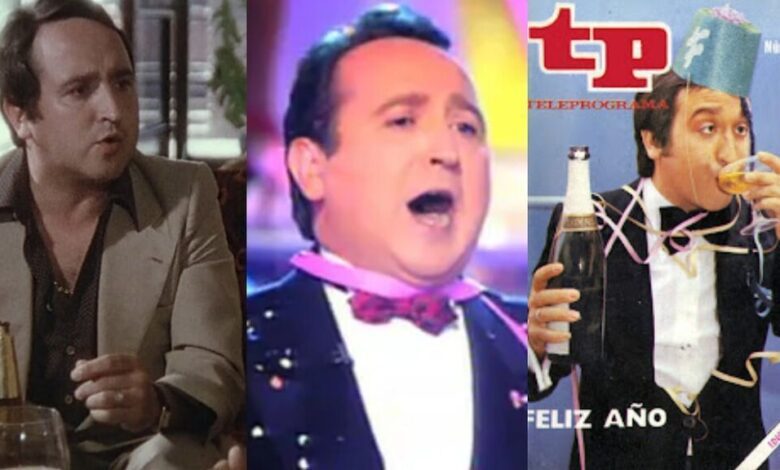
The passing of Fernando Esteso became a symbolic milestone for an entire generation of artists whose names were inextricably linked with Spain’s era of change. His death not only sparked a wave of memories, but also reignited questions about how quickly society’s attitude toward its icons can shift. For many fans, Esteso was more than just an actor—he embodied a time when Spanish cinema and television were undergoing a true revolution.
In the last years of his life, the artist ended up in the shadows despite his enormous contribution to the country’s culture. His name was rarely heard at award ceremonies, and recognition came too late. Nevertheless, his films and songs live on, and the characters he created on screen still bring smiles and nostalgia to millions of viewers.
Highs and lows
Fernando Esteso rose to fame as a master of comedy, portraying the quintessential Spaniard with provincial charm and boldness. His roles in cult classics like “Los Bingueros,” “Padre no hay más que dos,” and “Yo hice a Roque III” became symbols of an era when the country was just beginning to embrace new freedoms. In interviews, he often stressed that the phenomenon of “destape” was more a satire of male weaknesses than an expression of sexism, and it was precisely this that made his characters so relatable to audiences.
However, behind the facade of success lay serious challenges. After a meteoric rise in the 1970s and 80s, when Esteso was one of the most sought-after actors, he faced a period of obscurity. Changing audience tastes and new industry trends left him without roles, while his attempts to reinvent himself in other spheres—from the restaurant business to managing motorcycle racers—ended in financial setbacks and personal crises.
New horizons
Despite these difficulties, Esteso never disappeared from the screen entirely. From time to time, he appeared in guest roles, reminding new generations of his presence. A special chapter of his later career was his role in the popular TV series “La Que Se Avecina”, where he played himself. This unexpected cameo sparked widespread discussion and brought him a new wave of popularity among young people, for whom his name had previously been just a part of history.
Another memorable moment was the rerecording of the hit “La Ramona” in a duet with King África. Once an essential part of Spanish celebrations, the song returned to parties and social networks, showcasing once again how easily Esteso could connect with audiences of all ages.
Personal drama
Offstage, Fernando Esteso’s life was full of contradictions. His marriage to María José Egea lasted two decades and ended in separation, but years later the former spouses were able to reconcile. The death of María José from cancer in 2003 dealt the actor a heavy blow, which he endured away from the media spotlight. His two children, Fernando and Arancha, remained his main support through all the hardships.
The period following his separation from his wife marked the beginning of a personal and professional crisis. Esteso did not hide that during those years he fell into bad habits—alcohol, gambling, and even drugs became part of his daily life. These candid details, revealed in later interviews, only increased interest in his story and evoked sympathy among fans.
Legacy and remembrance
Today, the name Fernando Esteso is once again prominent, but in a different context. His passing has prompted a reevaluation of the role played by ‘destape’ era artists in Spanish cultural history. Many colleagues and critics note that Esteso’s contribution to the development of national cinema and television was underestimated during his lifetime. Despite their simplicity and humor, his films captured the complex changes taking place in society and helped people face transitions with a smile.
His memory endures not only in archival footage and old posters, but also in the hearts of those who grew up with his jokes and songs. For some, he will always be the cheerful hero of comedies; for others, a symbol of a bygone era, filled with contradictions and hope.
Fernando Esteso is a figure without whom Spanish popular culture of the late 20th century would be unimaginable. His journey is a story of ups and downs, of a struggle for recognition, and of how easily one can be forgotten despite past fame. His life and work remain topics of debate and discussion, and the memory of him continues to unite generations.
Fernando Esteso was born in Zaragoza and dreamed of the stage from an early age. He made his debut in theater, but true fame came with cinema and television. Alongside Andrés Pajares, he became the face of the comedy wave that swept Spain after the dictatorship. In addition to his acting career, Esteso also established himself as a singer and television host, with his songs still played at celebrations today. Despite a challenging path, he managed to leave a lasting mark in history and become a true legend for several generations of Spaniards.