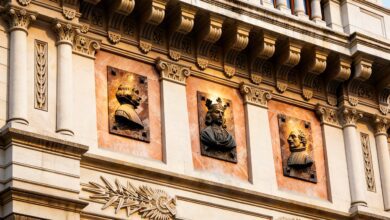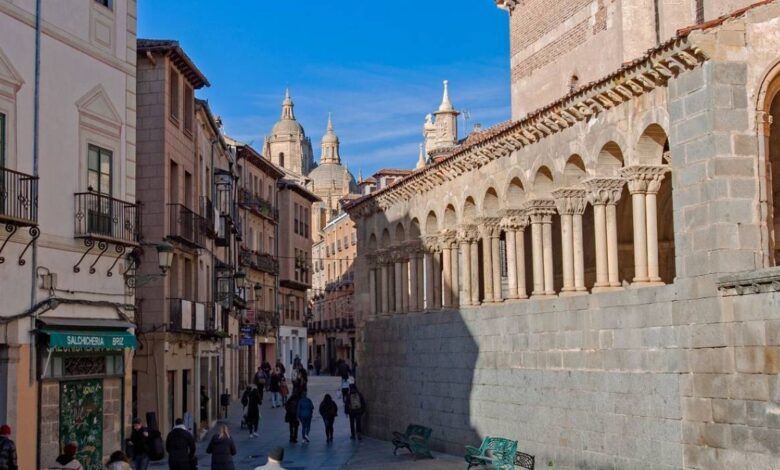
Segovia is not just another stop on Spain’s tourist map. This city, seemingly frozen in time, continues to shape how the country’s history and culture are perceived. Its medieval center, recognized as a UNESCO World Heritage site, has retained both its integrity and authenticity. Here, every stone, every street, and every tower is an integral part of a living organism, where the past has not given way to the present, but has become its foundation.
Unlike many other historic cities, Segovia does not need comparison to Ávila or Santiago de Compostela. Its uniqueness lies in the harmony between architecture, landscape, and atmosphere. The city does not try to appear ancient—it simply is. Strolling through its narrow streets, it’s impossible not to feel how centuries have replaced one another here, leaving behind not ruins, but the vibrant fabric of city life.
Architectural ensemble
Segovia’s main pride is its urban ensemble, where every element plays its part. Massive walls, erected back in the Middle Ages, still outline the old city’s boundaries. Inside lies a labyrinth of squares, churches, palaces, and residential houses that have preserved their appearance over centuries. There is no place here for chaotic construction or faceless new buildings: everything follows a strict logic and historical continuity.
A special place is held by the famous Roman aqueduct. Its granite arches, built without a single gram of mortar, still amaze the imagination. This is not just an ancient monument, but a symbol of engineering thought that shaped the city’s development and became its unofficial emblem. The aqueduct not only connects different eras but also reminds us that Segovia has always stood at the crossroads of major routes and events.
Fortress on the Rock
Rising on one edge of the historic center is the Alcázar—a fortress that appears to grow out of the rock itself. Its silhouette, with sharp towers and steep rooftops, is visible from afar and immediately brings to mind chivalric legends. But behind its fairy-tale appearance lies a harsh reality: the Alcázar was not just a royal residence, but a strategic stronghold where decisions were made that shaped the country’s destiny.
Inside the fortress, halls have been preserved where affairs of state once took place, and observation decks offer panoramic views of the surroundings. Here, it is easy to imagine how in different eras the city prepared for defense or welcomed important guests. The Alcázar is not a museum, but a living part of city life where history continues every day.
The Heart of the City
Segovia’s central square is graced by another architectural masterpiece—the cathedral known as the ‘Lady of Cathedrals.’ Its graceful lines and pale stone set the building apart from other Gothic churches in Spain. Built in the 16th century, the cathedral became a symbol of the transition from Gothic to Renaissance, while preserving its solemnity and grandeur.
The cathedral tower is visible from almost anywhere in the old town, serving as a landmark for locals and visitors alike. Inside, spacious naves, stained glass windows, and an altar still host regular services. The cathedral is not only an architectural centerpiece but also a spiritual hub, bringing together generations of residents.
A city made for strolling
Segovia is the perfect destination for those who appreciate leisurely walks and a cozy ambiance. You can spend hours wandering the cobbled streets, peeking into historic courtyards, and soaking in the views over the Eresma and Clamores valleys. Every path reveals something new: from an ancient synagogue or an old city tower to a charming café in a house with a story.
The views from the fortress walls and observation decks are especially striking. From here, the city looks like a toy, with surrounding hills and rivers forming a grand backdrop. But descend to the streets, and Segovia turns back into a living place where past and present are inseparable.
A sense of continuity
In the article about a medieval castle in Andalusia, we discussed how architecture and history shape the unique face of Spanish cities. There, it was about passions, intrigues, and destinies that left their mark on the fortress walls. In Segovia, the past is revealed differently: here, it is calm confidence and respect for heritage instead of drama. To learn more about how tragic events and legends shape a city’s tourist appeal, see the publication on the castle in Andalusia.
Segovia does not offer ready-made routes or standard entertainments. Its main attraction is the opportunity to feel like a part of history, rather than just an observer. Here, everyone can find their own corner, their own story, and their own perspective on the past.
The city lives not only through its monuments but also through the people who continue its traditions, maintain order, and remain open to new ideas. Segovia is an example of how to preserve uniqueness without locking oneself in the past, but by making it part of the present.
Segovia is a city where history has not ended, but continues every day. Its streets, fortresses, and cathedrals are not just landmarks but evidence that respect for the past can shape the future. There is no place here for hustle or haste: only time that flows differently and an atmosphere that cannot be faked.
The Alcázar of Segovia is one of the most recognizable fortresses in Spain, built on a rocky promontory at the confluence of two rivers. Its history spans several centuries: first as a Roman stronghold, then as a residence for Castilian monarchs and a military garrison. At various times, fateful decisions were made here, and its architecture changed according to the era and the rulers’ tastes. Today, the Alcázar is open to visitors, preserving the atmosphere of medieval power and grandeur. Its towers and halls have become a symbol not only of Segovia, but of Spanish history as a whole.