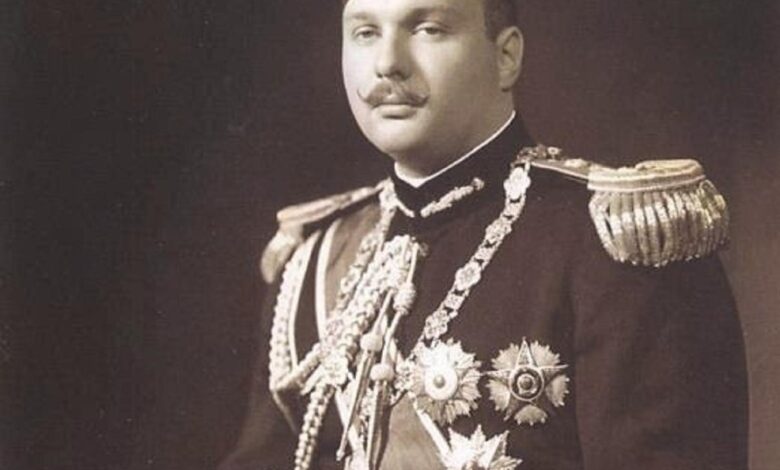
The life story of Egypt’s King Farouk is a remarkable tale of dizzying ascent and devastating downfall. He ascended the throne as a teenager, adored by his people, but ended his days in exile—a corpulent, ailing, and abandoned man, collapsing after a lavish dinner in a Roman restaurant with a revolver in his pocket.
The Nation’s Hope
Farouk was born in Cairo on February 11, 1920, into the family of reigning monarch Fuad I. After gaining independence from British influence in 1922, Egypt became a kingdom, and the heir to the throne was groomed from a young age for a great mission. The crown was placed upon his head in 1936, when he was just sixteen. Egyptians were elated: the handsome, athletic youth personified the dawn of a new era for the country. His childhood was spent in the “golden cage” of Cairo’s Koubbeh Palace, where his father sought to shield him from intrigue and insisted on perfect mastery of the Arabic language. Educated at the prestigious Eton in England, he remained, nevertheless, under the constant watch of British agents. In 1937, as he took the oath in parliament, the young monarch, gracefully greeting the crowds from a luxurious carriage, seemed the embodiment of every hope. No one doubted that he would be the one to free Egypt from foreign interference and secure a decent life for his people.
At first, Farouk met expectations. He initiated significant reforms, including land redistribution and the establishment of a public healthcare system. As a devout ruler, he pursued a decisive pro-Arab policy, opposing both the British and the secular Wafd party. However, his reign coincided with an extremely unstable period, overlapping with the start of World War II and a surge in nationalist sentiment. The young king, raised in European traditions, had to confront not only external challenges but internal ones as well. The dynasty, which had ruled since 1805, was torn by infighting, and corruption within the government reached alarming levels. Despite all these difficulties, the people continued to believe in their young leader.
A fatal turning point
A cruel twist of fate changed everything in 1943. While driving a Mercedes gifted by Hitler for his wedding, Farouk was involved in a horrific accident, crashing into a British military truck. This happened on November 6, and although doctors managed to save his life, he left the hospital a completely different man. Everything changed: his appearance, personality, and leadership style. The king rapidly gained weight, his appetite became excessive, and his interest in state affairs gradually faded. Rumors spread about a plot by the British or his rival, Khedive Abbas II. The severity of his injuries was officially concealed, but the consequences proved disastrous for the 23-year-old monarch. Historians believe that undiagnosed complications from the accident could have been the underlying cause of his personality changes and his long, painful decline.
His family was the first to notice the alarming transformation that was undermining his authority and strength. He developed a passion for luxury and began collecting extravagant items, and his numerous affairs gave him a reputation as a playboy. An even stranger trait emerged—kleptomania. Some subjects refused to believe what was happening, preferring to think that their real king had been kidnapped and replaced by a double. He became sullen and his behavior turned provocative, to the point that at official receptions he could throw ice cubes into ladies’ necklines. Fits of anger became more frequent. Even his own mother turned away from him, and his family lost all respect for him.
The Fall of the ‘Beloved’ Monarch
His personal life was also falling apart. His marriage to Queen Farida ended in divorce. In 1948, he divorced her on the grounds that she had given him only daughters but no heir, which caused public discontent. In 1951 he remarried, this time to Narriman Sadek, who gave birth to a son, Ahmed Fouad, in February 1952. But by then, neither his reputation nor his throne could be saved. On July 23, 1952, following a coup d’état led by the ‘Free Officers’ headed by Gamal Abdel Nasser, Farouk was forced to abdicate in favor of his young son. Fouad II’s reign lasted less than a year, after which the monarchy in Egypt was abolished for good. The last image seared into the memories of Egyptians was of a bloated, balding, overweight man in a naval officer’s uniform and dark glasses, silently walking toward the port of Alexandria.
Farouk went into exile aboard the royal yacht Mahroussa. His journey took him to Monaco, then Capri, and finally Rome, where he settled. His life ended on March 18, 1965. After finishing dinner within minutes at a restaurant on the outskirts of Rome, the 45-year-old former monarch suddenly collapsed onto the table. The official cause was listed as a heart attack, but in Egypt, persistent rumors circulated that he had been poisoned on Nasser’s orders. The truth was never established—the autopsy was never performed. That evening, he was accompanied by a young blonde woman, and in his pockets, besides several thousand lire, were found a revolver and an ID card listing his occupation as “rentier.”