Kathleen Kennedy’s life became an example of how personal choices can change not only an individual’s fate but also shape the perception of an entire dynasty. Her decisions, made against her family’s wishes, triggered a series of tragedies that still spark debate and discussion today. Kathleen’s story is more than just a tale of love and loss—it’s a vivid illustration of how the weight of tradition and expectations can break even the strongest among us.
Born in 1920 to Joseph and Rose Kennedy, Kathleen grew up surrounded by attention and care. Unlike her brothers, she had no aspirations for a political career, but she enjoyed all the privileges her status afforded. Kathleen spent her childhood in England, where her father served as ambassador. She quickly became part of high society, mingled with the British aristocracy, and was even recognized as one of the most dazzling debutantes of her generation. However, the outbreak of World War II forced the family to return to the United States, marking the first serious challenge for the young woman.
Despite returning to America, Kathleen could not forget England or her first love—William Cavendish, heir to the title Duke of Devonshire. Kathleen’s parents were firmly opposed to her marrying an Anglican, which went against their Catholic beliefs. Nevertheless, Kathleen stood her ground and married Cavendish in 1944. Of her entire family, only her older brother Joseph attended the ceremony. Just a few months after the wedding, Joseph died in a plane crash, and soon after William himself was killed at the front in France. Kathleen was widowed at 24 but did not let these tragedies break her spirit.
A second chance at happiness
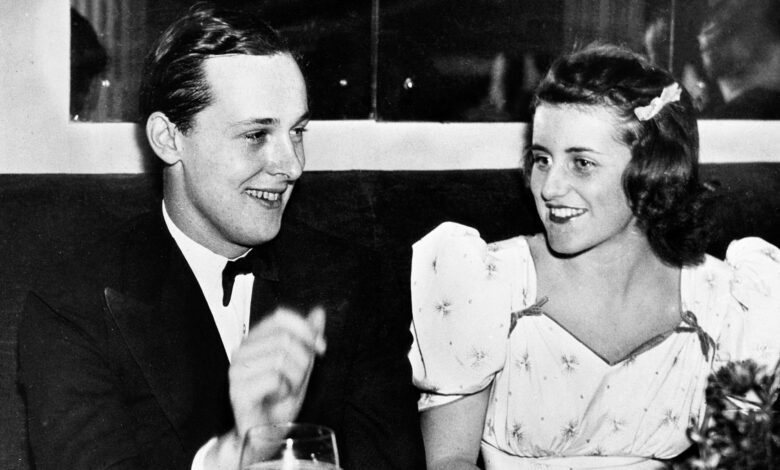
After her husband’s death, Kathleen returned to London’s social scene, where she quickly became one of its most prominent figures. During this period, she met Peter Fitzwilliam, the eighth Earl Fitzwilliam. Their relationship developed rapidly but once again met with fierce opposition from the Kennedy family. Kathleen’s mother threatened to withdraw her support if she decided to marry Fitzwilliam. Despite the threats, Kathleen had no intention of backing down. She arranged to meet her father in Paris, hoping to persuade him to reconsider.
On May 13, 1948, Kathleen and Fitzwilliam boarded a small plane to France. The flight took place in challenging weather, and soon after takeoff, the aircraft flew into a thunderstorm. An hour later, contact with the crew was lost, and not long after, the wreckage was found in a ravine. Everyone on board, including Kathleen, died. She was only 28 years old. Only her father attended the funeral; her mother refused to come. This tragedy once again underscored how severe the consequences of family conflict and the pressure of tradition can be.
Consequences for the family
Kathleen’s death was a blow to the entire Kennedy family. Her brother John, the future U.S. president, was so devastated that he could not attend the funeral. In her memory, he named his daughter after Kathleen, and the university where family members studied established a sports hall bearing her name. Despite all her trials, Kathleen remains remembered as a woman who had the courage to challenge the system in pursuit of her own happiness.
The story of Kathleen Kennedy is not just a tale of personal tragedy, but also an example of how internal conflicts and family pressure can lead to irreparable consequences. Her life and death continue to evoke interest and sympathy, and her actions have become a symbol of the struggle for the right to choose one’s own path.
Kathleen Kennedy, known as “Kick,” was one of the most remarkable members of the Kennedy family. Her independence and desire for freedom made her a standout figure not only in the United States but also in British society. Despite her tragic fate, the memory of her lives on thanks to acts that changed attitudes toward tradition even within the most conservative circles. Her story serves as a reminder of the price of personal choice and how difficult it can be to go against established rules.