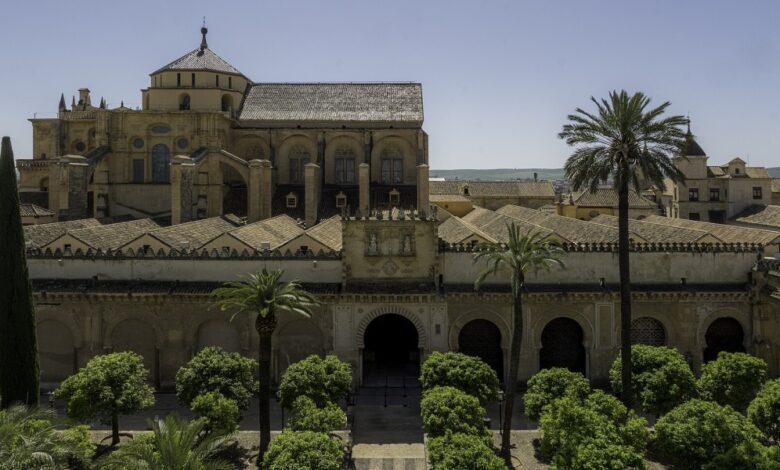
The name Córdoba is more than just a geographic label — it’s a key to understanding the complex history of southern Spain. Anyone who has ever walked its streets senses that the past hasn’t faded here, but lives side by side with the present. The question of the city’s name origin still sparks heated debate, as it conceals not just ancient peoples, but entire eras that have shaped the region’s identity.
A city that grew on the banks of the Guadalquivir, Córdoba has always been a prize for conquerors and merchants. Its strategic position turned it into a cultural magnet whose legacy can still be seen in its architecture and traditions. Yet it’s the city’s very name that remains a true mystery—unsolved for more than two thousand years.
Ancient roots
The first settlements on the site of modern Córdoba appeared long before the arrival of the Roman legions. The Turdetani lived here—descendants of the enigmatic Tartessians, whose culture is still shrouded in mystery. Their language and customs have nearly vanished, but some researchers believe they may have given the city its first name. The Latin Corduba is thought to be merely the Roman interpretation of an ancient toponym, which may have meant “elevation” or “place by the river.”
However, not everyone agrees with this explanation. Some archaeologists and linguists point to the possible influence of the Phoenicians, who actively traded in the south of the Iberian Peninsula. Their language had the word ‘Kart,’ which translates as ‘city.’ This theory seems tempting, since the Phoenicians founded Carthage and other major cities, but there is still no direct evidence of their presence in Cordoba.
The transformation of the name
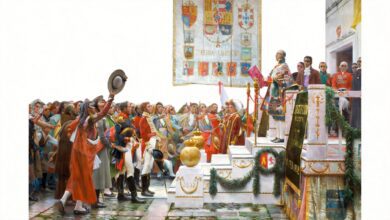
Over time, Cordoba changed its name more than once, reflecting shifts in rule and cultural influences. After the Roman conquest, the city became known as Corduba, and during the era of the Empire it gained the status of Colonia Patricia Corduba. The Visigoths called it Cordova, and with the arrival of the Arabs, it became Qurtuba—one of the most important centers of Muslim Spain.
Each new power not only rebuilt the city but also altered its name, emphasizing its own importance. After the Reconquista, the modern spelling—Cordoba—became established. This name has become a symbol of the city’s resilience and ability to change while preserving its uniqueness.
A name that crossed the ocean
Cordoba is not the only city with this name. Several cities called Cordoba appeared in the New World: in Argentina, Mexico, Colombia, Venezuela, and even in the United States. Spanish conquistadors, inspired by the glory of the Andalusian capital, named new settlements after their hometown. In Latin America, Cordoba became not only the name of cities but also a symbol of cultural continuity.
Even the currency of Nicaragua is named the Córdoba, highlighting the influence of Spanish history on the identity of entire countries. In each of these cases, the city’s name has become a link between the Old and New Worlds, serving as a reminder of roots and traditions.
Modern life
Today, Córdoba is a city where past and present intertwine at every turn. Here, you can find ancient walls, Roman bridges, and Arab arches, and just around the corner—modern universities and cultural centers. Life in Córdoba is a constant dialogue with history, which can be felt even in everyday details: in festivals, cuisine, and street conversations.
The city does not remain frozen in the past but is actively evolving, while maintaining respect for its origins. Tourism, education, and new technologies blend harmoniously with traditions that make Córdoba recognizable and unique.
Córdoba is not just about architectural monuments and old streets. It is a city that has survived the rise and fall of empires, religions, and cultures, all while preserving its soul. Its name is a reminder that history does not always provide clear answers and sometimes leaves more questions than solutions.
Córdoba is one of the oldest cities in Spain, boasting a history that spans more than two thousand years. Over the centuries, it served as the capital of a Roman province, the center of the Visigothic kingdom, and the heart of Muslim Andalusia. In the 10th century, the city became the largest cultural and scientific hub in Europe, home to renowned philosophers, poets, and scholars. Today, Córdoba is famous for its landmarks, with the Mezquita standing out as a unique example of blended architectural styles. The city continues to attract tourists and researchers alike, remaining a symbol of Spain’s diversity and historical depth.