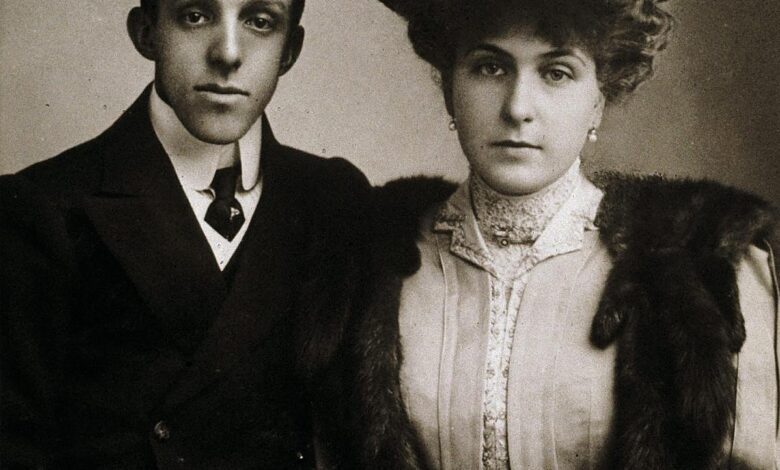
The events of 1935 became not only a test of endurance for the Spanish royal family, but also a turning point where personal destinies were closely intertwined with the country’s history. Forced exile in Italy did not prevent three children of Alfonso XIII and Victoria Eugenie from celebrating their weddings with the grandeur befitting royalty, albeit far from their homeland. These marriages became not just family celebrations, but also a symbol of change, compromise, and new rules for a dynasty facing the most challenging of circumstances.
Each of the ceremonies in Rome was filled not just with splendor, but with hidden dramas. Behind the façade of elegant receptions and luxurious attire lay fears tied to hereditary illnesses and the need to sacrifice dynastic rights for personal happiness. The Spanish nobility, gathered in the Italian capital, witnessed how tradition gave way to new realities, and how the fate of the heirs to the crown depended on circumstances beyond even monarchs’ control.
Family fears
The first of the weddings was the ceremony of Infanta Beatriz, held on January 14, 1935. For the family, it was not just a celebration, but an attempt to preserve dignity and unity in exile. Beatriz and her sister Cristina had lived since childhood under the shadow of hereditary hemophilia, brought into the Spanish dynasty by their mother, Victoria Eugenie. The disease had already claimed the life of their younger brother Gonzalo and led to the exclusion from the throne of the eldest brother—Alfonso, Prince of Asturias.
Their father, Alfonso XIII, did not hide from his daughters’ potential suitors the risks posed by the illness. This effectively ruled out marriages with other European royal houses. Still, both infantas received marriage proposals, but chose to forego dynastic unions in favor of personal freedom. For Beatriz and Cristina, this was a relief: they chose members of the Italian aristocracy, allowing them to escape the pressures of royal tradition.
Sacrifices for love
Beatriz married Alessandro Torlonia, a prince from a non-ruling dynasty, prompting her to renounce her rights to the Spanish throne. This step was inevitable: after the abdications of her brothers Alfonso and Jaime, Beatriz was second in line to the throne after Don Juan, the future father of King Juan Carlos I. The wedding took place at the Roman church El Santo Nombre de Jesús, and the atmosphere was filled with both a sense of loss and hope for a new beginning.
Cristina, for her part, tied her fate to Enrico Marone Cinzano, heir to the renowned Italian family that founded the famous vermouth. Her wedding took place later, but both sisters remained in Italy, where they found happiness far from the Spanish court. Their mother, Victoria Eugenie, did not attend the ceremonies, but she gave her daughters family heirlooms, which later became part of European jewelry collections.
Dynastic intrigues
The second high-profile wedding was the marriage of Infante Jaime to Emmanuela Dampierre, a member of the French-Italian aristocracy. Jaime, who had suffered almost complete deafness after a serious illness in childhood, was forced to renounce his rights to the throne at his father’s insistence. His marriage to Emmanuela, who did not belong to a reigning house, was further proof that the dynasty had to make compromises for the sake of its future.
The ceremony was held at the Church of San Ignacio de Loyola, after which the newlyweds were granted an audience with Pope Pius XI. Jaime and Emmanuela received the titles of Duke and Duchess of Segovia, and later Duke and Duchess of Anjou, giving them a special place in the history not only of Spain but also of France. However, domestic happiness did not last: after some years, Emmanuela left her husband, and their marriage was annulled outside Spain.
Heirs meet
The third wedding was perhaps the most fateful for the future of the Spanish monarchy. Don Juan, who became the main contender for the throne after his brothers’ renunciations, met his future wife Mercedes de Bourbon y Orléans at his sister’s wedding. Their acquaintance quickly turned into a romance, and just eight months later, on October 12, 1935, they married in the Roman basilica of Santa Maria degli Angeli.
The wedding unfolded in an atmosphere of restrained luxury: the groom wore a formal tailcoat adorned with medals, while the bride chose a silver gown from the renowned fashion house Worth. The bouquet had to be found at the last minute, and instead of a tiara, Mercedes opted for a wreath of orange blossoms. After the ceremony, the couple received a blessing from Pope Pius XII, and the family jewels given to Mercedes would later become the famed ‘legacy to be passed down’ within the royal family.
Neither mother attended her child’s wedding, highlighting the division and drama that reigned within the exiled dynasty. Nevertheless, these marriages laid the foundation for the future return of the Bourbons to Spain and the restoration of the monarchy.
Alfonso XIII, the last king of Spain before the proclamation of the Second Republic, was a figure whose decisions shaped the fate not only of his children but of the entire country. His life unfolded in a struggle between duty and personal feelings, and exile proved to be a severe ordeal. Despite losing the throne, he continued to influence dynastic marriages in an effort to preserve the family’s prestige. His descendants, despite all hardships, played a key role in Spain’s twentieth-century history, and memories of the year of three exiled weddings still spark debate and fascination among historians and monarchy enthusiasts.