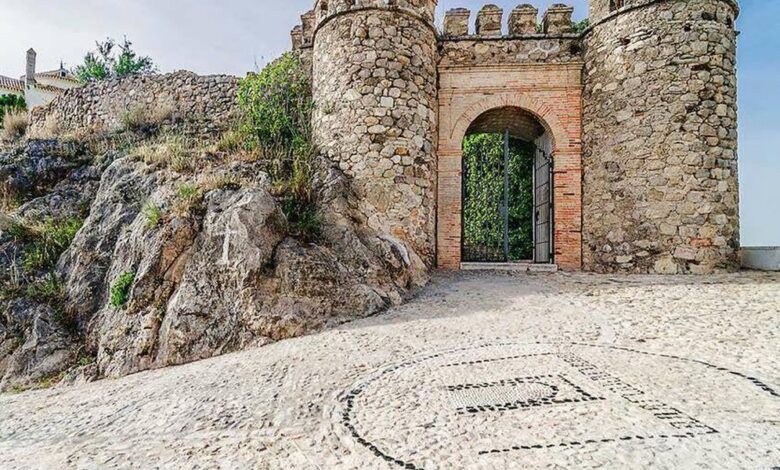
Far from the bustling resorts and well-trodden tourist routes, right in the heart of Andalusia, lies a small town capable of surprising even seasoned travelers. This is Carcabuey, located in the province of Córdoba, within the picturesque Sierra Subbéticas Natural Park. Here, history is not merely preserved within the walls—it lives in every stone of the streets and in the eyes of the locals, while the endless olive groves give the landscape an air of tranquility and authenticity.
Towering above all this beauty is a majestic castle known as Castillo de la Fidelidad, or the “Castle of Loyalty.” Perched atop a high hill, it served for centuries as a strategic lookout. Its position was so vital that it controlled ancient routes connecting five Andalusian provinces. It is no wonder this fortress has silently witnessed countless battles, cunning alliances, and changes of rulers, absorbing the spirit of bygone eras into its walls.
The name ‘Castle of Loyalty’ is no accident. It is tied to one of the town’s most enduring legends—a tale of the valor displayed by Commander Nuño Tello. In the 13th century, during the time of the Reconquista, he faced a difficult choice: to surrender the citadel to his enemies or remain loyal to his king. Tello chose loyalty, and his deed was forever etched into Carcabuey’s history, turning the fortress into a symbol of resilience and honor.
But the most remarkable discoveries awaited researchers underground. Archaeological excavations in this area revealed a unique item to the world—a bronze sword estimated to be about 3,200 years old, dating back to 1200 BC. This artifact, testament to the ancient origins of the settlement, is now part of the priceless collection at the British Museum in London. An astonishing fact linking a small Spanish town to one of the world’s major cultural centers.
Beyond its formidable citadel, Carcabuey carefully preserves its rich cultural and religious heritage. Strolling through its streets, you will find historic fountains, small local altars, and magnificent churches built between the 14th and 18th centuries. Among them stand out the church of Nuestra Señora de la Asunción and the church of San Marcos, which are outstanding examples of Cordoban Baroque. Nestled within the castle walls is the small chapel Ermita del Castillo, dedicated to the town’s patroness, Virgen del Castillo.
Life here flows at a leisurely pace but bursts into vibrant colors during festivals. Especially renowned is Corpus Christi, when locals skillfully and lovingly line the streets with carpets made of colorful wood shavings and fresh flowers. This spectacular scene transforms the entire town into a work of art, demonstrating the community’s remarkable unity and dedication to its traditions.