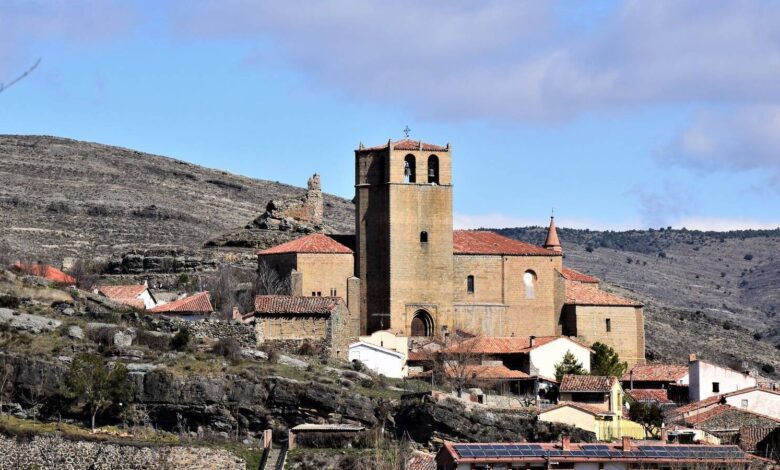
In the heart of the La Rioja region, on the banks of the Cidacos River, lies the small village of Enciso, home to fewer than two hundred residents. This spot has become a true magnet for travelers from across Spain, offering a unique blend of prehistoric heritage and medieval ambiance. Here, visitors can explore fossilized footprints of giant dinosaurs and wander the narrow streets, which still echo with the memories of knights and craftsmen. Enciso is more than just a settlement—it is a gateway between two very different eras, separated by millions of years.
Visitors arriving in this picturesque corner immediately sense its dual nature. On one hand, cobbled streets and the majestic ruins of an ancient castle reveal its rich feudal past. On the other, fossilized tracks etched in the rocks transport the imagination a hundred million years back, to an age when massive sauropods roamed these marshy lands. It is here that the famous ‘Dinosaur Trail’ begins—a seven-kilometer paleontological route winding through several unique open-air sites.
Open-air museum
The geological features of the area around Enciso have preserved more than 3,000 fossilized dinosaur tracks from the Lower Cretaceous period. Today, you can see them at sites like La Virgen del Campo, Valdecevillo, and La Senoba. The clay soils of the ancient landscape captured the impressions left by the dinosaurs before hardening, and subsequent erosion revealed this striking testament to prehistoric life.
You can explore these tracks on your own or with experienced guides. Some locations, such as Valdecevillo, are enhanced by life-sized, realistic dinosaur reconstructions, including an impressive Tyrannosaurus Rex figure. A must-see is the Enciso Paleontological Center, which offers a deeper look into the geological context and the species that once inhabited this area, including fish and marine reptiles.
A Stone Heart of the Middle Ages
Beyond its paleontological treasures, Enciso carefully preserves its authentic medieval character. The ruins of a castle, believed to be of Islamic origin from the 10th century, tower above the village. Fragments of its structure remain, including round and prismatic towers. Below the castle lies the old town, with stone houses and religious buildings such as the church of Santa María de la Estrella and the church of San Pedro with its 12th-century Romanesque tower.
The Immaculate Conception Bridge, built in the 16th century, leads to a Renaissance chapel of the same name perched on a hill. An interesting detail: the clock on the town hall pays homage to its prehistoric past. Three times a day, a small door opens and, accompanied by the chimes, a mechanical dinosaur appears.
From craft to family tourism
From the 16th to the 19th centuries, Enciso was an important textile center, famous for its shepherds’ blankets. Although the industry declined by the mid-20th century, it remains a vital part of the region’s cultural identity. Today, the village’s economy is driven by family tourism, which thrives thanks to attractions like El Barranco Perdido. This paleontology adventure park blends education with fun for both children and adults, offering rope courses and simulated archaeological digs.
Enciso is a place where history, nature, and science come together. Straddling the line between legend and scientific discovery, this village in La Rioja offers a unique experience: you can stroll down medieval streets and literally walk in the footsteps of real dinosaurs. We previously reported that Spain regularly holds competitions for the title of the most beautiful towns, and recently three towns in Albacete competed for the title of the most beautiful in Castilla-La Mancha, each ready to amaze with its unique history and natural beauty.