When Juan Carlos left Spain in August 2020 and went into exile in Abu Dhabi, he left behind not only his country but also a remarkable place that had been his home for decades. The Palacio de la Zarzuela, perched on the scenic hill of Monte del Pardo, served not just as the official residence of the monarch, but as a true symbol of the new era of the Spanish monarchy. Originally built in the 17th century by order of Felipe IV as a hunting lodge, over time it became the heart of royal life.
Architect Juan Gómez de Mora, renowned for his works in Madrid, designed the austere rectangular palace in the Madrid Baroque style. Zarzuela is surrounded by dense forests, where deer and wild boar are still spotted today. The grounds feature an Italianate garden with terraces and fountains, while the palace itself is adorned with galleries and a slate roof. Throughout its long history, the building has undergone many transformations, yet has always remained a place where key decisions for the country were made.
Turning points in history
At the beginning of the 20th century, Alfonso XIII used Zarzuela as a hunting lodge, and his son, the Count of Barcelona, often visited in his youth. The Civil War inflicted heavy damage on the palace—with the building at the heart of the fighting, it was almost completely destroyed. Large-scale reconstruction only began in 1958, initiated by Francisco Franco. Architect Diego Méndez, known for designing the monumental Valley of the Fallen, restored the palace, adding a modern floor and updating the interiors. The restoration cost 40 million pesetas—a huge sum at the time.
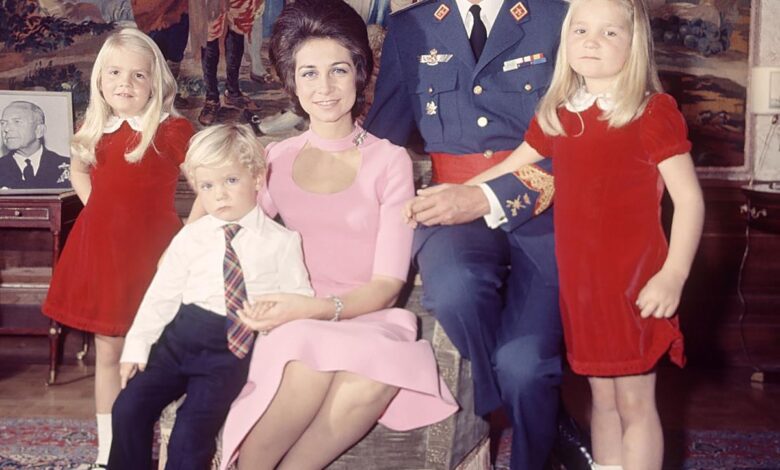
Shortly after the work was completed, Zarzuela became the official residence of the young prince Juan Carlos. He moved in while still single, at the dictator’s insistence, and after his marriage to Sofia in 1963, the couple made it their permanent home. Despite his father, the Count of Barcelona, wishing his son would live in Estoril, Juan Carlos chose Madrid and the seclusion of Zarzuela. The newlyweds made changes to the layout to make the house cozier and better suited to family life.
Architecture and daily life
Zarzuela Palace is not only a symbol of power, but also a fully functional home. It has three floors, a spacious external staircase, stone and slate walls. The first floor houses the kitchen, utility rooms, and storage areas. The second floor is devoted to offices, a library, a reception hall, and dining room. The most private area is the third floor, where the bedrooms, study rooms, and guest apartments are located.
In 1975, two wings were added to the main building: one became a new, more spacious residence for the royal couple, the other was designated for staff offices. Today, Queen Sofía lives in Zarzuela together with her sister, Princess Irene. The current king, Felipe VI, his wife Letizia, and their daughters now reside in a separate house on the estate, known as the ‘Prince’s Pavilion.’
Modern life
The palace grounds feature more than just living quarters and workspaces. There is a sports area, swimming pool, tennis court, helipad, and even a small chapel where members of the royal family have been baptized. At the request of Juan Carlos, a riding arena was built for Infanta Elena. The entire infrastructure was designed for a secluded yet eventful lifestyle away from the city noise.
Interestingly, after Juan Carlos was proclaimed king in 1975, he was offered to move into the lavish Royal Palace in central Madrid. However, the monarch chose to remain at Zarzuela, explaining his wish to live as close to an ordinary life as possible, away from bustle and formality. All servants and staff were selected by National Heritage, underscoring the special status of the residence.
Family traditions
Zarzuela Palace became not just a workplace, but a true home for the royal family. Family celebrations, important meetings, and even sports training sessions took place here. Despite isolation and constant supervision by the regime, Juan Carlos and Sofía managed to create an atmosphere of comfort and trust. Their decision to choose this palace became a symbol of a new era for Spain—one of change, but with respect for tradition.
Juan Carlos I was King of Spain from 1975 to 2014 and played a key role in the country’s transition to democracy after Franco’s dictatorship. Queen Sofía, born Princess of Greece and Denmark, has become one of the most respected figures in Spanish society. Zarzuela Palace remains the official residence of the royal family to this day, though Juan Carlos himself has lived outside Spain for several years.