King Felipe VI is once again heading to France, and once again—without Queen Letizia. This time, his destination is Versailles, where he will inaugurate a major exhibition dedicated to the Grand Dauphin—the son of Louis XIV and father of Spain’s first Bourbon monarch. Meanwhile, Letizia will remain in Madrid to present the prestigious Zenda literary awards. This division of royal duties has sparked questions and lively public debate.
Felipe recently visited Paris to pay his respects at the funeral of Tatiana Radziwill, a close relative and friend of his mother, Queen Sofia. Infantas Elena and Cristina attended the ceremony, but Letizia was notably absent then as well. It’s believed her connection to the late noblewoman was mostly formal, limited to summer meetings in Mallorca. Nonetheless, speculation continues within royal circles: did family tensions, particularly after the publication of King Juan Carlos’s memoirs—where Letizia was mentioned in an unflattering context—influence her decision to stay away?
Dynastic Focus
This time, Felipe VI’s visit is to open an exhibition about the Grand Dauphin, a pivotal figure in French and Spanish history. The event is organized with participation from the Prado Museum and Spain’s National Heritage. Despite his royal lineage, the Dauphin never ascended to the throne, but he became the father of Felipe V, Spain’s first Bourbon king. His life was marked by drama: an early death from smallpox, secret marriages, and complicated relationships with both his father and his children.
As part of the visit, a lunch with Emmanuel Macron is also scheduled. Felipe has enjoyed warm relations with him since 2018. It is possible that, behind closed doors, the leaders will address pressing international issues, especially now that tensions are running high across Europe. This may well be one reason why Letizia chose not to accompany her husband: the meeting is not only cultural but also political in nature.
Personal Agenda
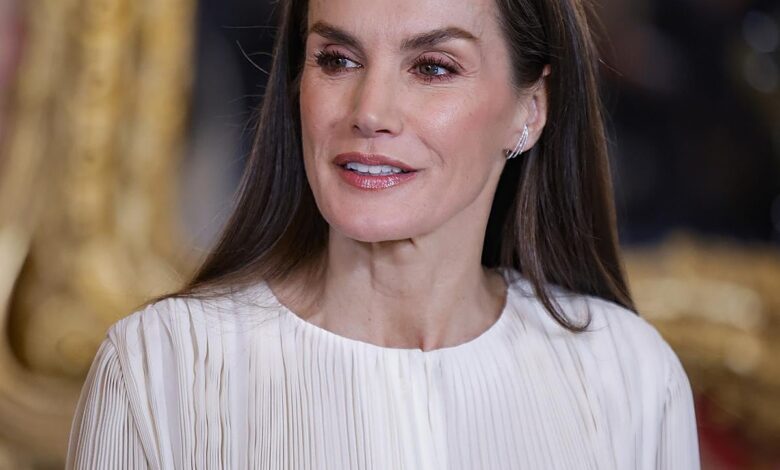
While the King is in Versailles, the Queen will focus on something she truly enjoys. In Madrid, Letizia will present the Zenda Awards, which honor leading figures in Spanish literature. This year’s laureates include Enrique Vila-Matas, Paco Cerdà, Chantal Maillard, and other renowned authors and publishers. For Letizia, an avid book lover, these events are more than a formality—they offer a chance to personally support writers, editors, and publishers.
The Zenda Award does not come with a cash prize, but its prestige grows every year. Presenting the award has become an integral part of the Queen’s public role. She openly admits that she enjoys interacting with creative people and always strives to emphasize the importance of literature in society.
Family Matters
Within the Spanish royal family, it has long been customary to divide official duties. In recent years, however, it has become increasingly apparent that Letizia prefers to focus on independent initiatives related to culture, education, and healthcare. Her absence from certain family events is often attributed not only to her workload, but also to her complex relationships with some of her husband’s relatives.
Recent events have also raised questions: the publication of Juan Carlos’s candid memoirs, the support for Infanta Elena and Cristina, as well as rumors of tension between Letizia and senior family members. All this fuels public interest in her every move and decision, especially when it comes to international trips.
Cultural diplomacy
The visit of Felipe VI to France is not only a tribute to history, but also an important diplomatic gesture. Spain and France have traditionally maintained close ties, and joint cultural initiatives continue to strengthen this partnership. The Spanish monarch’s participation in the opening of the Bourbon exhibition highlights the continuity and significance of dynastic bonds for both countries.
At the same time, Letizia’s independent engagement in cultural affairs reflects a modern approach to the queen’s role. She goes beyond traditional representation duties and actively pursues her own agenda, which has earned her widespread respect among Spaniards.
RUSSPAIN reminds readers that Queen Letizia Ortiz Rocasolano became the wife of Felipe VI in 2004. Before her marriage, she worked as a journalist and TV presenter. Since joining the royal family, she has been actively involved in issues of education, healthcare, and culture. Letizia is known for her independence and her drive to modernize the monarchy. Her work frequently sparks strong reactions in Spanish society, and her style and approach to her duties make her one of the most talked-about figures in modern Spain.