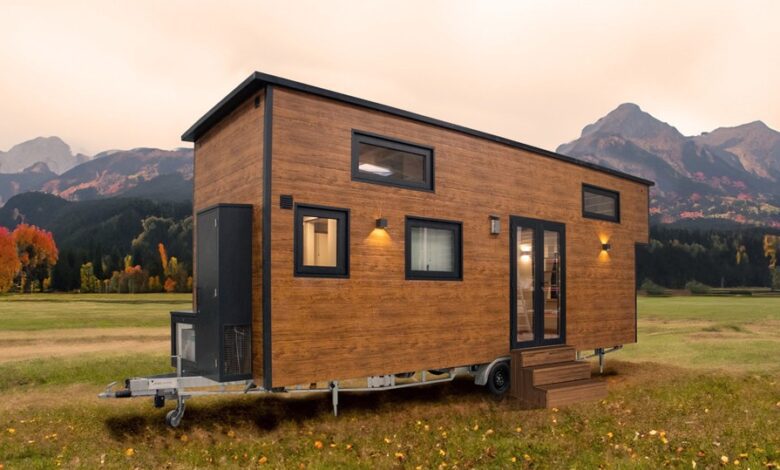
Spain is experiencing a real boom in tiny homes: compact, mobile, and eco-friendly living spaces that are increasingly attracting not only young families but also investors and minimalism enthusiasts. With urban real estate prices climbing and affordable housing becoming scarce, Spaniards are turning to alternative options. Tiny homes are more than a temporary fix—they represent a full lifestyle, offering savings, mobility, and independence from the traditional real estate market.
In recent years, the market has seen a surge of companies offering tiny homes for every taste, from ultra-modern mobile units to cozy wooden cottages with terraces. Each manufacturer strives to stand out: some focus on custom design, others prioritize energy efficiency and autonomy, while others emphasize maximum mobility. As a result, tiny homes have evolved beyond simply being housing—they’re now a tool for a wide range of lifestyles, from remote work to seasonal getaways.
Why tiny homes are gaining popularity
Why are tiny homes conquering the market so quickly? First, their cost is significantly lower than that of standard apartments or houses. Second, the construction process takes just a few weeks rather than months or years. Third, most models can be moved from place to place, which is especially valuable for those who don’t want to be tied to a single location. Moreover, modern tiny homes are built from eco-friendly materials and are often equipped with solar panels and autonomous water systems.
Spaniards are increasingly considering tiny homes not just as a primary residence, but also as an option for a vacation home, guest house, or even office. This flexibility is another major advantage. Some companies offer fully customized projects, allowing customers to choose the layout, finishes, and even add a terrace or a second floor. All of this makes tiny homes appealing to a wide range of buyers.
Market leaders
Among mini-home manufacturers in Spain and neighboring Portugal, several brands stand out. TinyHouse Portugal specializes in mobile homes built on trailers that are easy to transport. They are distinguished by hand-crafted assembly, attention to detail, and the ability to tailor the interior for any need—from a home office to a full-fledged family residence. Prices for these homes start at €45,000.
Casagea offers modular Scandinavian-style tiny homes that can be used as both permanent residences or mobile units. Their designs focus on high-quality insulation, eco-friendly materials, and modern engineering solutions. Prices range from 55,000 to 80,000 euros, depending on the configuration.
Homie by ATHomie is aimed at those who want to maximize comfort in a compact space. Their homes, about 40 square meters in size, come equipped with a full kitchen, bathroom, and even a rooftop terrace. This is an excellent option for year-round living, especially for those unwilling to compromise on comfort. The starting price is 75,000 euros.
Madeiguincho is a well-known Portuguese workshop where each home is handcrafted from local wood. Their focus is on minimalism, sustainability, and unique design. These homes start at 50,000 euros and often become genuine architectural landmarks.
What to consider
Before buying a tiny home, it’s important to decide on several key factors. First, choose whether you need a mobile or a stationary unit. This affects not only the price but also the licensing and maintenance requirements. Second, think in advance about the level of customization: which materials to use, whether an autonomous power system is needed, and how storage will be organized.
It is equally important to consider delivery and installation, especially if the house is ordered from a foreign manufacturer. Spain has its own building codes, and stationary tiny houses require a construction permit. Mobile options are subject to less bureaucracy, but they cannot be used as permanent residences without restrictions. It is also worth determining in advance what purpose the house is being bought for: permanent residence, vacation, rental, or work.
Looking Ahead
The tiny house market in Spain continues to grow, with demand for compact and eco-friendly solutions on the rise. More and more families, young professionals, and even retirees are opting for tiny homes as a way to cut costs and improve their quality of life. Manufacturers are actively adopting new technologies, experimenting with design, and offering increasingly appealing options for a wide range of clients.
In the coming years, we can expect new models to emerge that are even more energy-efficient and self-sufficient. Already, tiny houses are becoming part of major projects for rural development, tourism, and remote work. Spain is gradually turning into one of Europe’s hubs for this market, and tiny homes are becoming a symbol of contemporary change.
In case you weren’t aware, TinyHouse Portugal is one of the leading tiny house manufacturers on the Iberian Peninsula. The company is known for its personalized approach to each project, the use of eco-friendly materials, and fully customizable interiors. TinyHouse Portugal actively works with Spanish and European clients, offering solutions for permanent living, tourism, and business. Their houses can be found not only in Spain and Portugal, but also across other European countries.