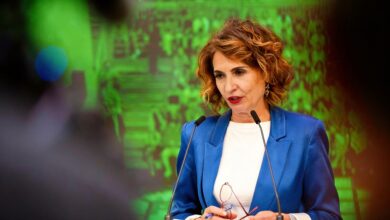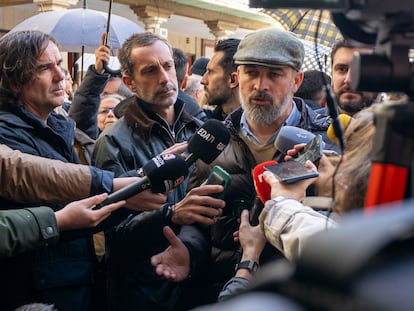
A new conflict is flaring up in Spain, one that could impact relations between the state, the church, and society. Vox party leader Santiago Abascal made sharp accusations against certain Catholic bishops, claiming that some of them are benefiting from immigration. His remarks came during the heat of the election campaign in Aragón and immediately sparked widespread public debate. The focus quickly shifted not only to political disagreements but also to questions about the transparency of church organizations and the role of charitable institutions in contemporary Spain.
Abascal did not specify exactly whom he was referring to, but mentioned connections between church organizations and non-profit foundations that receive state funding. Among them is the well-known charitable group Cáritas, which provides social support to those in need. According to Vox, such organizations not only assist migrants but also become part of a system that, party representatives claim, facilitates illegal immigration and is even linked to criminal groups.
Political disagreements
During the election campaign, Vox increased pressure on its political opponents, demanding an end to all state support for organizations that assist undocumented foreigners. This stance became one of the key conditions for possible cooperation with the Partido Popular (PP) at the regional level. In response to the initiative to legalize more than half a million migrants, which was supported by several church organizations and approved by the government, Vox accused its opponents of encouraging the ‘Islamization’ of the country and undermining national identity.
The leadership of the Catholic Church, on the other hand, supported the legalization process, calling it a step toward recognizing human dignity and strengthening the common good. Luis Argüello, head of the Spanish Episcopal Conference, emphasized that the issue concerns protecting fundamental rights and integrating vulnerable groups. This divergence of views has only increased Vox’s isolation on the political stage and intensified internal tensions within Spanish society.
Church’s Response
In response to accusations from Vox, representatives of the Catholic hierarchy issued strong statements. Episcopal Conference Secretary César García Magán warned against the use of slogans that, in his words, should have no place in Spain’s history. He also called attempts to pit faith in Jesus Christ against support for the church a ‘theological absurdity.’ These remarks came amid growing tension between religious and political circles, as well as ongoing public debates over the future of the country’s immigration policy.
Abascal himself, despite clear differences with Pope Francisco, has avoided open conflict with the church, mindful of the significant Catholic electorate. However, recent church decisions, such as supporting the Muslim community in Torre Pacheco and participating in the rethinking of historical monuments, left the Vox leader perplexed and disappointed. He expressed concern that church structures receiving government funding do not oppose certain government initiatives that, according to Vox, contradict the interests of the Spanish people.
Political implications
The final stage of the election campaign in Aragón was marked by fresh accusations against the Partido Popular. Abascal accused his rivals of “dirty tactics” and corruption, referencing recent scandals. He also questioned the possibility of supporting PP candidate Jorge Azcón without carrying out radical reforms. These statements only heightened tension in the political arena and cast doubt on the future of regional coalition agreements.
Meanwhile, the Church’s support for initiatives to legalize migrants and protect religious minorities has sparked fierce debate. For many Spaniards, these developments have raised questions about the balance between humanitarian values, national security, and accountability in the use of public funds. The question of who should help vulnerable groups and how remains unresolved, fueling ongoing public discussion.
Context and trends
In recent years, Spain has repeatedly grappled with heated debates over immigration policy and the role of religious organizations in the social sphere. Similar conflicts have already arisen when political parties tried to cut funding for NGOs working with migrants or accused them of links to criminal groups. In 2024, comparable disputes flared after several regional governments reviewed their support programs for charitable foundations, sparking protests and widespread discussion in the media.
Similar situations have occurred in other European countries, where issues of integration, national identity, and religious tolerance are fueling political debates. In Spain, where the Catholic Church has traditionally held a significant role in public life, any accusations against its representatives attract widespread attention and can influence public opinion. Ongoing debates about financial transparency, the accountability of charitable organizations, and the future of immigration policy are expected to continue in the near future.