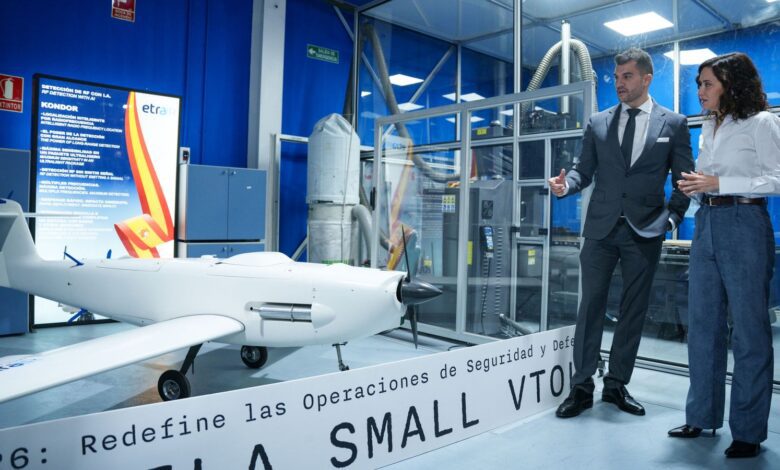
In the coming years, Madrid could become a key player in the European drone market. Regional authorities have announced large-scale investments and the launch of a comprehensive strategy that will impact not only business, but also the daily lives of residents. New regulations, infrastructure projects, and support for innovation are set to reshape the industry, creating thousands of new jobs.
The focus is not just on technological progress, but on building an entire ecosystem where drones become a familiar part of urban life. The authorities are prioritizing local developments to avoid dependence on imports and set their own terms in the market. Madrid already leads in the number of manufacturers and training centers, but the new strategy promises to take the region to the next level.
Regulation and new rules
One of the main priorities will be the creation of a transparent and user-friendly regulatory system. Plans include introducing a single access point for all permits and approvals, making it easier for companies and speeding up the adoption of new technologies. Special attention will be paid to designating specific flight zones to ensure the safety and predictability of drone operations across different districts.
Introducing clear regulations will not only attract investors but also reduce administrative barriers for startups and small businesses. Authorities expect this to spur the development of new services — from goods delivery to infrastructure monitoring and emergency response.
Infrastructure of the Future
The second key area is the construction of modern infrastructure. The region will see the launch of a network of helicopter and drone pads to serve various purposes: from logistics and tourism to medical transportation and emergency response. A special role is given to the scientific droneport, where universities and companies will be able to test advanced solutions and carry out experiments.
Such infrastructure will open new doors for business and speed up the integration of drones into urban life. Authorities emphasize that this is not only about technology, but also a means to improve quality of life and make services more accessible and efficient.
Focusing on Talent and Innovation
The third element of the strategy is the development of human capital. Madrid will open a specialized training center for drone pilots, engineers, and operators. Programs are designed both for young people and professionals looking to master new careers.
At the same time, the region will support startups and investors through acceleration programs and the creation of an innovation hub. This hub will develop solutions for the space sector, agriculture, mining, and public services. Authorities believe that this approach will help retain talent and attract new investment.
Economic impact and prospects
The strategy includes grants for drone manufacturing, measures to attract investors, and risk management campaigns. The region also plans to actively participate in European networks and promote new uses for drones — from agriculture to public services.
Madrid already ranks second in Spain for the number of drone operators and leads in the number of manufacturers and educational institutions. The strategy is expected to give a strong boost to creating high-tech jobs and strengthen the region’s position in the international market.
In recent years, interest in drones has grown noticeably in Spain. In 2025, several autonomous communities launched pilot projects for medication delivery and wildfire monitoring using unmanned aerial vehicles. Catalonia and Andalusia are actively investing in the development of their own testing centers and specialist training programs. European initiatives to create a unified airspace for drones are also gaining traction among Spanish companies. These trends demonstrate that drones are becoming an integral part of the country’s modern economy and infrastructure.