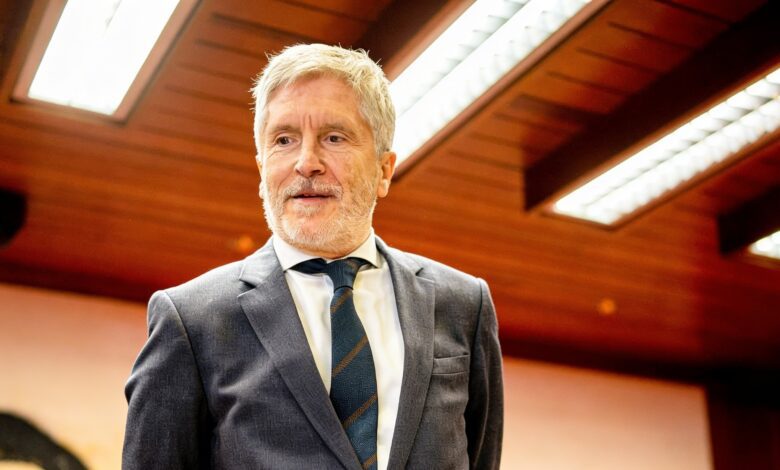
The decision by Spain’s Minister of the Interior, Fernando Grande-Marlaska, to testify in the ‘caso Kitchen’ case exclusively in writing has become a prominent event nationwide. This move highlights how high-ranking officials can use their authority to avoid public hearings, raising questions about transparency and equal treatment before the law. For Spanish society, this decision may set a precedent affecting trust in the judicial system and perceptions of accountability among those in power.
Written responses instead of an in-person appearance
Fernando Grande-Marlaska will not appear in court for the ‘caso Kitchen’ case, opting instead to submit written answers to pre-prepared questions. The court granted his request, citing a law that allows government members to testify in writing if the matters concern their official duties. The questions for the minister will be drafted by the defense of Sergio Ríos, the former driver of Bárcenas, who is a key witness and accused in the case.
The ‘caso Kitchen’ case centers on an investigation into an unofficial police operation aimed at monitoring former Partido Popular treasurer Luis Bárcenas during the tenure of Mariano Rajoy. According to the investigation, state secret funds were used in this scheme, and police officers were involved in gathering information about the personal life of Bárcenas and his associates.
According to court documents, Sergio Ríos received around €50,000 from secret funds and was later hired by the police after cooperating with the organizers of the operation. His testimony became one of the pivotal moments of the proceedings, and Marlaska’s decision to answer questions only in writing rules out the possibility of follow-ups or clarifications during the hearings.
Role of Marlaska and Other Involved Figures
The initiative to summon Marlaska to court came from Sergio Ríos’ defense team. The court set the date for his testimony for May 11, but the minister exercised his right to submit written responses and filed a request on March 24. The law allows this form of testimony for government members if their statements concern official matters. This rule applies both during the investigation and at trial.
As a result, the court formally requested a list of questions for Marlaska from the defense, emphasizing that they must be clear and precise. This approach spares the minister from appearing in court and avoids photographs and videos of his presence. Marlaska previously served as a judge at the National Court and, since 2018, has been Minister of the Interior, succeeding Jorge Fernández Díaz, who is also a main defendant in the ‘caso Kitchen’ case.
Another former minister, Juan Ignacio Zoido, has also been summoned to court, but his testimony will take place in the usual manner— in person, on April 23. This highlights the different approaches to the case’s various figures and raises further questions about equal treatment of all parties involved.
Investigation Details and Controversial Issues
The investigation revealed that Sergio Ríos was recruited to provide information about the Bárcenas family in exchange for monthly payments and a promise of employment with the police. His nickname, “cocinero” or “K2,” was coined by former commissioner José Manuel Villarejo, who is also one of the defendants. According to investigators, it was through Ríos that the organizers of the operation gained access to Bárcenas’s personal data, including potential information storage devices and documents.
The case includes audio recordings made by Villarejo, discussing the details of the payments and Ríos’s assignments. However, at the start of the trial, set to begin on the 6th, the defense is expected to challenge the admissibility of these recordings as evidence. This could significantly impact the proceedings and the positions of the parties.
In light of recent developments in Spain’s judicial system, it is worth noting that questions about court transparency and independence are becoming increasingly relevant. For example, recent rulings involving former prosecutors and appeals to the Constitutional Court, such as in the García Ortiz case, previously covered in our report about the prosecutor’s planned complaint, highlight the complexity and ambiguity of high-level judicial proceedings.
Context and similar cases
Spanish law allows high-ranking officials to provide written testimony in cases related to their official duties. However, such decisions often spark public debate, as they limit opportunities for direct questioning and clarification. In recent years, similar situations have arisen in cases involving corruption and abuse of power, where ministers and other government representatives have opted for written communication with the court.
In 2024, there was a case where a former Minister of Economy also exercised this right, leading to criticism from the opposition and human rights organizations. Experts noted that this practice could undermine trust in the judicial system and create a sense of inequality before the law. At the same time, supporters of written testimony point to the need to protect state interests and prevent leaks of information related to national security.
Overall, each new case in which senior officials avoid in-person questioning becomes a topic of public discussion and affects perceptions of justice in Spain. These situations highlight the importance of balancing the protection of state interests with the need for transparency in judicial proceedings.