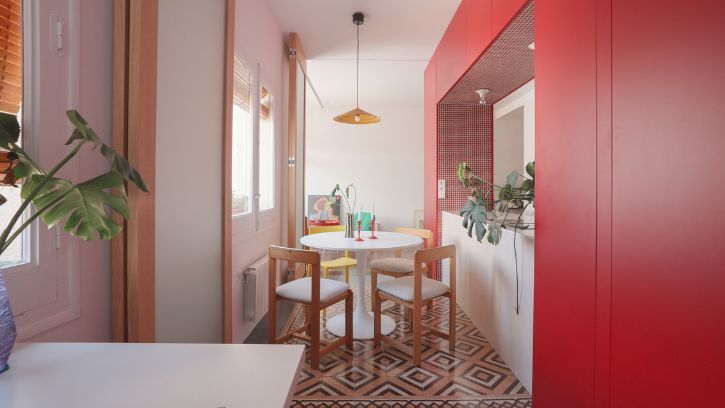
The impact of subtle details on how we perceive space becomes a decisive factor for comfort and coziness at home. Even in a perfectly tidy apartment, a sense of chaos can arise if the delicate nuances of decor are overlooked. Spanish interior design experts point out: it’s the minor mistakes in lighting, furniture arrangement, and material selection that can turn a cozy home into a source of irritation and visual noise.
In recent years, residents of Spain are increasingly confronted with the phenomenon of ‘invisible clutter.’ Outwardly, everything seems orderly, but after a busy day, many experience a strange sense of tension when they come home. The reason lies not in the number of things, but in their placement, combinations, and even the lighting temperature. Experts insist: a few small changes can completely transform the atmosphere.
Light as a source of chaos
Lighting is one of the most underrated factors influencing our perception of order. Cold lamps in lounge areas, poorly placed lights, or oversized chandeliers can create a feeling of disorder even in a minimalist interior. When lighting accents are not coordinated, a space feels fragmented and uncomfortable.
Professionals recommend combining several types of lighting: general, spot, and decorative. This approach helps create a harmonious setup, where every corner of the room plays its own role. It’s essential to maintain balance: lighting that’s too bright or too dim can disrupt overall perception and cause fatigue.
Special attention should be paid to light temperature. Warm tones encourage relaxation, while cooler ones can make even the most stylish interior feel uninviting. Well-chosen lighting not only highlights the advantages of the space but also brings back a sense of order and comfort.
Mistakes in arranging items
A crookedly hung painting, an oversized mirror on a small wall, or disproportionate furniture—all these disrupt visual balance. Even if there is nothing unnecessary in the room, a single poorly placed detail can ruin the impression of the entire interior. It’s important that every object ‘communicates’ with its surroundings and supports the overall concept.
Experts remind us of the ‘single work of art’ principle, where all elements of the interior are perceived as parts of a unified whole. Ignoring this rule leads to a sense of fragmentation and chaos. This is especially critical for small spaces, where every mistake becomes noticeable.
Furniture disproportionate to the scale of the room also creates discord. A huge sofa in a small living room or a massive table in a cramped kitchen not only hinders free movement but also visually clutters the space. Maintaining proportions is the key to harmony.
Open spaces and their pitfalls
The trend for open floor plans has brought new challenges to Spanish homes. The lack of clear boundaries between areas leads to mixed functions and a loss of order. Without thoughtful transitions between the kitchen, living room, and dining area, chaos can arise—even if everything is in its proper place.
To create coziness in open spaces, experts recommend using soft boundaries: different flooring finishes, color accents, low partitions, or furniture to zone the room. These techniques help maintain a sense of freedom while structuring the space and avoiding visual noise.
Transitions between areas are especially important. Well-designed transitions, as seen in the famous projects of Finnish architects, make interiors cohesive and logical. Without them, even the most expensive renovation loses its appeal.
Materials and their interaction
Clutter often arises not from the number of items, but from how they are combined. Incompatible materials—such as a glossy floor next to rough wooden furniture or bright colors paired with cool metal—create a sense of disunity. As a result, the space feels fragmented and uncomfortable.
The optimal solution is to limit yourself to two or three main materials and let them ‘communicate’ through shades and textures. This approach creates a harmonious environment where each element supports the overall style. Lighting also plays a role: well-placed accents help materials stand out and add warmth.
Attention to detail in choosing materials allows you to avoid a chaotic feel even in vibrant interiors. Harmony is achieved not by the quantity, but by the quality of combinations.
Rhythm and traffic zones
Visual rhythm is another key aspect that’s often overlooked. Disrupted logic in item placement, misaligned shelves, lamps, and doors distract the eye and create a sense of disorder. When interior elements are arranged in a unified rhythm, the space feels orderly and calm.
Transition zones—corridors, hallways, distribution spaces—are particularly sensitive to overcrowding. An excess of furniture, shoes, or decor in these areas instantly creates a sense of chaos. Even a minimal number of items, if tastefully selected, can make such spaces expressive and unique.
Paying attention to the rhythm and clarity of these passageways helps maintain a subconscious sense of order. This brings not only visual appeal but also psychological comfort for everyone living in the home.
JOTAJOTA+ is a creative duo that has become one of the most prominent players in the Spanish interior design market in recent years. The studio’s founders, José Gabaldón and Javier Onrubia, are renowned for their attention to detail and their ability to turn even the most challenging spaces into examples of harmony. Their projects are distinguished by a refined sense of balance between functionality and aesthetics, as well as a commitment to creating interiors that are both visually appealing and comfortable to live in. Thanks to their approach, many Spanish homes have reached a new level of coziness and style, while the concept of ‘invisible clutter’ has become a subject of professional analysis and discussion.