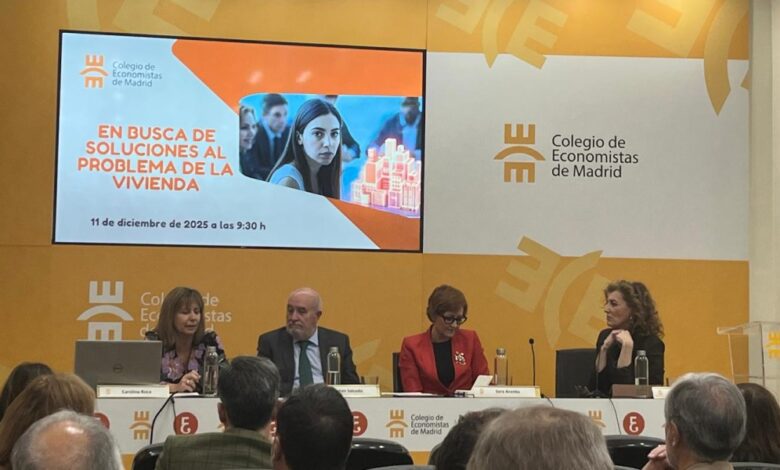
The issue of housing availability in Spain is once again in the public spotlight. At a recent meeting between construction industry representatives and Madrid authorities, urgent problems such as the housing shortage and challenges in attracting investment were discussed. Participants in the discussion admitted that divisions between political forces run so deep that hopes for a unified national housing agreement have all but vanished.
Carolina Roca, head of the Madrid Developers Association (Asprima), stated openly that private investment in real estate continues to be demonized in the country, even though it could be the key to breaking the deadlock. According to her, one segment of politicians categorically rejects business involvement in construction, while another, though obliged to heed public opinion, recognizes that investors are essential.
Housing shortage
Experts note that the problem is long-standing, but its scale is underestimated. Over 150,000 new residents arrive in Madrid each year, and by 2030 the region’s population could exceed 10 million. Meanwhile, according to regional authorities, plans for the next decade envision the construction of about 250,000 new apartments—which is clearly insufficient to meet demand.
Sara Aranda, head of the Madrid Department of Urban Planning, emphasized the urgent need to revise land use policies and speed up the conversion of unused areas into plots suitable for development. Regional authorities are already preparing a new law that will unify existing land use and spatial planning regulations. The legislation is expected to come into force by the end of 2026.
Investment climate
However, even with plans to increase new development, attracting investors is becoming increasingly difficult. According to Carolina Roca, businesses now have to wait at least ten years to see a return on investment. As a result, many choose to invest in other European countries where investor conditions are more favorable.
Vice Consul for Housing José María García said that authorities are working to cut red tape, increase building density, and simplify the process of converting commercial land for residential use. Particular attention is being paid to creating affordable housing for socially vulnerable groups.
Regional challenges
Other regions of the country are facing similar difficulties. María Pardo, responsible for housing policy in Castilla y León, noted that the problem is just as severe in their autonomous community, although it manifests differently. Here, the main challenge is the geographic fragmentation and the concentration of people in large cities.
The region plans to build just over a thousand apartments for young people, but the number of applicants for affordable housing is already nearing 20,000. According to Pardo, the lack of political consensus and limited opportunities for urban expansion — only 6% of the region’s territory is urbanized — are hindering progress.
Finance and Environment
Another common factor across all regions is the low income level of the population. Salaries are not sufficient for most Spaniards to purchase housing at market prices, which in turn reduces the attractiveness of the market for investors and drives young professionals to leave the country.
Tougher environmental regulations are creating additional challenges. Carolina Roca believes that while protecting the environment is important, excessive bureaucracy leads to project approval delays. Local administrations cannot handle the volume of applications, making the environmental review yet another bottleneck for new housing construction.
In case you didn’t know, Asprima is one of the largest developers’ associations in Madrid, bringing together the region’s leading construction companies. The organization actively participates in drafting legislative initiatives aimed at developing the real estate market and increasing housing availability. Carolina Roca, who heads Asprima, is known for her strong statements and consistent advocacy for private investment in the construction sector.