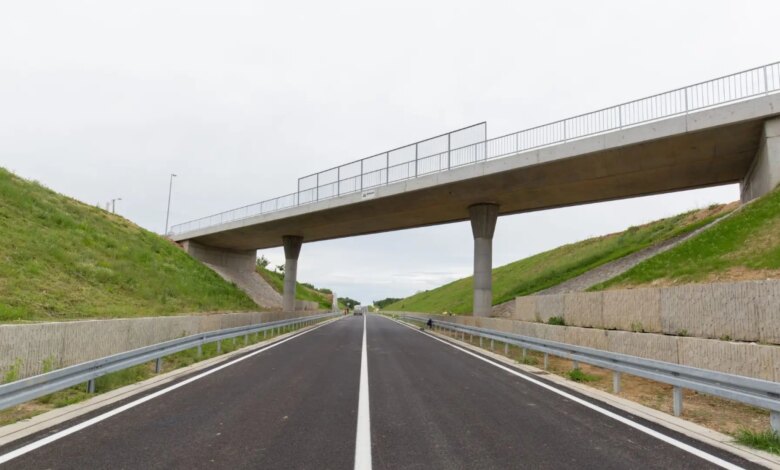
A heated debate is unfolding in California over a massive bridge that cost the budget 19 million dollars, yet will remain permanently closed to people. Neither drivers nor pedestrians will ever use this structure—a modern infrastructure irony, where priorities shift faster than the dollar’s exchange rate. Authorities insist the bridge will save lives, but not human ones. At a time when every dollar counts, decisions like this spark not only surprise, but also a flood of sarcastic comments.
Instead of the usual concrete paths and railings, a green corridor designed exclusively for animals will appear here. The Wallis Annenberg Bridge, spanning the ten-lane US 101 between Calabasas and Westlake Village, is intended to become a lifeline for local wildlife, long trapped by American highways. For mountain lions, coyotes, and deer, attempting to cross the busy road has been a one-way ticket. Now, under the officials’ plan, animals are getting a chance at survival—and people, a new topic for kitchen-table debate.
Skeptics never tire of pointing out that, amid economic pressure and social issues, spending millions on a bridge for animals is a luxury fit only for Hollywood. But project supporters counter that it’s about necessity, not whim. Ecosystems split by highways lead to species extinction, and collisions with animals cost the budget millions every year—including human fatalities. The only question is, who’s willing to believe that a bridge made of earth and shrubs can really change the situation.
Ecological Paradox
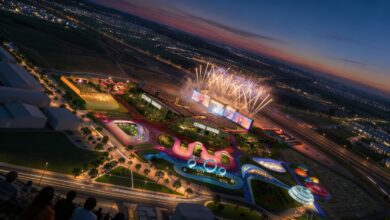
A large-scale construction project in California has become a symbol of a new era, where caring for nature sometimes appears to challenge common sense. The Wallis Annenberg Bridge looks nothing like typical engineering structures: its surface will be layered with soil and planted with native vegetation so that animals won’t notice the trick. For them, it will feel less like a bridge and more like a seamless extension of the forest, allowing them to safely cross a dangerous highway without risking their lives.
Noise barriers and special lighting shields will be installed along the structure to minimize stress for wildlife. Human presence is strictly forbidden: no bike lanes, no observation points, not even paths for curious tourists. All of this is meant to return to nature what was taken from it decades ago.
Nevertheless, despite its noble intentions, the project has become a target for criticism. Debates continue on social media and during public hearings: is the wildlife bridge truly an investment in the future, or just another attempt to spend money on questionable initiatives? For local authorities, however, the answer is clear: safety and biodiversity preservation outweigh skepticism.
The Price of Survival
The issue of habitat fragmentation in the United States is particularly acute. Tens of thousands of kilometers of roads cut through ecosystems, turning them into isolated islands. As a result, animal populations deteriorate, and rare species are pushed to the brink of extinction. In the Santa Monica Mountains, the situation is critical: local pumas are already teetering on the edge of extinction due to the inability to migrate.
Every year, thousands of animals die under the wheels of cars, and drivers face not only stress but also hefty repair bills. The Wallis Annenberg Bridge is set to become the first step toward restoring natural connectivity. The idea is to allow animals to safely move between fragmented habitats, reducing collisions and preserving genetic diversity.
Supporters of the project insist that the investment will pay off not only in saved animal lives, but also by reducing accident-related expenses. Moreover, successful implementation could serve as a model for other regions facing similarly urgent wildlife collision issues.
Between skepticism and hope
While some call the bridge a ‘monument to absurdity,’ others see it as a symbol of change. California authorities emphasize that the project is not merely a gesture of goodwill, but an attempt to correct past mistakes. Human activity has long upset the balance between urbanization and nature, and now unconventional solutions are required.
Interest in the experiment is being shown not only by American states, but also by foreign countries. If the bridge meets expectations, similar structures may appear around the world. However, for now, the main criterion for success is not the number of cars that have passed over it, but the traces of animal paw prints on the soft ground.
The question of whether such investments are justified will remain open for some time. Yet it is already clear: California has chosen to remind everyone that progress does not always mean new roads for people—it can also mean giving animals a chance not to be crushed under the wheels of civilization.
The Wallis Annenberg Bridge is a unique example of how infrastructure projects can transform not only the landscape, but also society’s perception of nature. Named after the renowned philanthropist, it has become a symbol of the effort to restore the lost harmony between humans and the environment. In the coming years, this bridge will determine just how far modern societies are willing to go to preserve biodiversity and ensure road safety.