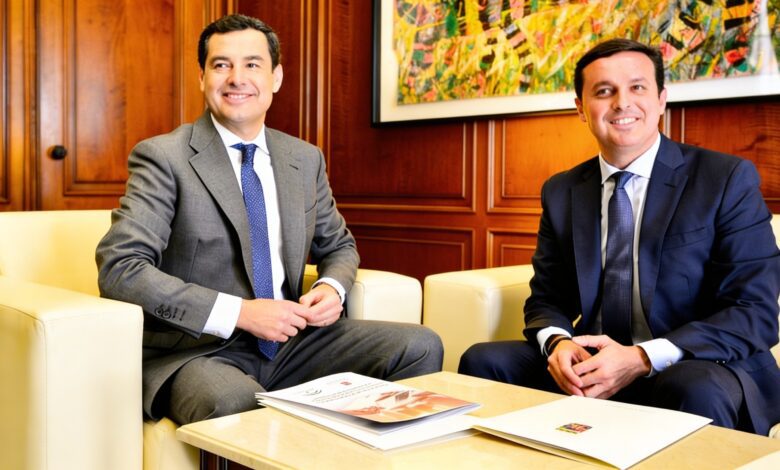
The investigation into the mask procurement case in Almería has become one of the most talked-about events in recent years for residents of Spain. At the center are suspicions of unlawful schemes involving contracts worth millions of euros, a situation that could change how regional budget spending is monitored. In the coming weeks, the court will begin hearing testimony from key figures, a development that has already sparked discussions in the country’s political and business circles.
Key figures and dates
According to case files, 32 individuals have been summoned to court for questioning over alleged fraud involving contracts for masks and other services with the Diputación de Almería between 2016 and 2021. Among them is the institution’s former president, Javier Aureliano García, who is scheduled to appear before the judge on June 26, two weeks after the new Andalusian parliament convenes. The first to answer investigators’ questions will be Kilian López, considered an intermediary in a deal worth more than two million euros, and Óscar Liria, the former vice president responsible for contract allocation.
As El Pais reports, investigators believe that López may have gained significant benefits from the deal and was also linked to other suspicious contracts through his companies. Investigators also took interest in the relatives of some suspects, who, according to the investigation, helped conceal income and transfer funds through shell companies. García, who resigned after his arrest, faces several charges, including bribery, money laundering, and fraud involving government contracts.
Schemes and suspicions
Case files detail how the suspects may have used accounts in the names of relatives to pay personal expenses, including mortgage installments. During searches, large amounts of cash were discovered, as well as documents suggesting profits may have been distributed among those involved. Investigators also looked into expenses for travel charged to public funds that, according to them, were unrelated to official duties.
Óscar Liria is a key figure in the case—he was arrested back in 2021. According to investigators, he may have used companies registered to relatives to transfer funds and buy luxury cars. His interrogation is set for May 28, immediately after Kilian López. Another prominent figure, Fernando Giménez, is believed to have received up to 10% of the sums from suspicious contracts. He has been summoned to court on June 4.
Political context
The mask case coincided with major political developments in Andalusia. While the dates of the interrogations do not overlap with the election campaign, they do coincide with the formation of the new parliament and the possible nomination of a candidate for regional president. This adds tension, especially given that among the accused are former leaders of the local Partido Popular branch.
The party responded to the scandal quickly: following García’s arrest, the leadership was changed in an effort to minimize political losses. In public statements, party representatives tried to shift attention to corruption scandals in other political groups, reminding the public of cases where opposition figures had faced criminal prosecution. Analysis by russpain.com indicates that such strategies are often used to reduce reputational risks ahead of elections.
The role of relatives and business entities
The case involves not only politicians but also their relatives and business owners through whose companies, according to investigators, the questionable transactions were conducted. For example, Rodrigo Sánchez Simón, the former mayor of the small town of Fines, and his son are suspected of securing contracts worth over one million euros through OYC Servicios Urbanos. Investigators believe some of these contracts may have been fictitious or signed with violations.
The focus on family members is explained by the fact that, according to investigators, funds were distributed and attempts were made to conceal the real beneficiaries through them. During the investigation, large sums of cash were found hidden in unexpected places, which became one of the key pieces of evidence in the case. As El Pais reports, similar schemes have repeatedly been the subject of court proceedings in Spain, and their exposure often leads to high-profile resignations and reshuffles in regional administrations.
Context and similar cases
In recent years, Spain has faced a series of high-profile investigations related to corruption and abuse in the awarding of public contracts. For example, in Santander, investigators recently widened the circle of suspects after the footbridge tragedy, bringing in new figures, including an employee from the 112 emergency service. More details on the progress of this investigation can be found in the article about the widening of suspects after the structure collapse in Santander. Such cases show that Spain’s judicial system is increasingly paying attention not only to prominent political figures but also to those behind the scenes who allocate public funds.
The surge of interest in such cases is driven not only by the scale of the damages but also by public demand for transparency and fairness. In recent years, courts have increasingly examined corruption cases in municipalities and regional administrations, leading to tighter oversight and new accountability standards for officials. As a result of these investigations, not only does the leadership change, but the approach to awarding contracts at all levels of government is also being revised.