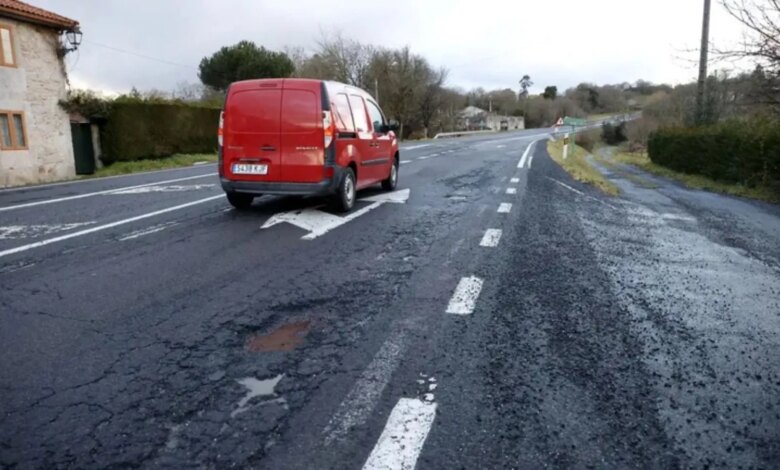
Drivers planning trips across Spain face a serious threat: almost a third of the country’s road network requires urgent repairs, and in some regions the situation is nearing critical. Every day, thousands risk accidents due to deep cracks, potholes, and worn-out surfaces. The problem is no longer about comfort — it’s now a question of safety and lives.
According to Autobild, over the last four years the length of roads with severe damage has nearly tripled. There are now 34,000 kilometers of routes in Spain where driving has become a challenge for both motorists and their vehicles. In 2022, these problem sections stretched to just 13,000 kilometers, clearly illustrating the scale of decline.
Regions with the highest risk
The situation is especially dire in eight autonomous communities, where more than half of all roads are classified as hazardous. Aragón tops the list, with 68% of its routes needing immediate intervention. Drivers passing through Zaragoza, Huesca, or Teruel must stay extremely alert: every journey can feel like a game of chance.
Castilla-La Mancha and Galicia also stand out, as 59% of their road networks are in poor condition. In the provinces of Toledo, Ciudad Real, and Lugo, asphalt has lost its grip, while potholes have become a regular feature of the landscape. Extremadura, Castilla y León, and Andalucía are not far behind—here, between 54% and 58% of roads are in urgent need of major repairs. In Badajoz, León, and Jaén, driving feels like running an obstacle course.
The financial gap
The investment shortfall in road infrastructure has reached 13.5 billion euros—a record figure that highlights systematic neglect of road maintenance. State-managed highways alone require 4.7 billion euros, while regional and provincial roads need even greater investments—over 8.7 billion. The situation worsens by roughly 8% each year: without substantial funding, the degradation will only accelerate.
Worn-out asphalt increases braking distance, accelerates tire and suspension wear, and in some areas, even patch repairs are no longer effective—a complete reconstruction is needed. The country’s interior regions are particularly hard-hit: for many residents, it’s the only way to get to work, the hospital, or school. As a result, the road network has become not only a technical problem, but also a social issue.
Double standards
The contrast between regions is plain to see. In Madrid, Cantabria, and Rioja, required investments do not exceed 300 million euros and pavement quality is above average. Elsewhere, drivers are forced to choose between safety and the need to travel on damaged roads. This situation creates inequality and fuels discontent among the population.
Road markings and signals have all but disappeared in many areas, which is especially dangerous at night or in bad weather. Drivers complain about the lack of warning signs and poor visibility, increasing the risk of accidents. The inland provinces, with lower population density, find themselves even more vulnerable: for them, every road is a lifeline.
Consequences for Everyone
The shift from preventive to delayed repairs means work now begins only when a road becomes almost impassable. This not only increases the cost of restoration but also sharply raises the risk of accidents. According to Autobild, while waiting for repairs, accident risks multiply several times over.
Drivers traveling across Spain are now forced to plan their routes in advance and choose safer paths. Depending on the region, a road can be either safe or a real trap. This unpredictability undermines trust in the system and raises concerns about the future of the country’s road infrastructure.
The Spanish Road Association (Asociación Española de la Carretera, AEC) is a key organization responsible for analyzing the condition of the road network and preparing recommendations for the authorities. Its experts regularly conduct inspections, collect statistics on accidents and road surface wear, and develop proposals to improve the situation. Thanks to their work, the public and government agencies gain an objective understanding of what is happening and can make decisions based on real data.