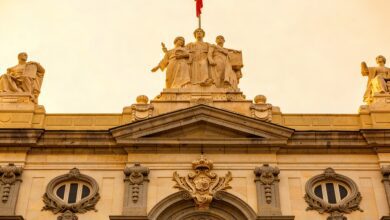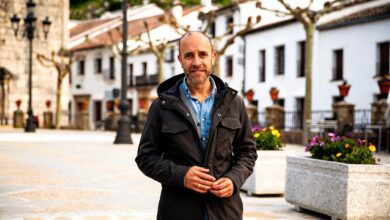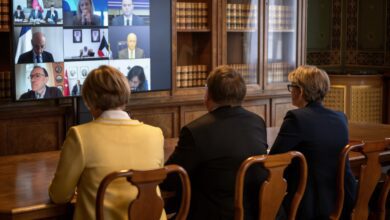
José Luis Ábalos, former transport minister, his ex-advisor Koldo García, and businessman Víctor de Aldama will stand trial before the Supreme Court of Spain in the coming months. They are accused of receiving illegal commissions during the procurement of masks at the height of the COVID-19 pandemic. However, Ábalos’s defense insists that the case should be heard not by a panel of judges, but by a jury randomly selected from the public.
The final composition of the court has yet to be determined. Preliminary reports suggest that the five judges who initiated the case in November 2024 could be joined by two more: the most experienced judge not previously involved in the process, former Attorney General Julián Sánchez Melgar, and the newest member of the chamber, Javier Hernández. Still, the issue of a jury remains unresolved, with the court promising to review the defense’s petition.
Defense arguments
On December 11, Judge Leopoldo Puente officially opened proceedings against Ábalos, his former adviser, and businessman Aldama. They are charged with forming a criminal organization, repeated bribery, obtaining and misusing insider information, abuse of influence, embezzlement of public funds, forgery of official documents, and misconduct in public office.
The lawyer for former minister Carlos Bautista is making a last-minute attempt to change the trial procedure. He argues that the verdict of guilt or innocence should be rendered not by a panel of professional judges, but by a jury. In his view, the main charges—bribery, abuse of influence, and embezzlement—should, by law, be heard by a jury.
Legal nuances
In support of this position, the defense cites two Supreme Court rulings from 2010. According to these rulings, if the primary purpose of other alleged offenses is to commit acts that fall within a jury’s jurisdiction, any related charges should also be tried by a jury. In this case, the lawyer contends that the criminal organization was created specifically for embezzlement, bribery, and abuse of influence.
Bautista also argues that the insider trading charge is so closely tied to the primary offenses that assigning it to a different court is impractical. He emphasizes that the law does not set a deadline for requesting a trial by jury—this can be done up to the start of hearings or even during pretrial proceedings.
The court’s position
However, not all experts agree with the defense’s arguments. Some lawyers point out that the law on jury trials explicitly excludes cases that fall under the jurisdiction of the Audiencia Nacional. The Koldo case investigation began there, and the Abalos case was separated into a different proceeding solely because of his status as a deputy.
In addition, Judge Puente included a charge of official misconduct in the indictment, which by law cannot be considered by a jury. It is also noted that the defense did not request a jury trial when appealing the decision to bring charges.
Expectations and perspectives
In his petition, Abalos’s lawyer insists that the determining factor for the court’s composition should be the crimes listed by the prosecution and private plaintiffs. He says none of these include official misconduct, and therefore there is no obstacle to a jury trial. He also claims there are no deadlines restricting when such a petition can be filed.
Hearings in the Abalos, Garcia, and Aldama case are scheduled to begin in the first months of 2026, likely at the end of February or in March. By that time, the court must finalize the panel’s composition unless the defense’s petition is granted, which experts view as unlikely.
Court composition
The Supreme Court usually forms a panel of seven judges. Five of them have already participated in the initial review of the case: Criminal Chamber President Andrés Martínez Arrieta, his predecessor Manuel Marchena, as well as judges Andrés Palomo, Ana Ferrer, and Eduardo de Porres. According to established procedures, they are most likely to be joined by former Attorney General Julián Sánchez Melgar and Javier Hernández—the most senior and the newest members of the chamber, who have not previously participated in this case.