A political storm has erupted following the train accident in Adamuz. The spotlight is not only on the incident itself, but also on how authorities responded. The Partido Popular (PP) has accused the government of attempting to conceal key details about the crash and of breaking with traditions of official communication. Questions over the actions of Prime Minister Pedro Sánchez and Transport Minister Óscar Puente are growing louder.
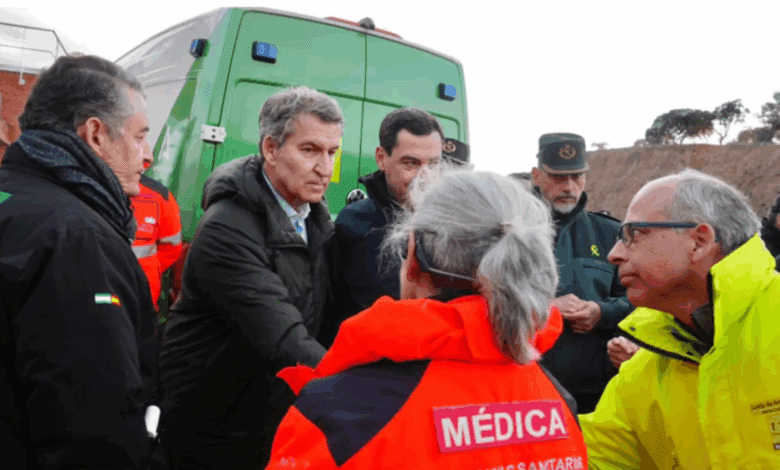
The PP claims that party leader Alberto Núñez Feijóo did not receive a call or even a message from the head of government after the tragedy. Moreover, during Feijóo’s visit to the crash site, the transport minister was notably absent, which even puzzled some government supporters. In response, the government asserts that contact did occur—but only through correspondence between the chiefs of staff of both leaders. According to them, the exchange was limited to polite pleasantries with no real information shared about the situation.
Escalating confrontation
The situation quickly escalated beyond the usual exchange of statements. The PP insists that, in such situations, there has always been direct communication between party leaders—especially in the wake of national tragedies. As an example, they cite the 2013 Alvia train disaster in Angrois, when then Prime Minister Mariano Rajoy personally informed the opposition. Now, according to the PP, the government is deliberately ignoring these traditions to minimize the opposition’s role and control the flow of information.
In Adamuz, Feijóo told reporters that all information about the incident was coming to him exclusively through the regional authorities of Andalusia and the media. He emphasized that he had not received a single official notification from the central government. This statement triggered a wave of criticism toward Madrid, as well as fresh accusations against Sánchez and Puente.
Manipulation and Accusations
Responding to the accusations, government representatives tried to defuse the situation, insisting that contact with the PP was established immediately after Feijóo’s public statements. However, according to the opposition, the communication consisted only of formal messages exchanged between the chiefs of staff—Diego Rubio and Marta Varela. The PP maintains that this cannot be considered genuine communication, just an attempt to create the appearance of dialogue.
Prominent PP politicians are openly irritated. They point out that after tragedies such as March 11 or natural disasters, the protocol of direct communication between leaders has always been upheld. Now, in their view, the government is trying to manipulate public opinion, portraying itself as the only reliable source of information. The party stresses that it does not intend to engage in provocations, but will not allow itself to be misled either.
Opposition Response
The PP emphasizes its restraint and sense of responsibility. The party claims it will not fall for provocations or use the tragedy for political attacks. However, it demands transparency and adherence to institutional norms. Their rhetoric clearly expresses dissatisfaction with the government’s handling of crisis situations, hinting that such an approach could lead to even greater public distrust.
Domestic political tension has been mounting since the Adamuz accident. Both sides accuse each other of manipulation and attempting to exploit the tragedy for their own interests. Meanwhile, ordinary citizens remain unaware of the real causes and consequences of the incident, witnessing yet another round of political confrontation.