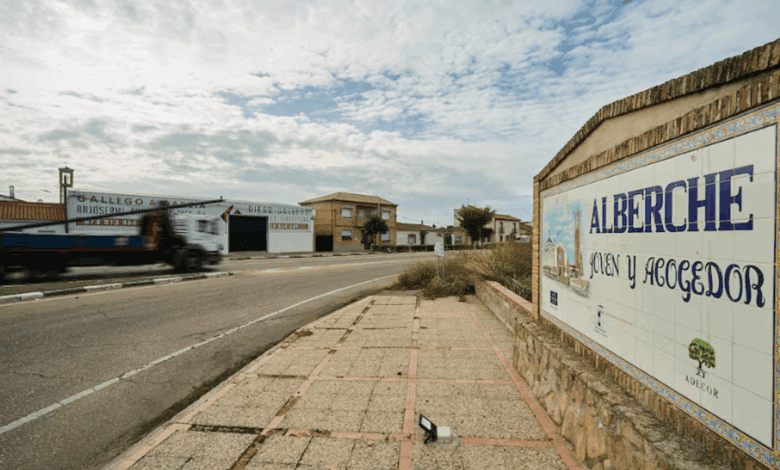
In the small settlement of Alberche del Caudillo, located in the province of Toledo, the issue of renaming has been stalled for a second year. Despite the requirements of the Law of Democratic Memory, which came into effect in 2022, local officials are in no hurry to shed the historical toponym associated with the Franco era. The reason: they are waiting for the publication of the official list of Francoist symbols, which is supposed to determine which names must be changed.
Alberche is one of fourteen localities where, in 1958, by order of the Instituto Nacional de Colonización, an element glorifying the dictatorship was added to the name. Today, only six such settlements across the country still retain these names, despite changes in legislation and public opinion.
Law and bureaucracy: Why is the renaming process dragging on?
In February 2023, the first step towards renaming Alberche del Caudillo was taken when the head of the local administration signed the relevant order. However, the process was soon halted. The municipality refers to a legal opinion stating that, without a government-approved catalog of Francoist symbols, changing the name would be premature. City officials insist they are ready to comply with the law as soon as the official document is published.
For now, as the government prepares to publish the catalogue—which is planned to be ready by year’s end—the situation remains unchanged. Officials insist that the renaming process will resume immediately after the list is released. However, critics argue that this approach is simply a way to delay implementing the law.
Other cities with Francoist place names
Alberche del Caudillo is not the only locality facing this issue. The list also includes Llanos del Caudillo in Ciudad Real, Villafranco del Guadiana in Badajoz, Alcocero de Mola in Burgos, Quintanilla de Onésimo in Valladolid, and San Leonardo de Yagüe in Soria. Recently, the village of Villafranco del Guadalhorce joined them, after residents voted to remove the Francoist part of the name.
In some cases, attempts to change place names meet resistance from locals or face legal obstacles. For example, in Llanos del Caudillo, a poll was held in 2004 with most residents voting to keep the old name. Later, in 2018, a court upheld the municipality’s right not to change the name, as the law at the time did not explicitly ban such toponyms.
Debate over implementing the law
The question of who should oversee compliance with the memory law remains unresolved. Lawyers specializing in this area note that the lack of a catalog does not prevent municipalities from acting independently if a name is clearly linked to the dictatorship. In practice, however, many local authorities prefer to wait for official clarification to avoid potential disputes and sanctions.
Critics point out that the absence of penalties for delaying the process effectively allows municipalities to ignore the law’s requirements without consequences. Some lawyers have even appealed to the ombudsman to intervene, but so far the situation has not changed. Meanwhile, the government is continuing its work on creating the catalog, which is expected to serve as the basis for future decisions.
What will change with the introduction of the catalog
Recently, the Council of Ministers approved a decree to create a list of symbols and elements associated with the Franco regime in public spaces. A dedicated technical commission is responsible for compiling and regularly updating this list based on submissions. Once the catalog is published, municipalities are expected to lose all formal grounds for delaying renaming.
Nevertheless, experts believe that even after the official document is published, not all issues will be resolved automatically. In some cases, further clarification will be necessary, as well as efforts to engage public opinion to prevent conflicts and ensure the law is implemented locally.