Linguistic changes in Andalusia directly affect the region’s identity and influence how residents perceive themselves and one another. A new large-scale study reveals that familiar differences between accents are gradually fading, while appreciation for local characteristics is increasing. This is not just a matter of linguistics—it’s about cultural shifts that may change the familiar face of southern Spain.
Dynamics of change
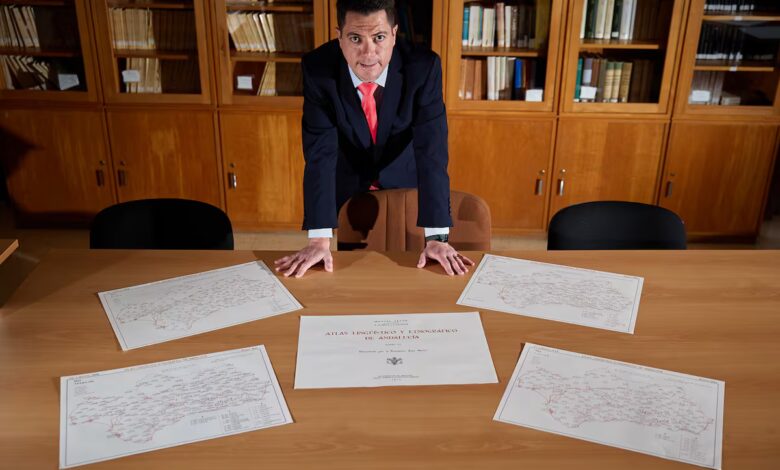
According to El Pais, new data from the Atlas of Linguistic Accents in Andalusia (ALIAA) reveal unexpected trends. Some features once typical only of eastern areas are now appearing in the west. For instance, the open pronunciation of vowels at the ends of words has become noticeable in Cádiz and Huelva, where it was previously absent. At the same time, certain linguistic traits are moving in the opposite direction—from west to east.
Researcher Alfredo Herrero notes that the disappearance of the traditional ‘ceceo’ in favor of ‘seseo’ is linked to public opinion. Young people, especially in public settings, increasingly choose forms considered more prestigious. At the same time, there is a countertrend—residents are starting to value their local accents, which prevents speech from becoming completely uniform.
Social pressure and politics
In recent years, society’s attitude toward accents has changed noticeably. While people used to be mocked for unusual speech, such behavior is now considered unacceptable. This shift is also seen in politics: recently, Vice President and Finance Minister María Jesús Montero proposed adopting a law to protect Andalusians’ right to speak their language without embarrassment. She believes this measure will help people openly express their identity.
ALIAA became the continuation of a large-scale project launched back in the mid-20th century. At that time, researchers gathered data by interviewing elderly men who had lived all their lives in one village. The modern study relies on digital technology and includes recordings from more than four thousand people of various ages and educational backgrounds. This has helped create a more complete picture of linguistic changes.
Territorial differences
Despite the general trend toward accent convergence, some distinctions have persisted for decades. For instance, in the eastern provinces—Almería, Granada, Jaén, and part of Córdoba—the form ‘vosotros’ is still more commonly used, whereas in the west—in Huelva, Seville, and Cádiz—’ustedes’ prevails. In Málaga and nearby areas, both forms coexist. Interestingly, it is mostly young people who are abandoning ‘ustedes’, which may eventually erase this difference.
The influence of social factors is also evident in other linguistic features. For instance, the palatalization of word endings, which was typical of the east, is now found in the western provinces as well. This indicates that linguistic processes move in both directions, not just from west to east or vice versa.
Looking to the future
Whether these changes will lead to the complete disappearance of Andalusian accents remains an open question. According to experts, the opposite is more likely: residents of central and northern Spain may begin adopting some features of southern speech. This is part of a general linguistic trend toward simplifying syllabic structure. Researchers already note that elements of Andalusian pronunciation are now appearing in other regions of the country.
In recent years, interest in regional accents in Spain has grown noticeably. Similar developments have been observed elsewhere in the country: both Galicia and Catalonia have reported increasing respect for local linguistic traditions. In 2025, Valencia considered introducing new educational programs to preserve dialects. These initiatives show that linguistic diversity is becoming an important part of cultural policy and public life.