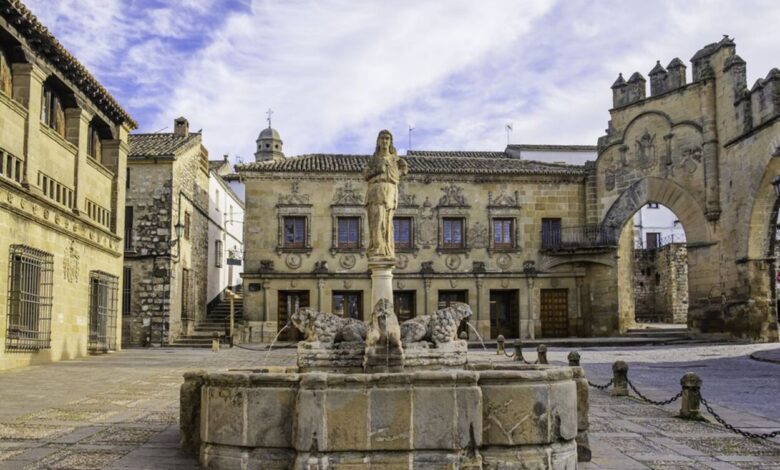
In the heart of Jaén province lies a city that rarely makes it to tourist hotlists, yet has the power to surprise even seasoned travelers. Baeza is not just another Andalusian town—it’s an open-air museum, where every stone preserves echoes of the past. Autumn is the perfect time to stroll here: gentle sunlight, a golden glow, and almost no crowds.
The town’s main square welcomes visitors with its majestic cathedral, rising on the site of an ancient mosque. The tower still retains features of a minaret, while inside you’ll find a blend of Gothic and Renaissance styles. Nearby, an elegant fountain murmurs—a reminder of how vital water once was for city life. It’s easy to imagine students, merchants, and craftsmen hurrying through these same streets centuries ago.
Architectural treasures and the spirit of the Renaissance
Baeza is renowned for more than just its cathedral. Just steps away stands the Jabalquinto Palace, now a university. Its façade is adorned with intricate carvings, and the courtyard is supported by marble columns. This building, like so many others in Baeza, reflects the influence of the Renaissance, the city’s golden age. In Pópulo Square, a house with coats of arms and a fountain guarded by stone lions recall the former might of the local nobility.
Every turn here is an encounter with history. Remnants of fortress walls, ancient gates, and towers serve as reminders of the times when Baeza was a crucial strategic site. The city also bears traces of its Arab past: the massive Úbeda gates and Aliatares tower still impress with their imposing presence.
A city of thinkers and cultural discoveries
Baeza is not only an architectural gem, but also a center of learning. In the 16th century, a university was established here, offering theology, rhetoric, and classical languages. In the early 20th century, the young Antonio Machado worked within these walls, leaving a lasting mark on the city’s cultural life. Today, Baeza is home to several museums: a historical museum exploring different eras, a cathedral museum showcasing unique religious artifacts, and an olive oil museum which shares the story of the region’s greatest treasure.
In autumn, Baeza is especially delightful for a stroll. Narrow streets lead to cozy squares, while city viewpoints offer sweeping vistas of endless olive groves. It’s easy to lose track of time here: the sound of church bells, the scent of fresh olive oil, and the town’s unhurried pace create a unique atmosphere. Every visit to Baeza is a chance to discover something new—a hidden courtyard or an ancient door, each with its own story to tell.