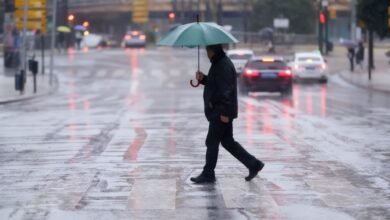
A sudden change in weather conditions in Spain at the beginning of April became an unexpected challenge for many regions. Following a spell of unusually hot weather, with temperature records set in several cities, the country was engulfed by a large area of instability. This event affected not only the daily life of Spaniards, but also raised concerns about possible impacts on infrastructure and agriculture.
According to Agencia Estatal de Meteorología (Aemet), the start of the week saw record-breaking temperatures across the country: in Santander, thermometers soared to 32.8°C, while in Asturias, the temperature reached 29.8°C. However, by Tuesday, the situation had shifted: an active weather system moved into the west and center of the peninsula, bringing heavy rain and thunderstorms. As a result, several autonomous communities were placed under a yellow weather warning.
Risk zones
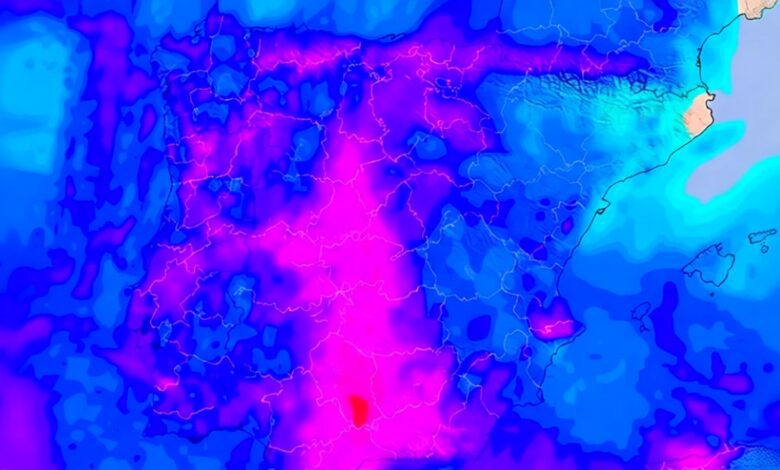
The worst of the storm hit Galicia, Castilla y León, Castilla-La Mancha, Extremadura, Andalucía, and Asturias. These regions experienced torrential rain, in some places accompanied by thunderstorms. According to russpain.com, certain areas reported local flooding and transport disruptions. Meanwhile, in other parts of the country, including the Islas Baleares, rainfall was minimal, though cloud cover and fog persisted.
On Wednesday, April 8, meteorologists forecast continued unstable weather. The formation of an isolated cold air mass in the southwest of the peninsula led to heavy cloud cover and prolonged rainfall. In some areas, precipitation intensified significantly, with thunderstorms posing additional risks for residents and infrastructure.
Temperature fluctuations
The weather system brought not only precipitation but also a noticeable drop in temperatures. This was especially evident in the central and western parts of the country, where highs fell sharply. The decrease was most pronounced in Andalusia, Extremadura, and the western part of the Meseta. In eastern regions and the Balearic Islands, changes were less marked, but nighttime lows also dropped.
Despite the worsening conditions, Aemet meteorologists note that no significant rainfall is expected on Thursday and Friday. However, uncertainty remains for the weekend: new waves of rain are possible, especially in western and central areas. Residents and businesses are having to adjust their plans due to the unpredictable forecast.
Regional impact
The effects of the weather are felt not only in major cities but also in rural areas. In Galicia and Castilla-La Mancha, farmers report delays in fieldwork due to waterlogged soil. In Andalucía and Asturias, local authorities have increased monitoring of roads and bridges to minimize the impact of potential flooding. In Extremadura and Castilla y León, municipal services are operating in emergency mode, dealing with the aftermath of the heavy rains.
In other regions where rainfall has been less intense, increased cloud cover and fog persist, making road travel more difficult and affecting transportation schedules. In the northern areas of the Canary Islands (Islas Canarias), visibility has also worsened and there are localized showers.
Context and consequences
Spring weather anomalies are not uncommon in Spain, but such sharp temperature fluctuations and widespread downpours do not happen every year. In recent years, the country has already faced similar phenomena: for instance, in Cantabria (Cantabria), major infrastructure projects were previously suspended due to weather conditions, such as what happened with the wind farm — the ministry’s decision sparked debate among local residents. Such events highlight the importance of timely response to natural challenges and the need to adapt infrastructure to new climate risks.
In recent years, Spain has increasingly faced weather anomalies, ranging from droughts to sudden downpours and storms. In 2025, spring thunderstorms have already caused transport disruptions and temporary power outages in some provinces. In 2024, Cataluña and Valencia experienced local flooding following heavy rainfall. These events highlight the need for ongoing attention to climate change and readiness for new challenges, both from authorities and the public.