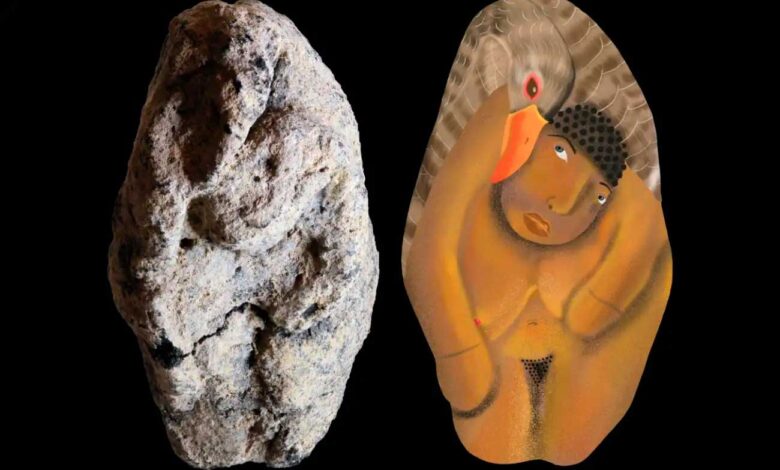
In one of the Levant’s oldest settlements, archaeologists have discovered a clay figurine that has sparked heated debate among experts. The find was made in the Nahal Ein Gev II area, once inhabited by the Natufian culture. The artifact is estimated to be around 12,000 years old.
The figurine, made of fired clay, stands just over 3 centimeters tall and weighs only 12.6 grams. Despite its small size, it amazed researchers with its unusual subject: it depicts a woman with a goose on her back, neck, and head. The detailed rendering of both the bird’s and human’s anatomy led scientists to believe the scene was intentional.
Initially, researchers considered the possibility that the figurine represented a huntress with her prey. However, the goose’s posture and position did not match the depiction of carrying a dead animal. The bird appears alive and is depicted in a mating position.
This observation prompted researchers to analyze the beliefs of the Natufians. It’s known that this culture followed animistic traditions, attributing a soul not only to humans but also to animals, plants, and even inanimate objects. Their rituals and myths often featured images of humans interacting with totemic creatures.
According to archaeologists, the figurine may have symbolized a mystical union between a woman and an animal spirit. Similar motifs appear in the mythologies of various peoples, where totem animals play a key role in the origin of a tribe or its spiritual life. A large number of goose bones were also found at the settlement, indicating that these birds held special significance for the local inhabitants.
Technological analysis revealed that the figurine was fired at a relatively low temperature—about 400 degrees Celsius. This suggests a deliberate approach to its creation rather than a random craft. The artisan who made the artifact had a refined artistic sensibility and a good knowledge of anatomy.
However, not all scholars agree with the ritual interpretation. Some experts have proposed alternative hypotheses. For instance, there is an opinion that the figurine could depict a goose attacking a woman, rather than an intimate scene. It is known that wild geese can behave aggressively towards humans, especially when they feel threatened.
Despite these disagreements, the discovery from Nahal Ein Gev II is a significant contribution to understanding the spiritual life of the ancient Levant. It highlights the complexity of their worldview and the richness of their symbolism, and also shows that the boundaries between humans and animals in their minds were far less distinct than they are today.
Archaeologists continue to study such artifacts to gain a deeper understanding of how the earliest ideas about the world were formed among people on the verge of transitioning to a settled lifestyle and agriculture.