Events in Venezuela are once again at the center of attention for the Spanish public. Decisions made in Caracas directly affect the interests of Spaniards, given the close historical and economic ties between the two countries. Attempts by Spanish politicians to influence processes in Latin America have sparked heated debates and could impact Spain’s image on the international stage.
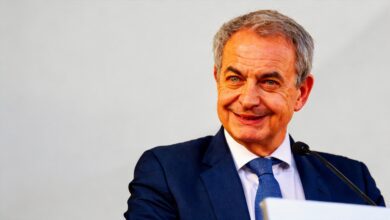
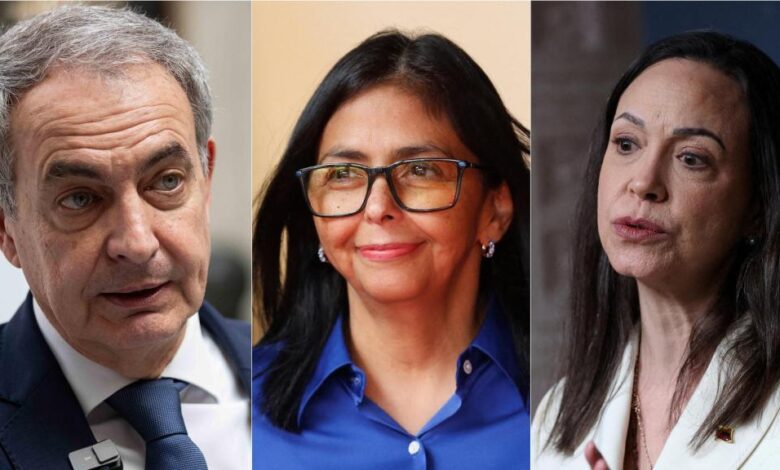
A new political conflict is brewing around María Corina Machado. Her supporters accuse former Spanish Prime Minister José Luis Rodríguez Zapatero of attempting to isolate the opposition leader by organizing a dialogue with minor opposition figures in Caracas. Zapatero held meetings with Delcy Rodríguez and several politicians not aligned with Machado, which is seen as a step toward legitimizing the new government that has replaced the Maduro regime.
Delcy Rodríguez’s proposed amnesty initiative has caused particular outrage. According to the opposition, this law not only fails to guarantee the release of all political prisoners but also allows the authorities to retain repressive tools. Former Caracas mayor Antonio Ledezma and other opposition representatives believe the amnesty is selective and does not cover serious crimes committed during years of dictatorship.
Scandal over the dialogue
Zapatero’s meeting with opposition representatives unconnected to Machado sparked a wave of criticism. Machado’s supporters believe these moves are designed to create the illusion of dialogue and strengthen the new government’s position. Among those invited were politicians such as Henrique Capriles, Stalin González, and Antonio Ecarri, who currently play a secondary role in the country’s political life.
The opposition insists that real democratic transition is impossible without Machado’s participation. Her supporters emphasize she was elected by the people and is a symbol of resistance. Ledezma calls what is happening ‘a theater for an international audience,’ which only helps the regime maintain the appearance of change.
These events draw particular interest in Spain, as Zapatero, despite the criticism, remains actively involved in Latin American politics. His actions are perceived ambiguously: some see them as an attempt to foster dialogue, others—as a way to support authoritarian regimes.
Amnesty Law
The amnesty bill proposed by Delcy Rodríguez has become the subject of intense debate. Zapatero has offered full support for the legislation, describing it as ‘ambitious’ and necessary for social reconciliation. However, opposition representatives and human rights groups argue that the law does not address the main issues.
According to Ledesma, the amnesty will not lead to the release of all political prisoners, but will simply legalize the crimes of the regime. He notes that more than 600 people, including 85 military personnel who refused to obey the authorities’ orders, are still being held in Venezuelan prisons. Ledesma is convinced that true freedom is only possible with the immediate release of all detainees, not through formal laws.
Sergio Contreras, former political prisoner and head of the NGO Refugiados sin Fronteras, emphasizes that the amnesty only covers certain periods and does not extend to all the years of the dictatorship. Moreover, it does not abolish repressive laws, allowing the authorities to retain control over the opposition.
Reaction and consequences
Spain is closely monitoring the situation, as any changes in Venezuela could impact Spanish interests in the region. Zapatero’s intervention and support for controversial initiatives raise questions about Spain’s role in international politics and its ability to influence developments in Latin America.
Recalling recent events, it is worth noting that sharp political conflicts related to international statements and their reactions have already been discussed in the Spanish media space. For example, RUSSPAIN.COM analyzed in detail the situation when Elon Musk’s comments about Pedro Sánchez sparked heated debate among Spanish journalists and prompted discussion about the principles of democracy. You can read more about that conflict in the material at this link.
The Venezuelan opposition continues to insist on the need for real change and transparent dialogue. At the same time, the actions of Spanish politicians in the region are under close scrutiny, as their decisions affect not only the fate of Venezuela but also Spain’s reputation on the international stage.
Context and parallels
In recent years, Latin America has repeatedly seen situations where attempts at dialogue between the authorities and the opposition have led to new conflicts. The recent crisis in Bolivia comes to mind, where negotiations between the parties failed to bring about real change and only deepened mistrust. Similar developments were observed in Nicaragua, where amnesty laws were used to maintain control over the opposition. Such events resonate strongly in Spain, as many Spaniards have relatives or business ties with Latin American countries. Interest in these news stories remains high, since they directly influence Spain’s image as an international player and its relationships with its former colonies.