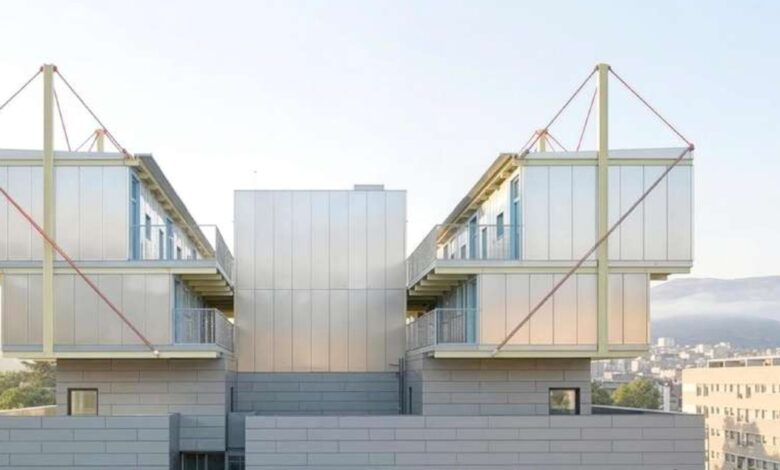
In the Basque Country, authorities have decided to use the rooftops of state-owned buildings to construct new apartments. This move could transform how the housing issue is addressed, as it creates additional living space without using new land plots. This is especially important in cities where there is little free land left, while demand for affordable housing among young people continues to grow.
According to El Pais, six projects have already been prepared, providing for the creation of 189 new apartments on the rooftops of 65 government-owned buildings. Most of these properties are social rental housing. The new apartments will be built using modular structures made of wood or metal, allowing for one or two new floors to be added to existing buildings. This approach does not require changes to urban planning and does not increase development density, which is particularly important for historic neighborhoods.
Action plan
Work is scheduled to begin in 2028, and the first residents will be able to move into the new apartments by the end of 2029 or early 2030. The projects will be implemented in Bilbao, Vitoria, as well as in Leioa, Mutriku, and Arrasate-Mondragón. All new apartments are intended for young people, helping them start independent lives more quickly. Authorities expect this step will nearly triple the number of affordable rental apartments.
Detailed planning for each of the five cities where the new apartments will be built will begin soon. In 2027, tenders for construction work will be announced. If everything goes according to schedule, construction will take about a year and a half. The authorities are working with social cooperatives that use modern technologies and eco-friendly materials to reduce costs and speed up the process.
Architectural Solutions
In each city, local architectural firms are developing the projects. They employ new construction methods to minimize environmental impact and avoid disturbing residents already living nearby. Officials emphasize that these are not just theoretical concepts, but real, verifiable, and replicable solutions that could serve as examples for other regions.
Vitoria will see 82 new apartments, Bilbao — 28, Leioa — 34, Mutriku — 22, and Arrasate-Mondragón — 23. All of them will be rented to young people at affordable prices. This approach not only increases the amount of housing, but also helps make cities denser and more resilient to change.
Strategy and Outlook
This project is part of a broader program that includes the construction of 7,000 new rental apartments during the current government term, as well as the conversion of vacant commercial spaces into housing and the regulation of rental prices in high-demand areas. Authorities also plan to make better use of empty apartments and introduce new regulations to support young tenants.
According to El Pais, the initiative has gained momentum thanks to a new law allowing modular apartments to be placed on the roofs of public buildings without complicated approvals. This speeds up the process and reduces bureaucratic obstacles. Officials are confident that this approach can be replicated in other regions across the country.
In recent years, Spain has seen a rise in projects aimed at increasing urban density without expanding city boundaries. For example, programs to convert offices and shops into apartments are already underway in Madrid and Barcelona. In Valencia, authorities are also considering building modular homes on the rooftops of old buildings. Such solutions make it possible to quickly respond to rising housing demand and help cities adapt more flexibly to shifts in the real estate market.