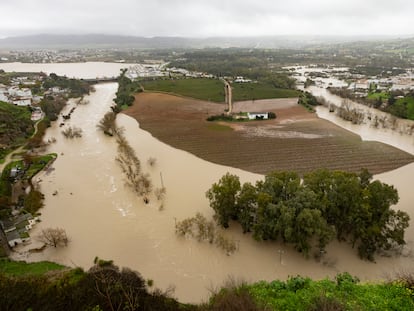
Spanish agriculture is under threat after a series of devastating storms paralyzed fieldwork and left thousands of families without income. In response, authorities have urgently eased the requirements for receiving agricultural subsidies. Now, workers affected by the bad weather will be eligible for payments even with a minimal number of days worked.
Next Tuesday, the Council of Ministers is expected to approve a reduction in the minimum number of working days required to qualify for subsidies and agricultural income. For those who already received payments last year, the required days will drop from 35 to 5. For others, from 53 to 15. This move comes in response to numerous union appeals calling for urgent changes, as it has become impossible to work on flooded or damaged land.
Union response and demands
Unions note that the halt of agricultural campaigns and the inability to reach fields have sharply reduced employment in the sector. Representatives from UGT FICA Andalucía emphasize that without these measures, thousands of families would be left without means to live. In addition, the unions are demanding temporary changes to social security rules: the suspension of the annual 30-day work requirement to maintain status in the agricultural registry, and the exemption from contributions to the special agricultural regime during the aftermath of natural disasters.
Minister of Agriculture, Fisheries and Food Luis Planas has announced that he has already appealed to the European Commission for funds from the crisis reserve to support the hardest-hit regions. Authorities are also considering temporarily relaxing requirements under the Common Agricultural Policy (PAC), so that farmers do not lose support if they cannot meet all the conditions.
Scale of the damage and support measures
According to ministry estimates, more than 14,000 hectares of farmland in Andalucía alone have been left without harvest due to flooding. Berry, citrus, vegetable, grain and olive plantations have been especially hard hit. The exact extent of the damage is still unknown, as many areas remain difficult for experts to access. Authorities are already drafting a set of measures to compensate farmers for their losses and restore destroyed infrastructure, as demonstrated during the minister’s visit to Villaverde del Río (Sevilla).
Particular attention is being paid to the agricultural insurance system, which the government sees as a key tool to protect farmers and ranchers from climate risks. In 2026, €315 million will be allocated for this purpose, significantly more than in 2018. In Andalucía alone, public support for insurance policies amounted to more than €32 million last year, covering around 45% of the insurance costs for local farmers.
Coordination and European assistance
Authorities emphasize the importance of coordinated efforts between the central government and regional and local bodies. The Ministry and the government of Andalucía have agreed to act jointly to speed up aid distribution and avoid duplicating support measures. Agricultural organizations also note that the main priority now is to help those who have completely lost their income, and then to restore the region’s production capacity, as it is considered one of Europe’s main food suppliers.
The government of Andalucía has appealed to Madrid to initiate emergency measures at the European Union level under Article 221 of Regulation (EU) 1308/2013 to secure funding from the EU’s reserve fund. Similar support was provided in March 2025. At the same time, regional authorities are seeking additional relaxations for the conditions required to receive direct payments under the PAC program, so that farmers do not lose aid due to force majeure circumstances.
Among the proposed measures are simplifying crop rotation requirements, allowing the use of spontaneous or artificially created plant cover, and easing the rules for receiving support for plant protein production. This will enable farmers to receive payments even if they are unable to meet all formal criteria due to the effects of the rains and flooding.
Reflecting on recent events, it is worth noting that authorities have previously resorted to large-scale resource mobilization to eliminate the consequences of natural disasters in Andalusia. As reported in the coverage about the full mobilization of national and European funds to support the affected regions, Madrid’s decisions have directly impacted the lives of thousands of families and businesses.
In recent years, Spain has been facing growing climate challenges, increasingly leading to devastating consequences for agriculture. Natural disasters like the current storms have repeatedly forced emergency changes in the country’s agricultural policy. In 2023 and 2024, similar support measures were introduced following severe droughts and floods, when farmers lost crops on a massive scale and demanded urgent assistance. European and national funds regularly allocate additional resources to restore affected regions, while insurance is becoming an increasingly essential tool to protect farmers from unpredictable weather disasters.