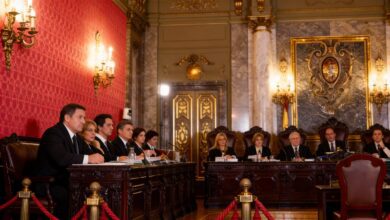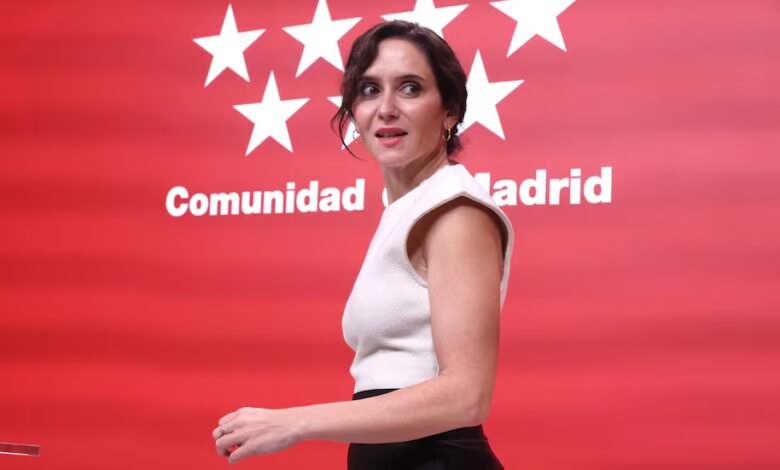
On Friday in Madrid, public attention was focused on a statement by Isabel Díaz Ayuso, the regional head, following the Supreme Court’s verdict against the country’s Attorney General. The ruling sent shockwaves through political circles and sparked an intense media reaction. Ayuso, openly satisfied, emphasized that she holds not only the Attorney General responsible, but also Pedro Sánchez himself, whom she believes orchestrated all actions taken against her.
The case centered on suspicions that the Attorney General had leaked information related to tax violations by Ayuso’s partner. Specifically, it involved a document in which attorney Alberto González Amador admitted to two counts of tax evasion amounting to over 300,000 euros. Despite a lack of direct evidence, the court found the Attorney General guilty of breaching confidentiality, marking a significant blow to his career.
Political tensions and Ayuso’s response
Ayuso issued a tough statement accusing Sánchez of using the judicial system to achieve political goals. She stressed that she considers herself the winner in this confrontation, viewing the actions of both the Attorney General and the prime minister as coordinated. According to her, it is Sánchez who should be in the dock, not just the prosecutor.
In her statement, Ayuso was reserved and serious, not letting emotions get the better of her. She refrained from answering journalists’ questions, sticking to a carefully prepared text. Her stance was clear: the court’s decision confirms that state institutions function, despite attempts by certain individuals to use them for personal gain.
Internal party divisions and the role of advisors
Within the Partido Popular itself, tensions have also risen. Ayuso and her close advisor Miguel Ángel Rodríguez pointed to the prosecutor as the source of the leak from the very beginning. However, during the proceedings, no irrefutable evidence of his guilt was found. Even so, the Madrid branch’s version dominated, further strengthening Ayuso’s position in her ongoing rivalry with Sánchez and even with her own party leader, Alberto Núñez Feijóo.
Journalists present at the court hearings denied receiving information directly from the prosecutor. Some even provided correspondence proving they obtained the information before the accused did. Nevertheless, most judges supported a guilty verdict, disregarding the lack of direct evidence.
Accusations against the government and fallout for the prosecutor’s office
Ayuso did not stop at criticizing the prosecutor. She accused the central government of manipulation and of using the judicial system for political purposes. In her view, this case is telling for the entire country: even high-ranking officials can be held accountable if they break the law.
As a result of the scandal, the attorney general was removed from office, shifting public attention from Ayuso’s partner’s tax issues to questions of political pressure and transparency in government institutions. Ayuso’s adviser, who had previously claimed the prosecutor offered the defendant a deal, later admitted this was only his assumption, not a confirmed fact.
The impact of the case on Spain’s political climate
This case became one of the most talked-about events in Spanish politics in recent years. It not only cast doubt on the independence of the judiciary, but also reignited tensions between regional and central authorities. Ayuso leveraged the situation to strengthen her position and criticize the Sánchez government, accusing it of trying to undermine the foundations of democracy.
In the end, despite the lack of direct evidence of collusion between the prosecutor and the prime minister, public opinion sided with Ayuso. The scandal led to the resignation of a high-ranking official and marked a new chapter in the ongoing political struggle between Madrid and the central government.