April 2026 brings special attention to Barcelona, as Spain hosts three major political events that attract leading European and global figures. Amid rising international tensions prompted by the actions of the US and Israel regarding Iran, Barcelona has become the venue for discussing the future of a multipolar world. For Spaniards, this is not only an opportunity to assert themselves on the global stage, but also a chance to influence the formation of new political and economic alliances—developments that may impact the country’s internal stability and prospects.
The first in this series of forums was the European Pulse Forum, held on April 9 and 10. Organized by Politico magazine and consulting firm beBartlet, the event gathered politicians, business leaders, and experts from across the European Union in Barcelona. The main focus was to analyze public sentiment and find solutions to pressing issues identified through a large-scale survey in six EU countries. Participants included European Commission Vice President Teresa Ribera, members of the European Parliament, a former US ambassador to NATO, as well as top executives from major transport and energy companies. The presence of Pedro Sánchez, Catalonia’s leader Salvador Illa, and Barcelona’s mayor Jaume Collboni highlighted the forum’s importance for both the region and the country.
Brazil and Spain
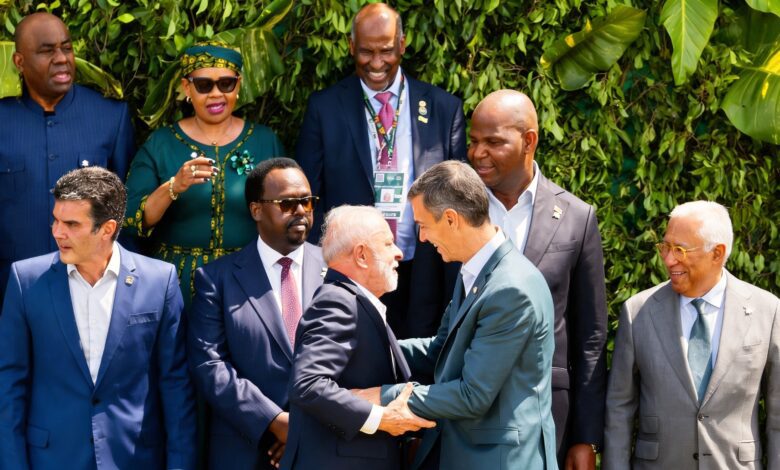
A week later, on April 17, Barcelona was once again in the spotlight thanks to a bilateral meeting between Pedro Sánchez and Brazilian President Luiz Inácio Lula da Silva. This meeting built on last year’s agreements reached in Brasília and aimed to strengthen economic ties and investment cooperation between the two countries. However, this time the focus shifted to a united stance on the conflict in Iran and support for a peaceful resolution. As El Pais notes, both leaders seek to demonstrate the unity of progressive forces and increase the influence of Spain and Brazil on the international stage.
The meeting between Sánchez and Lula da Silva was not limited to economic issues. It served as a prelude to a third major event—the Global Progressive Mobilization forum, held on April 17 and 18 at Fira Barcelona. Representatives of socialist, social democratic, and labor movements from various countries gathered here to discuss ways to strengthen democracy and deepen collaboration among progressive organizations. Among the guests were Teresa Ribera, Salvador Illa, Jaume Collboni, UK Deputy Prime Minister David Lammy, Lithuanian Prime Minister Inga Rugineine, Colombian President Gustavo Petro, Nobel laureate Maria Ressa, and Indian opposition leader Rahul Gandhi.
Global challenges
The simultaneous hosting of three forums in Barcelona highlights the growing interest in Spain’s role in international politics. As Europe faces new threats and the challenge of balancing national interests with global issues, such gatherings provide venues for developing coordinated solutions. According to El Pais, discussions in Barcelona address not only foreign policy, but also internal stability, economic development, and social justice.
Special focus is placed on building new coalitions and sharing experience among countries with diverse political traditions. For Spain, this is an opportunity to strengthen its position within the EU and beyond, and for Catalonia, a chance to demonstrate its importance as a center for political dialogue. Notably, against the backdrop of international crises, Barcelona is becoming a place where not only problems are discussed, but also real solutions are proposed.
Context and consequences
In recent years, Spain has increasingly served as a venue for international meetings and forums on security, economic, and democracy issues. For example, in 2024 Madrid hosted the NATO summit, and in 2025 Valencia organized a forum on climate policy. Such events help strengthen the country’s image as a reliable partner and mediator in complex negotiations. Analysis by russpain.com indicates that participation in these initiatives allows Spain to influence the European agenda, attract investment, and expand cooperation with Latin America and Asian countries.