The decision by Barcelona’s city authorities to revise the future Carmen Thyssen Barcelona museum project has become a major event for both city residents and all of Catalonia. The changes to the reconstruction plan for the Palau Marcet building (formerly Cine Comedia) directly affect not only the architectural character of the city center but also the balance between culture and commerce in the historic district. The reduction of commercial space and amendments to the building’s height reflect new priorities in city policy, putting the interests of residents and the preservation of cultural heritage at the forefront.
As highlighted by El Pais, a majority of city council members supported the updated plan during the meeting: PSC, Junts, PP, and Vox voted in favor, while BComú and ERC opposed. The key change is the reduction in the area allocated for commercial and auxiliary functions from 2,750 to 1,760 square meters, which now accounts for 16% of the total area instead of the previous 25%. This decision follows lengthy discussions and compromises between the municipality and investors, as well as feedback from city center residents.
Project modifications
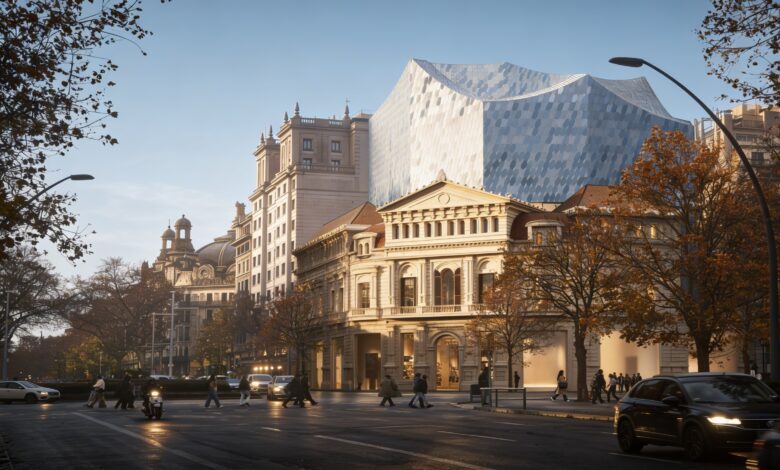
The revised project has abandoned the idea of a restaurant with a separate entrance from the street. Now, the restaurant will be located on an inner terrace, hidden from passers-by. The museum’s lobby will have only two retail spaces: a specialized bookstore and the museum’s official shop. Initially, another retail point was planned, but this was excluded after summer discussions. The architectural firm OUA from Barcelona and the British studio Casper Mueller Kneer Architects are in charge of the design, with investment provided by Stoneweg.
An important aspect is the change in architectural concept: the new two floors above Palau Marcet will now be less massive and visually lighter than originally planned. This decision was made following criticism of the initial renderings, which sparked debate among architects and locals. The building’s façades will retain their historic appearance and be restored to their original color, while the interior spaces will be fully renovated to suit the museum’s needs.
Cultural significance
The museum is scheduled to open in 2028. The two lower floors will house a permanent exhibition of nineteenth- and twentieth-century Catalan art, including works by Ramon Casas, Eliseu Meifrèn, Santiago Rusiñol and others, as well as previously unseen pieces from the Carmen Thyssen collection. The bookstore, official shop, and entrance to the new auditorium will also be located here. The upper floors will host temporary exhibitions and a restaurant.
According to investor representatives, the project is seen as a major responsibility and an opportunity for Barcelona to strengthen its status as a cultural hub. The architects emphasize that working with Palau Marcet is a challenge, as the building is well known to locals and closely tied to the city’s history. As reported by El Pais, the team of architects is satisfied with the compromise reached, which preserves the building’s historical identity while creating a modern museum space.
Reaction and outlook
Although final approval of the project is still pending at the Generalitat level, the museum’s initiators have already expressed satisfaction with the city council’s decision. In their view, the project is moving closer to realization after many years of waiting and debate. It is worth noting that such projects in Barcelona always spark wide public debate because they touch on issues of urban development, tourism, and cultural policy.
In recent years, the city has repeatedly reviewed major cultural initiatives to ease commercial pressure on its historic districts. For example, according to russpain.com, similar debates have arisen around new cultural venues and festivals, as residents have called for limiting commercialization and preserving Barcelona’s unique character. In this context, the decision regarding the Carmen Thyssen Museum reflects a broader trend toward a more balanced approach in the development of the city center.
In the context of cultural transformations in Barcelona, it’s worth recalling other recent projects related to the renovation of historic buildings and the creation of new museums. In recent years, the city has repeatedly faced the challenge of balancing the interests of investors, residents, and tourists. For example, the launch of new cultural venues has often involved public discussions and adjustments to the plans. In 2025, a similar situation arose during preparations for a major fashion event on the coast, when city authorities also revised architectural solutions and commercial aspects to take residents’ opinions into account. Read more about such changes in Barcelona’s cultural life in the article on new formats for urban events on this page. These examples show that the city continues to seek a balance between development and preserving its unique atmosphere.