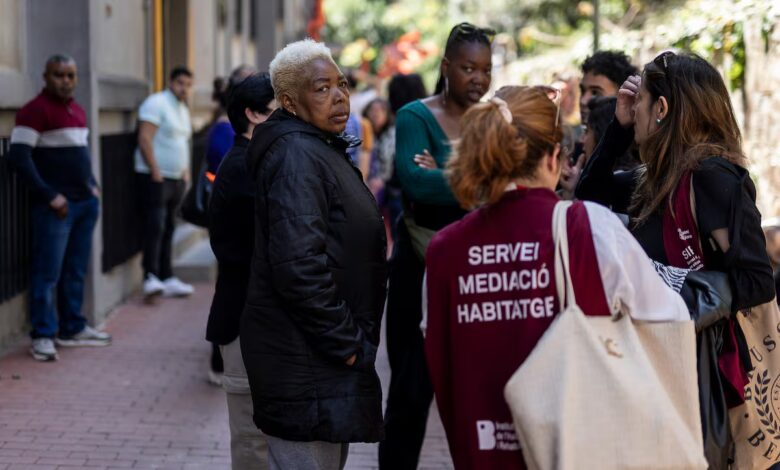
A real crisis has erupted in Barcelona: the city’s social services have officially acknowledged that they can no longer provide temporary accommodation to families left homeless. All spots in emergency shelters and municipal pensions are occupied, and officials say there are no new rooms expected to become available anytime soon. This news has come as a shock to many, as it concerns hundreds of families, including numerous children and women who have suffered from domestic violence.
The situation is made worse by the fact that demand for temporary housing has reached record highs in recent months. Shelters and hostals are currently accommodating not only families who have lost their homes due to eviction, but also victims of violence and foreigners facing difficult life circumstances. Social workers admit that it is becoming increasingly difficult to find even temporary refuge for such people. Some families have to stay in pensions for not just weeks, but years, waiting for any chance to move into their own housing.
Crisis details
Last December, nearly three and a half thousand people were living in Barcelona’s municipal pensions, most of them families with children. For many, temporary housing was the only refuge from the streets. But now this resource has been exhausted. Social service workers openly express their concern: finding an apartment for vulnerable families is nearly impossible, and the lines for assistance grow longer every day.
City authorities are forced to look for alternative solutions. As a temporary measure, a special social payment is proposed—a so-called emergency aid for urgent housing access. This support can reach up to €1,500 and is intended to cover rent, security deposits, or other urgent expenses related to finding new accommodation. But even these measures do not always help: the rental market is overheated, and prices continue to rise.
Financial burden
Municipal spending on maintaining temporary shelters and pensions has soared to astronomical amounts in recent years. Just last year, the city spent more than €38 million on these needs—over €100,000 a day. Despite such expenditures, the problem remains unresolved: there still aren’t enough places, and the number of those in need continues to grow.
The authorities assure that no one will be left without a roof over their head and promise to increase financial support. However, in practice, many families are forced to look for housing on their own, often agreeing to extremely inconvenient or even dangerous conditions. Some are forced to crowd into overcrowded rooms or turn to private individuals, risking ending up in an even more difficult situation.
Alternative measures
For those already staying in emergency shelters, additional support is provided—a special payment calculated for 12 months. This is intended to help families break out of the cycle of temporary accommodation more quickly and find more stable housing. However, the situation is far from simple: many families spend not months, but years in pensions, unable to escape their difficult circumstances.
Since last summer, city officials have shifted their priorities: temporary housing is now first offered to families with children. Single adults and childless families must settle for short-term solutions, fueling discontent among them as well. Social workers note that tensions in the housing queue are growing, and the number of requests for assistance continues to rise.
Questions for the authorities
The city ombudsman (Síndic de Barcelona) has already called on the municipality to reconsider its approach to organizing temporary housing. In his view, the current system is not meeting its goals: many families are forced to live in pensions for two years or more, and management of these facilities often goes through tourist companies, which raises further concerns.
The ombudsman insists on the need to create more comfortable and safer conditions for temporary accommodation, especially for families with children. He also calls for a review of shelter stay durations and for greater transparency in the allocation of spaces. For now, the situation remains tense, with thousands of Barcelona residents still waiting for change.