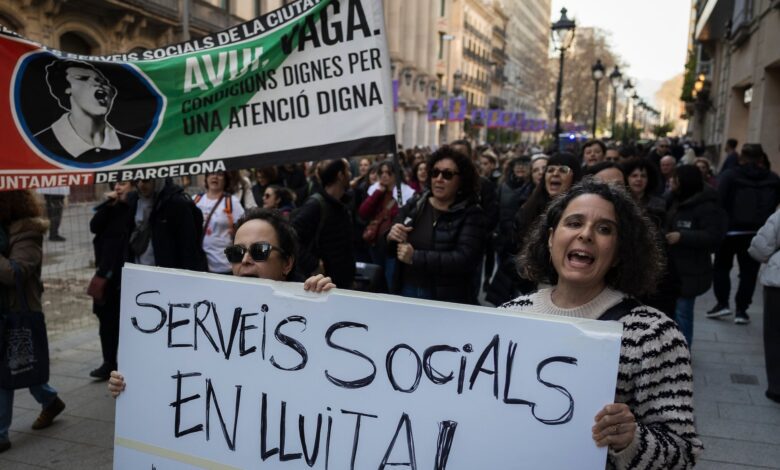
A serious conflict is brewing in Barcelona between city authorities and social service workers. The municipality’s decision on a new labor agreement has sparked a wave of discontent among employees, who have been holding partial strikes for several weeks. Now they have announced a full work stoppage on the 10th, which could affect thousands of residents in need of support.
According to El Pais, the protest was triggered by a recently signed agreement between the city hall and major unions, introducing a reduced 35-hour workweek. However, social service staff believe this document worsens their situation. They claim the agreement fails to consider the specifics of their work and deprives them of previously guaranteed rights such as flexible schedules, extra rest days, and opportunities to recover after emotionally demanding shifts.
Discontent is growing
Employees of the Municipal Institute of Social Services (IMSS) and external organizations supporting the homeless, families with children, women affected by violence, and other vulnerable groups have been gathering for mass meetings for several weeks. Up to 400 people attended the most recent gatherings. Workers emphasize that the new conditions not only fail to make their jobs easier but also create additional difficulties, especially under constant pressure from the housing crisis and the increasing number of people seeking help.
The CGT and Intersindical unions supported the strike decision. They argue that the new agreement unfairly prioritizes mainly male and force-based departments, while female and social sectors lose benefits. Union representatives note that the reduction of work-life balance measures and decreased rest time negatively impact employees’ mental and physical health.
Impact on the city
If a full strike takes place on the 10th, many social services could become unavailable to Barcelona residents. This is especially critical for those relying on emergency assistance, temporary shelter, or crisis support. Workers point out that help is already frequently delayed and access to shelters is limited due to a lack of resources and staff.
Staff at citizen service offices (OAC) are also participating in partial strikes and are considering joining the general protest. According to El Pais, city authorities have yet to comment on the situation or propose solutions, which only increases tensions.
Loss of trust
Many employees believe that the new agreement is a blow to their professional dignity. They emphasize that they are not refusing to work, but are demanding conditions that allow them to fulfill their duties properly. Among their main concerns are the loss of nine extra rest days for staff under the greatest workload, and the reduction of mental health support measures.
Unions warn that such changes could lead to staff burnout and a decline in the quality of public services. At a time when social services are facing a growing number of requests and increasingly complex cases, the lack of support from the administration may have long-term negative consequences for the entire city.
In recent years, Spain has seen a rise in strikes among social sector workers. Similar protests have already taken place in Madrid and Valencia, where employees demanded better working conditions and the preservation of social benefits. In most cases, the authorities made concessions only after mass demonstrations and public pressure. Experts note that the situation in Barcelona could set an example for other cities if the conflict is not resolved soon.