Far from Barcelona’s bustling tourist routes, in the heart of the Sant Martí district, lies a hidden corner that feels like it transports you thousands of kilometers away—straight to the Caribbean. This is not another picture-perfect attraction from a guidebook, but a true hidden gem, unknown even to many locals. It’s an extraordinary passage where time seems to have stopped at the turn of the last century, offering weary travelers a retreat from the city’s hustle and a completely different side of Barcelona.
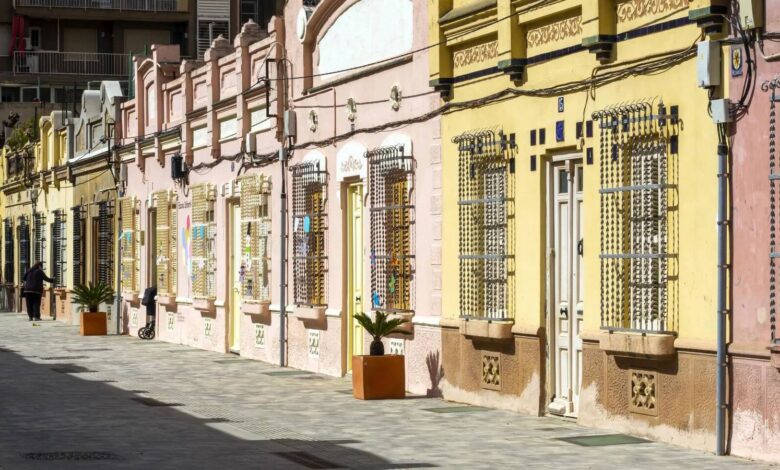
The Passatge d’Antoni Gassol is a narrow pedestrian lane just 122 meters long, quietly linking the neighborhoods of El Clot and Sant Martí de Provençals. Along both sides, about twenty small houses stand in perfect rows, their façades painted in delicate pastel shades ranging from pale yellow and sky blue to muted pink. This unique color palette, bathed in brilliant Spanish sunlight, creates an atmosphere reminiscent of colonial Havana or another Caribbean town.
This remarkable architectural ensemble did not appear here by chance—its history is closely linked to Barcelona’s industrial past. Built between 1911 and 1929, the project was designed by architect Manuel Puig Janer, who specialized in this type of construction. The initiative came from local entrepreneur Antoni Gassol, who sought to provide affordable, quality housing for workers from the many surrounding textile factories. Despite their modest, utilitarian purpose, these buildings are not without grace and attention to detail. Each house is adorned with tastefully crafted stucco elements, original wrought-iron window grilles, and handsome wooden doors, testifying to the strong influence of Modernisme even on the folk architecture of Barcelona’s early suburbs.
Today, the atmosphere here is one of remarkable tranquility, a striking contrast to the city’s bustling pace. Laundry hangs casually on lines stretched between houses, pots of geraniums and other flowers grace the entrances, children play carefree in the street, and neighbors chat leisurely right on their doorsteps. This idyllic, almost rural scene gives the place a unique, nearly cinematic charm. In 2021, the entire passage was fully renovated: it became completely pedestrian, the paving and lighting were updated, yet authorities and residents approached the process with great care, preserving its unique historical character and authenticity.
Finding this oasis of tranquility is easy, even though it’s hidden away from the main avenues. The Passatge d’Antoni Gassol is tucked between Andrade and Consell de Trento streets, linking Carrer d’Espronceda and Bac de Roda. The most convenient way to get here is by taking the metro to Bac de Roda or Clot stations (lines 1 and 2), then enjoying a short walk. This corner, protected as a historic ensemble, reveals a different side of Barcelona—less glossy and touristy, more intimate and human, and undoubtedly authentic.
By the way, the Sant Martí district, where the passage is located, boasts a rich industrial past. It was once known as the “Catalan Manchester” due to its abundance of factories and plants, with smokestacks shaping the landscape. Over time, industrial zones gave way to modern residential neighborhoods, innovative technology hubs such as the renowned 22@ district, and beautiful urban beaches that appeared after the city’s Olympic transformation. Yet deep in Sant Martí, you can still find authentic places that preserve the memory of Barcelona’s working-class, industrial heritage.