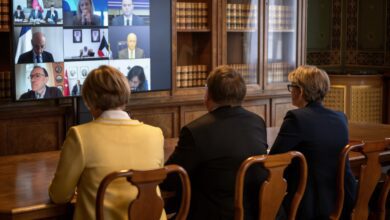
The issue of granting Catalonia a special financing regime has once again become one of the most debated topics in Spain. The decision to give the region the authority to manage its own tax collection and expenditures has sparked a wave of criticism and concern among other autonomous communities. For Spaniards, this means possible changes in the distribution of state funds and new challenges for national unity.
Internal disagreements
As El Pais notes, after Arcadi España was appointed finance minister, the Catalan government and its ERC allies hope to speed up the transfer of powers to manage taxes, including the IRPF. However, even among autonomous regions with their own financing agreements, such as the Basque Country and Navarre, there are warnings. Imanol Pradales, head of the Basque Country, reminded that independent tax management comes with unilateral risks: if a region fails to manage its budget or breaches financial discipline, it cannot expect help from Madrid. He emphasized that during financial crises, the Basque Country managed on its own, and no one came to the rescue.
María Chivite, the President of Navarra, also shared her experience with Salvador Illa. She emphasized that an effective tax system requires not only political will, but also long-term staff training and infrastructure development. According to her, Navarra lost 900 million euros in tax revenue during the pandemic, and these losses were not compensated from the central budget, unlike other regions.
Open confrontation
While the advice from Pradales and Chivite was shared in private conversations, the leaders of Castilla-La Mancha and Asturias spoke out publicly. Emiliano García-Page, President of Castilla-La Mancha, categorically rejected the possibility of adopting a document agreed between PSC and ERC as the basis for the new system. He stated that no autonomous community should accept terms designed for Catalonia and demanded equal rules for all.
The Asturian leader Adrián Barbón took a less sharp but equally firm stance. He stressed that Asturias would not support any initiative that undermines the interests of the region and called for open dialogue among all autonomous communities. His deputy, Gimena Llamedo, added that Asturias would not accept a ‘done deal’ and insists on an equal discussion.
Consequences for the entire country
The discussion on the new funding model affects not only Catalonia but also the entire system of interregional relations in Spain. According to RUSSPAIN.COM, if Catalonia is granted special conditions, other regions may demand similar rights, potentially leading to a revision of the budget allocation principles. Current calculations already indicate that some regions, such as Asturias, could receive additional funds, but their leaders are insisting on changes that would ensure fairness and equal access to public services.
In this context, it is worth recalling that Spain’s authorities recently agreed to transfer new powers to the Basque Country, including control over airports and migration. This decision, as described in detail in the report on the extension of powers to the Basque Country, has already sparked debates about the balance of interests between the central government and the regions.
Context and trends
In recent years, Spain has faced increasing demands from its autonomous communities for greater powers. Following the pandemic and economic challenges, regions have been pushing more frequently for independence in managing finances and social policies. In 2024, similar debates erupted over the transfer of authority for airport and migration management to the Basque Country, setting a precedent for other regions. In 2025, changes to the formula for distributing the budget among the autonomous communities were discussed, but consensus was not reached. These developments reflect profound shifts in the structure of the Spanish state and are intensifying competition between regions for resources and influence.