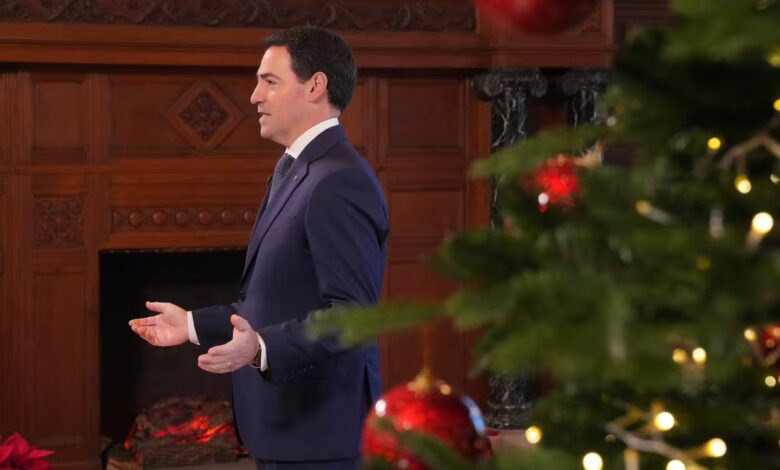
In his New Year address, Euskadi’s head of government, Imanol Pradales, focused on migration and integration. Over the past 25 years, the number of migrants in the region has increased tenfold—from 30,000 to more than 300,000. Pradales addressed the newcomers, emphasizing: “You have already taken the first step, now it’s time for the second.” He called on migrants not just to live in Euskadi, but to become part of it, sharing not only its rights but also its responsibilities.
According to Pradales, only joint efforts can build a cohesive society. He noted that Euskadi belongs to everyone who respects and strengthens its foundations, regardless of country of origin. However, he believes that achieving this requires active involvement from all residents, not only those born in Euskadi.
A shared home
In his speech, Pradales gave special attention to leaders of migrant communities. He urged them to take responsibility for integration and set an example for others. According to Pradales, the goal is to create a common space where rights and responsibilities are shared by everyone who calls Euskadi home.
Pradales stressed that his stance is rooted in humanist values. He reminded listeners that one’s freedom begins with respect for the freedom of others, and that responsibility extends not only to oneself but also to the community. “What unites us is not only territory, but also shared values,” he said. He invited migrants to embrace an identity based on respect, equality, coexistence, culture, and the common good of the region.
Autonomy challenges
In his speech, Pradales also addressed relations with the central government. He recalled the agreements reached with Madrid in November 2023, when to secure the reelection of Pedro Sánchez, the Basque party PNV received promises to expand regional autonomy. Since then, according to Pradales, the fulfillment of these commitments has been delayed and patience in the region is running thin.
He expressed frustration that talks on transferring new powers to the Basque government have once again been postponed. Pradales emphasized that the issue is not just about the number of powers, but about the region’s right to self-govern. He urged Madrid not to drag out the process and to honor its commitments.
Language and identity
Another key topic of the address was the fate of the Basque language (Euskera). Pradales referred to recent court rulings that limit requirements for Euskera proficiency when hiring for public sector jobs. He noted that despite these obstacles, the local population would continue to support and promote their language, which he said is ‘deeply rooted in the hearts’ of Basques.
Pradales vowed that authorities would work further to normalize and popularize Euskera. He expressed confidence that no external decisions could halt this process.
Looking ahead
In concluding his speech, Pradales expressed hope that 2026 would be a turning point for the Basque Country. He emphasized that the region needs all the tools for independent development and self-governance, so that no one makes decisions for the Basques. According to him, only in this way can prosperity and well-being be ensured for their common home — Euskadi.